Germany Crypto Tax: How to Use the 12-Month Exemption for Bitcoin
 Aug, 20 2026
Imagine selling your Bitcoin after exactly one year and paying zero tax on the profit. For many investors in other European countries, this sounds like a dream. But for residents of Germany, it is simply how the system works. Under Section 23 of the German Income Tax Act (Einkommensteuergesetz or EStG), cryptocurrencies are treated as 'private money.' This unique classification means that if you hold your digital assets for more than 12 months, any gain from selling, swapping, or spending them is completely tax-free. This rule creates a powerful incentive for long-term holding. While France taxes crypto gains at a flat 30% regardless of how long you hold, and the UK has reduced its capital gains allowance, Germany offers a full exemption after the holding period passes. However, the devil is in the details. Miscalculating the holding period by even a few hours can turn a tax-free sale into a taxable event with rates up to 45%. Here is how to navigate these restrictions to keep more of your profits.
The Core Rule: What Counts as a Tax-Free Sale?
The foundation of this strategy is precise timing. The German Federal Central Tax Office (Bundeszentralamt für Steuern or BZSt) defines the holding period as exactly 365 calendar days. It does not matter if it is a trading day or a weekend; the clock starts ticking from the exact minute you acquired the asset and stops when you dispose of it. When you sell Bitcoin, swap Ethereum for stablecoins, or use crypto to pay for a service, that action triggers the tax calculation. If the time between purchase and disposal is greater than 365 days, the gain is exempt. If it is less, the gain is taxed as income. This applies equally to Bitcoin, Ethereum, and most other recognized cryptocurrencies. It is not just about selling for cash; using crypto to buy goods or services also counts as a disposal event. Therefore, if you bought a car with Bitcoin you held for 13 months, you owe no tax on the appreciation. Buy it with Bitcoin held for 11 months, and you owe tax on the difference between what you paid and the market value at the time of purchase.Short-Term Gains and the €1,000 Threshold
What happens if you sell before the 12-month mark? You don't necessarily owe tax immediately. There is a small buffer zone. For short-term holdings (less than 12 months), you only pay tax if your net gains exceed €1,000 in a single financial year. This threshold was increased from €600 effective January 1, 2024. Here is the catch: it is an all-or-nothing rule. If your total short-term gains are €900, you pay nothing. But if they hit €1,001, you pay tax on the entire €1,001, not just the extra euro. These gains are added to your regular income and taxed at your marginal rate, which ranges from 14% to 45%, plus a potential 5.5% Solidarity Tax. This makes active trading expensive. Unlike in the US, where you can offset gains with losses, Germany currently lacks robust tax-loss harvesting provisions for private individuals. If you have a big loss on one trade and a big gain on another within the same year, you generally cannot cancel them out to reduce your taxable base below zero.Calculating Your Holding Period: FIFO vs. Specific Identification
This is where most people get tripped up. When you sell some of your coins, which ones are considered sold? The German tax law mandates the First-In-First-Out (FIFO) method. This means the first coins you bought are the first ones considered sold. You cannot choose to sell the specific lot you bought last month to keep the older, tax-free lots untouched. Consider this scenario: You bought 1 BTC in January 2024 and another 1 BTC in January 2025. In February 2025, you sell 1 BTC. Under FIFO, the tax office assumes you sold the January 2024 coin. That coin has been held for over 12 months, so the gain is tax-free. If you had tried to claim you sold the January 2025 coin (which would be taxable), the tax office would reject it because FIFO is mandatory. However, if you mix old and new coins in the same wallet and buy more recently, the math gets complex. If you buy 1 BTC in January 2025 and sell 1 BTC in March 2025, the tax office looks at your oldest acquisition date. If you had any Bitcoin left over from previous purchases that were held for less than 12 months, those might be deemed sold first. To avoid confusion, many experienced investors use separate wallets for different acquisition batches. This keeps the FIFO calculation simple and auditable.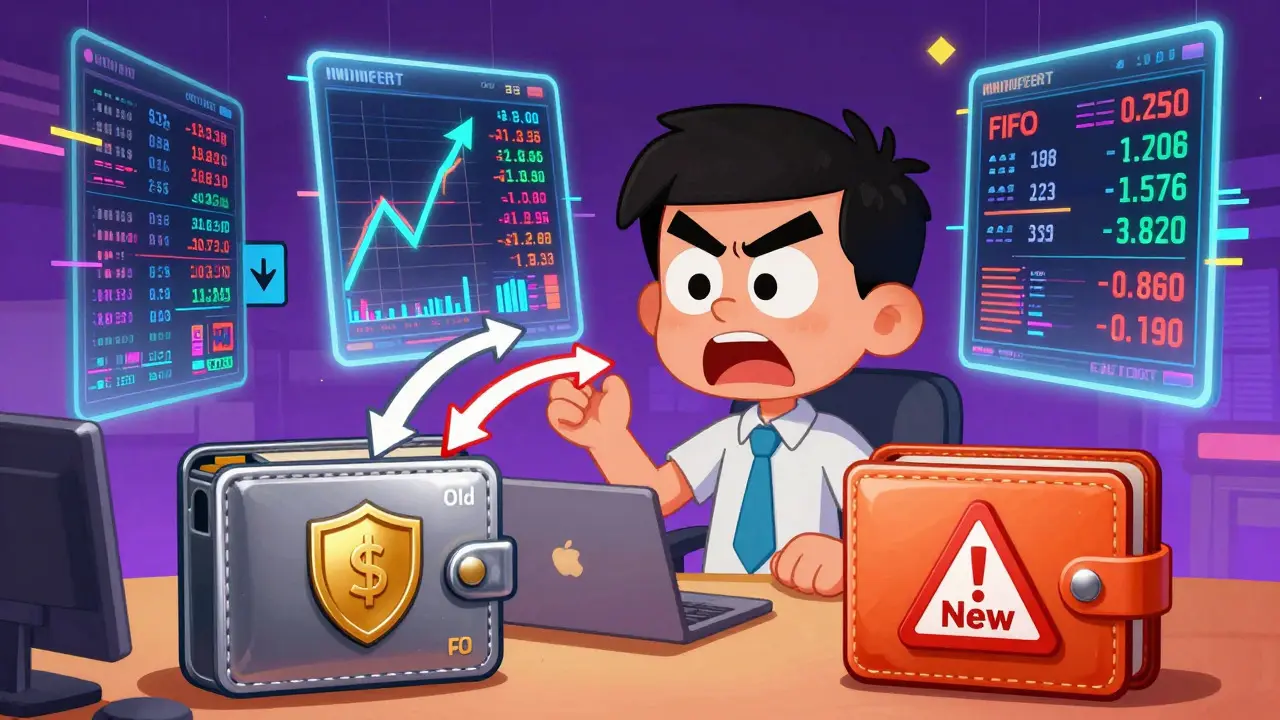
Special Cases: Mining, Staking, and DeFi
Not all crypto income follows the same path. The March 2025 guidance from the Federal Ministry of Finance clarified how various activities are treated:- Mining Rewards: Treated as income when received. If you sell the mined coins immediately, you pay income tax on the fair market value. If you hold them for 12 months, the subsequent sale is tax-free, but the initial receipt is still a taxable event if it exceeds €256 annually.
- Staking Rewards: Similar to mining. The reward is taxable income when received. The 12-month clock for capital gains starts from the date you receive the staking reward, not the date you bought the original asset.
- DeFi and Yield Farming: Depositing into liquidity pools is often seen as a disposal event, triggering immediate taxation. Withdrawals are acquisitions. This makes DeFi strategies tax-heavy for short-term users. Long-term holders who lock assets in stable yield products may benefit from the 12-month rule upon exit, but the entry point is critical.
Filing Your Taxes: The Elster Portal and Deadlines
You must report your crypto transactions via the official Elster online tax portal. Paper submissions are allowed but discouraged due to processing delays. The standard deadline for tax returns is July 31 of the following year, though recent administrative backlogs have occasionally pushed this to September 30. Most taxpayers find that preparing the data manually takes 15-20 hours. This is why 42% of German crypto users with significant holdings use specialized software like Koinly or BitcoinSteuer. These tools track your FIFO lots automatically and generate reports compatible with the Elster module. The Elster portal itself has improved significantly since 2023, but 61% of users still rely on external software to prepare their data before uploading. Always screenshot your transaction timestamps. In disputes, the exact minute of acquisition and disposal matters. As one user noted, saving an extra day of patience paid for their entire tax advisor fee.
Comparing Germany to Other EU Jurisdictions
Why do so many investors consider moving to Germany? The tax treatment is distinctively favorable for long-term holders compared to neighbors.| Country | Tax Treatment | Holding Period for Exemption | Short-Term Rate | Annual Allowance/Threshold |
|---|---|---|---|---|
| Germany | Income Tax (Private Money) | > 12 months (Tax-Free) | 14% - 45% | €1,000 net gains |
| France | Flat Tax (Prélèvement Forfaitaire Unique) | N/A (Always taxed) | 30% | €300 (transfer fees) |
| United Kingdom | Capital Gains Tax | N/A (Always taxed) | 10% - 24% | £6,000 allowance |
| Portugal | Capital Gains Tax | 28 days (Tax-Free for non-habitual residents) | 28% | Varies by residency status |
Risks and Future Changes: The DAC8 Directive
Nothing is permanent in regulation. The biggest threat to this framework is the EU-wide DAC8 directive, scheduled for implementation around 2026-2027. This directive aims to harmonize crypto taxation across member states. Analysts predict it could introduce a standardized capital gains tax structure, potentially eliminating Germany's unique 12-month exemption or capping it with a minimum tax rate. Deloitte Germany projects a 60% probability that some form of the EU proposal will pass by 2027. However, grandfathering provisions are likely, meaning assets held before the change might retain their current tax status. Until then, the 12-month rule stands. If you are planning to sell large positions, doing so now while the exemption is fully intact is a smart move. Waiting for the new EU laws could mean losing this advantage entirely.Practical Tips for Maximizing Your Exemption
To ensure you stay on the right side of the line, follow these practical steps:- Track Exact Timestamps: Record the date and time of every buy and sell. Blockchain explorers can help verify these times.
- Use Separate Wallets: Keep long-term holdings in a cold storage wallet separate from your trading wallet. This simplifies FIFO calculations.
- Monitor the €1,000 Limit: If you trade actively, keep your net short-term gains under €1,000 if possible, or budget for the tax liability on the full amount if you exceed it.
- Consult a Professional for Complex Cases: If you involve DeFi, NFTs, or cross-border transfers, a tax advisor specializing in crypto can save you from costly errors. The average cost is around €285 per filing season, which is cheap insurance against a 45% tax bill.
- File Early: Don't wait until the deadline. The Elster portal can get slow, and early filing allows you to fix mistakes without penalty.