How Blockchain Is Changing International Aid Distribution: Real-World Results
 Jul, 24 2026
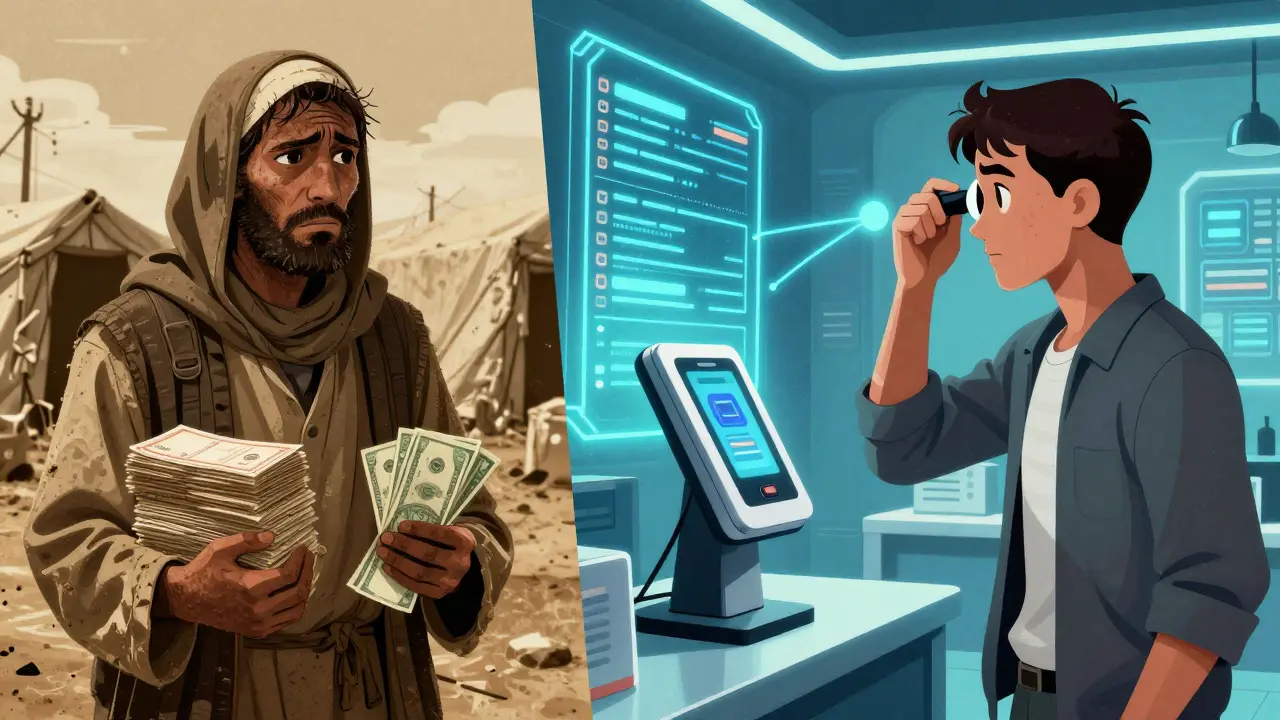
Imagine you are a refugee in Jordan. You need to buy food, but the traditional system forces you to carry stacks of paper vouchers or physical cash through crowded markets. It’s unsafe, slow, and often humiliating. Now, imagine walking into a shop, scanning your eye, and having funds transferred instantly from a secure ledger. No cash to lose, no paper to tear up. This isn’t science fiction; it is how the World Food Programme (WFP) has been operating for years using International Aid Distribution on Blockchain.
The idea sounds high-tech, almost too good to be true. But when you look at the numbers, the story gets complicated. On one hand, billions in aid have reached people faster and with less corruption. On the other, the technology requires infrastructure that many crisis zones simply don’t have. So, does blockchain actually help the people who need it most, or is it just another shiny tool for NGOs?
The Problem With Traditional Aid
To understand why anyone would bother with blockchain, you first have to look at what was broken before. For decades, distributing aid meant moving physical money or printing millions of paper vouchers. The United Nations estimated that roughly 30% of all aid was diverted to corrupt institutions or lost to administrative bloat. That means for every $100 sent to help a family, only $70 might actually reach them.
Traditional banking systems charge fees that eat into small donations. A single transaction can cost $1 to $2 in processing fees. When you are sending $5 to a family, that fee is huge. Then there is the security issue. In many camps, women carrying cash or vouchers face harassment or theft. Paper vouchers also create black markets where refugees sell their food stamps for less than face value because they need immediate cash for medicine or rent.
The goal of any new system had to be simple: cut the middlemen, stop the theft, and keep the recipients safe. Blockchain offered a way to do exactly that by creating a shared, unchangeable record of transactions that everyone could audit but no single person could alter.
How It Actually Works: The WFP Example
The biggest real-world test of this concept is the WFP’s "Building Blocks" project. Launched as a pilot in Pakistan in 2017, it started with just 100 refugees. Today, it is the largest blockchain implementation in humanitarian history, serving over 1 million refugees in Bangladesh and Jordan.
Here is the technical breakdown without the jargon. The system runs on a private Ethereum blockchain. This means it’s not open to the public like Bitcoin; only authorized nodes (servers run by WFP and partners) participate. This keeps costs down and speeds things up.
| Feature | Traditional Cash/Vouchers | Blockchain System (e.g., Building Blocks) |
|---|---|---|
| Transaction Fees | $1 - $2 per transaction | Near zero (saved $2.4M in Jordan alone) |
| Security for Recipients | Low (risk of theft/loss) | High (biometric access, no cash carried) |
| Processing Time | Weeks for settlement | Near real-time |
| Transparency | Opaque, hard to audit | Fully auditable ledger |
| Infrastructure Needs | Minimal (paper/cash) | High (internet, scanners, smartphones) |
The magic happens at the point of sale. Refugees use an iris-scanning technology called EyePay. They scan their eyes at a registered vendor’s terminal. The system verifies their identity against the blockchain ledger. If they have funds, the payment is approved instantly. Crucially, their sensitive personal data isn’t stored on the blockchain itself. Instead, an anonymous identifier links their biometrics to their wallet. This protects their privacy while ensuring only they can spend their aid.

The Hidden Costs: Infrastructure and Access
If blockchain is so great, why isn’t every NGO using it? The answer lies in the hardware. Blockchain doesn’t run on thin air. It needs internet connectivity, reliable electricity, and specific devices.
In 2022, the Prism Sustainability Directory found that 68% of refugee camps in developing regions lack the basic infrastructure to support these systems. You need vendors with smartphones and stable data connections. You need biometric scanners at distribution points. In remote areas, where the need for aid is often highest, the internet is spotty or non-existent.
Then there is the human factor. Not everyone can navigate a digital system. TechChange’s 2022 study showed a stark divide based on age. Younger beneficiaries (under 35) needed about 2.7 training sessions to get comfortable with the system. Those over 55 needed an average of 6.3 sessions. For elderly refugees, especially those suffering from malnutrition which can affect iris patterns, the biometric scanners sometimes failed entirely. In January 2023, a forum thread documented 47 reports of such failures, leaving some seniors unable to buy food until manual overrides were processed.
Oxfam’s Approach: UnBlocked Cash
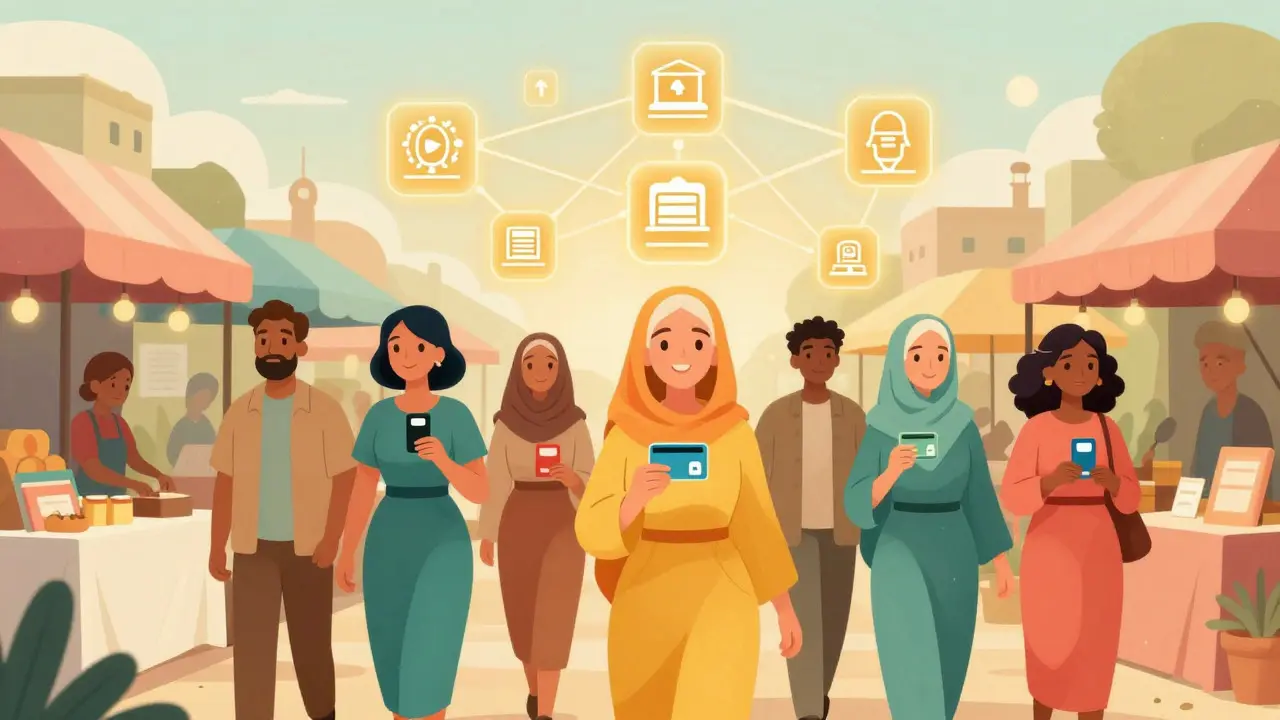
While WFP focuses on iris scans, Oxfam took a different route with its UnBlocked Cash project. Instead of biometrics, they used e-voucher "tap-and-pay" cards. Beneficiaries receive a card linked to their digital wallet. Vendors use pre-installed apps on their smartphones to process payments.
This approach solved the gender safety issue brilliantly. Oxfam’s field reports from Bangladesh noted that 92% of female recipients felt safer with digital transfers compared to carrying physical cash. Women no longer had to visit multiple distribution points or worry about being robbed on the way home. Vendors loved it too-78% reported satisfaction because they got paid immediately, rather than waiting 2-3 weeks for bank settlements.
However, this system still relies heavily on smartphone adoption among vendors. If a vendor’s phone breaks or loses signal, the whole chain stops. Oxfam reported that 31% of initial users required retraining within the first month, highlighting the steep learning curve for both donors and receivers.
Is It Worth It? The Expert Debate
The results are impressive on paper. WFP saved $2.4 million in transaction fees in Jordan alone. Diversion of funds dropped by 98%. But experts are divided on whether this justifies the complexity.
David Beasley, former Executive Director of WFP, called it a "paradigm shift in humanitarian accountability." He argued that saving millions in fees allows more resources to go directly to feeding people. From his perspective, the ROI is undeniable.
On the flip side, Dr. Sarah Smith from Oxford University’s Humanitarian Innovation Project warns that we are overselling the tech. She points out that in contexts where banks already work well, blockchain adds unnecessary cost and complexity. The Humanitarian Advisory Group’s 2021 review found that while seven UN entities launched blockchain initiatives, only three showed a clear cost-benefit advantage over conventional methods at scale.
There is also the risk of "techno-solutionism." As former WFP head James Morris noted, buying expensive servers doesn’t fix the root causes of poverty or conflict. It just makes the leakage slightly harder. If the infrastructure fails, people still don’t eat. A piece of paper never crashes.
The Future: Interoperability and CBDCs
We are currently in a phase of strategic refinement. The rapid expansion days are over. Now, organizations are trying to make their systems talk to each other. In September 2023, the UN launched the Interagency Blockchain Framework to create interoperability between different humanitarian blockchains. Imagine a refugee moving from a camp in Jordan to one in Lebanon and keeping their same digital identity and balance. That is the holy grail.
At the same time, a new competitor is emerging: Central Bank Digital Currencies (CBDCs). These are digital versions of national currencies issued by governments. They offer similar transparency and speed to blockchain but without the need for complex private networks or crypto infrastructure. By 2030, the Center for Global Development estimates only a 32% chance that blockchain will be widely adopted across the entire humanitarian sector, largely due to the rise of CBDCs and persistent infrastructure gaps.
For now, blockchain remains a powerful tool for specific scenarios: places with high corruption, weak banking systems, and decent mobile connectivity. It is not a silver bullet, but it is a significant step forward in dignity and efficiency.
Does blockchain aid protect user privacy?
Yes, if implemented correctly. Systems like WFP's Building Blocks do not store sensitive personal data directly on the public ledger. Instead, they use anonymous identifiers. Your biometric data (like an iris scan) is verified locally or on secure servers, and only the transaction hash is recorded on the blockchain. This ensures that while the transfer is transparent and auditable, your identity remains private.
Why don't all NGOs use blockchain for aid?
The main barriers are infrastructure and cost. Blockchain requires reliable internet, electricity, and compatible hardware (smartphones, scanners). In 68% of refugee camps, this infrastructure is lacking. Additionally, setting up these systems requires specialized technical staff and extensive training for beneficiaries, which can be more expensive than traditional methods in regions with existing banking networks.
How much money has been saved using blockchain in aid?
In Jordan alone, the WFP's Building Blocks program saved approximately $2.4 million in transaction fees. By eliminating the $1-$2 per transaction fee charged by traditional banks, these savings can be redirected to purchase more food and supplies for refugees. Globally, the WFP has distributed over $325 million worth of aid through this system since 2023.
What happens if the internet goes down during a distribution?
This is a major vulnerability. Unlike cash or paper vouchers, blockchain transactions require connectivity to validate the ledger. If the internet fails, transactions stop. Most large implementations have backup plans, such as offline modes that sync later, but these are technically complex and prone to errors. This is why hybrid models are often recommended for remote areas.
Is blockchain better than cash for women refugees?
Generally, yes. Studies show that women feel significantly safer using digital wallets accessed via biometrics or tap-cards. They avoid the risks of carrying physical cash, which can lead to harassment or theft. Oxfam reported that 92% of female recipients in Bangladesh preferred digital transfers for this increased sense of security allows women greater autonomy in managing household resources.