Iceland Crypto Mining Restrictions: Landsvirkjun's Power Rules
 Sep, 25 2026
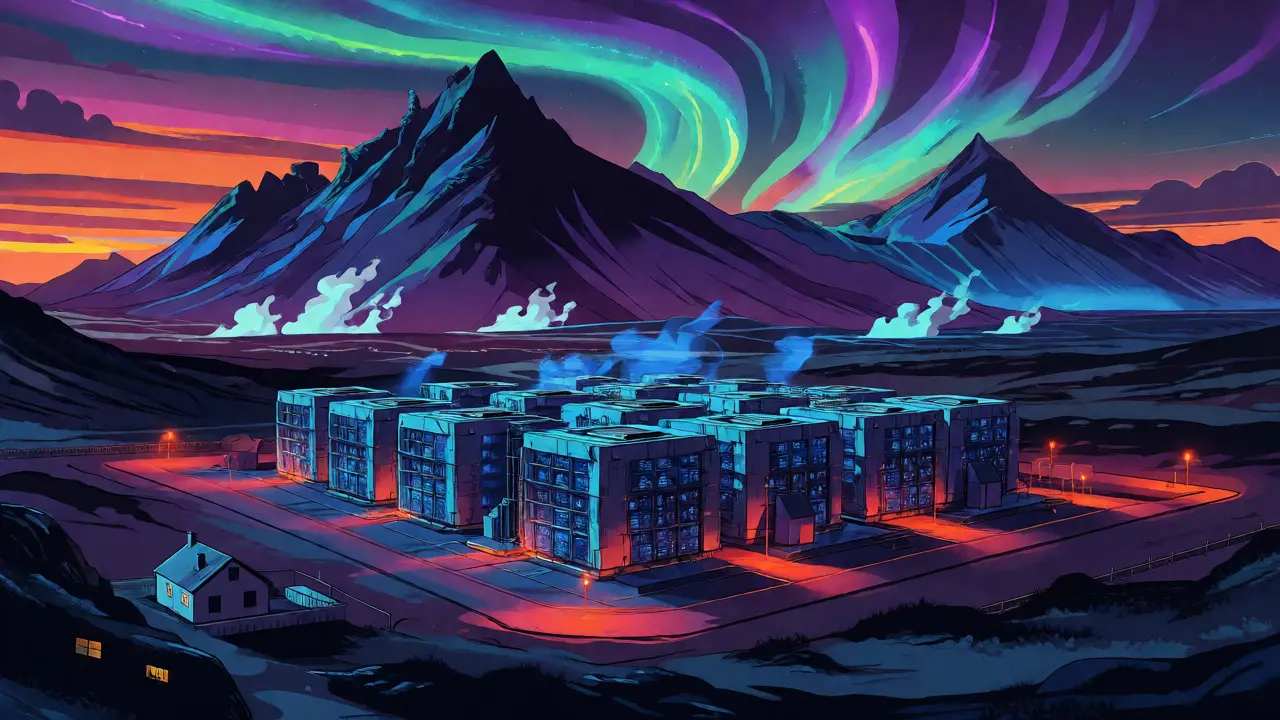
Imagine paying a premium for electricity because your neighbor is running a server farm that hums louder than the Northern Lights are bright. That’s the reality in parts of Iceland today. While the country remains a global magnet for Bitcoin mining thanks to its cheap, renewable geothermal and hydroelectric power, the free-for-all era is over. The national power company, Landsvirkjun, has tightened the screws on who gets how much juice.
If you’re looking at setting up rigs in Reykjavik or considering an investment in Icelandic hash rate, you need to understand the new rules. It’s not just about having a plug; it’s about navigating a complex web of grid capacity limits, environmental mandates, and shifting political winds. Here is what is actually happening on the ground.
The Energy Crunch Behind the Ban
Iceland’s grid was built for fishing boats and aluminum smelters, not thousands of ASIC miners humming 24/7. By 2017, crypto processing accounted for nearly 90% of data center power consumption in the country. Fast forward to today, and the strain is palpable. Local residents often complain about brownouts during peak winter months, while industrial users worry about stability.
Landsvirkjun, which supplies about 70% of the country’s electricity, cannot simply build new plants overnight. Geothermal wells take years to drill; hydro dams face strict environmental reviews. So, they imposed restrictions. These aren’t always outright bans but rather strict caps on new connections. If you want to expand your mining facility, you might be told there is no spare capacity until a new generation project comes online-often years away.
| Factor | Impact on Miners | Current Status (2026) |
|---|---|---|
| Grid Capacity | Limits new high-load connections | Tight; priority given to existing contracts |
| Environmental Impact | Requires proof of sustainable sourcing | Strict monitoring of water usage & emissions |
| Political Pressure | Risk of future tax hikes or curfews | High; PM expressed desire to reduce mining share |
| Energy Cost | Still competitive vs. global average | ~$0.03-$0.05 per kWh for large contracts |
Who Is Landsvirkjun and Why Do They Matter?
You can’t talk about restrictions without talking about the gatekeeper. Landsvirkjun is Iceland’s largest power producer and supplier. Unlike many countries where multiple private utilities compete, Iceland’s energy landscape is dominated by this state-owned entity and regional cooperatives. This centralization gives Landsvirkjun massive leverage.
They don’t just sell watts; they manage the national interest. When they say "no" to a new 50-megawatt mining connection, it’s rarely a bureaucratic hiccup-it’s a strategic decision. They prioritize industries deemed essential for long-term economic stability, such as aluminum smelting, which provides steady, predictable load profiles compared to the volatile demand spikes of some mining operations.
For miners, this means you are often competing with legacy heavy industry for a finite resource. If Landsvirkjun decides that a new aluminum plant offers better long-term ROI than another Bitcoin farm, your application goes to the bottom of the pile.

Regulatory Shifts: From Welcome Wagon to Watchdog
A few years ago, Iceland rolled out the red carpet. Cheap energy and cool air were the selling points. But public sentiment has shifted. In March 2024, the Prime Minister publicly stated a desire to reduce the footprint of cryptocurrency mining. This wasn’t just rhetoric; it signaled a change in regulatory posture.
The government isn’t banning Bitcoin outright. Instead, they are tightening the leash through existing financial frameworks. The Financial Supervisory Authority requires strict adherence to anti-money laundering (AML) laws. But the real bite comes from the Ministry of Environment and Natural Resources. New permits for land use and water rights (crucial for cooling systems) are becoming harder to secure.
Think of it like this: You can still mine, but you have to prove you aren’t draining the local aquifer or hogging the grid during peak residential hours. Some municipalities have even started experimenting with time-of-use rates, penalizing miners who run full tilt when locals are cooking dinner and heating their homes.
The Environmental Paradox
Here’s the irony: Iceland markets itself as a green energy hub. Most of its electricity comes from renewable sources-hydro and geothermal. On paper, Icelandic Bitcoin should be one of the cleanest in the world. But "renewable" doesn’t mean "infinite."
Geothermal plants release small amounts of sulfur dioxide and CO2, and they consume significant water resources. As mining operations scale up, the cumulative environmental impact becomes visible. Local communities near power stations have raised concerns about noise pollution and visual blight from massive data centers.
Landsvirkjun now requires detailed environmental impact assessments for any major expansion. If your mining operation threatens to disrupt local ecosystems or deplete water tables faster than they recharge, your permit could be revoked. This is a far cry from the early days when a shipping container full of GPUs could pop up anywhere with minimal oversight.

How Miners Are Adapting to Restrictions
Smart operators aren’t throwing in the towel; they’re pivoting. Here’s how successful companies are navigating the new normal:
- Co-location Services: Instead of building new infrastructure, miners are renting space in established facilities that already hold grandfathered power contracts. Companies like Hive Blockchain Technologies and Genesis Mining have leveraged their existing footprints to maintain access.
- Flexible Load Participation: Advanced miners are installing hardware that can throttle down instantly when the grid signals stress. This allows them to participate in demand-response programs, earning credits or lower rates in exchange for being good neighbors.
- Diversification into AI: With crypto mining margins squeezing due to regulations, some facilities are retooling for Artificial Intelligence workloads, which command higher prices per kilowatt-hour and are seen as more strategically valuable by the government.
It’s also worth noting that smaller, home-based miners are largely unaffected by these corporate-level restrictions. Your personal rig in a garage won’t trigger a grid review. The pressure is squarely on industrial-scale operations consuming megawatts.
Is Iceland Still Worth It?
This depends entirely on your risk tolerance and capital. If you’re looking for the absolute cheapest electricity globally, places like Paraguay or certain regions of Texas might offer better raw rates. But if you value regulatory clarity, political stability, and a proven track record of renewable energy integration, Iceland remains a top-tier choice.
The restrictions are essentially a quality control filter. They weed out fly-by-night operators who treat the grid like a buffet. For serious investors willing to navigate the permitting process and commit to long-term contracts, the market is stabilizing. The "wild west" phase is over, replaced by a mature, regulated industry that pays for its privilege to exist.
Keep an eye on the Central Bank of Iceland. Their exploration of a Central Bank Digital Currency (CBDC) could eventually reshape the entire payment landscape, potentially reducing the reliance on traditional banking rails for crypto transactions. That’s a longer-term play, but it signals that Iceland isn’t abandoning digital assets-just refining how they interact with the physical economy.
Can I still mine Bitcoin in Iceland in 2026?
Yes, Bitcoin mining is legal and active in Iceland. However, new industrial-scale projects face strict grid capacity limits and environmental reviews. Small-scale home mining remains unrestricted.
What is Landsvirkjun’s role in crypto mining?
Landsvirkjun is the state-owned power company that supplies most of Iceland’s electricity. They control the allocation of power to high-consumption users, effectively deciding which mining operations get connected to the grid based on capacity and strategic priorities.
Are there taxes on crypto mining in Iceland?
Mining profits are subject to standard corporate income tax. Additionally, miners pay electricity costs, which include transmission fees and potential levies for grid usage. There is no specific "crypto mining tax," but general financial regulations apply strictly.
Why did the Icelandic government turn against mining?
The shift stems from concerns over excessive energy consumption straining the national grid, environmental impacts on local communities, and a desire to prioritize other industries like tourism and aluminum smelting for long-term economic stability.
Is geothermal energy truly unlimited for mining?
No. While renewable, geothermal resources are finite and require careful management to prevent reservoir depletion. New wells take years to develop, creating bottlenecks that limit immediate expansion of mining capacity.