ko.one Crypto Exchange Review: Is It Legit or a Scam? (2026 Analysis)
 Aug, 13 2026
Have you stumbled upon ko.one, a website claiming to be a cryptocurrency exchange? You are not alone. In the fast-moving world of digital assets, new platforms pop up daily, often using names that sound familiar to trick users into trusting them. But here is the hard truth: there is almost no credible information about an exchange called "ko.one" in any major financial database, regulatory registry, or reputable review site as of August 2026.
This silence is loud. When a platform handles your money, it should have a footprint. It should have audits, user reviews, and regulatory licenses. The absence of these things raises a massive red flag. Most likely, you are looking at one of two things: a typo for the well-known South Korean exchange Coinone, or a potential phishing site designed to steal your funds. Before you deposit a single satoshi, let’s break down what you need to know to stay safe.
The Confusion: ko.one vs. Coinone
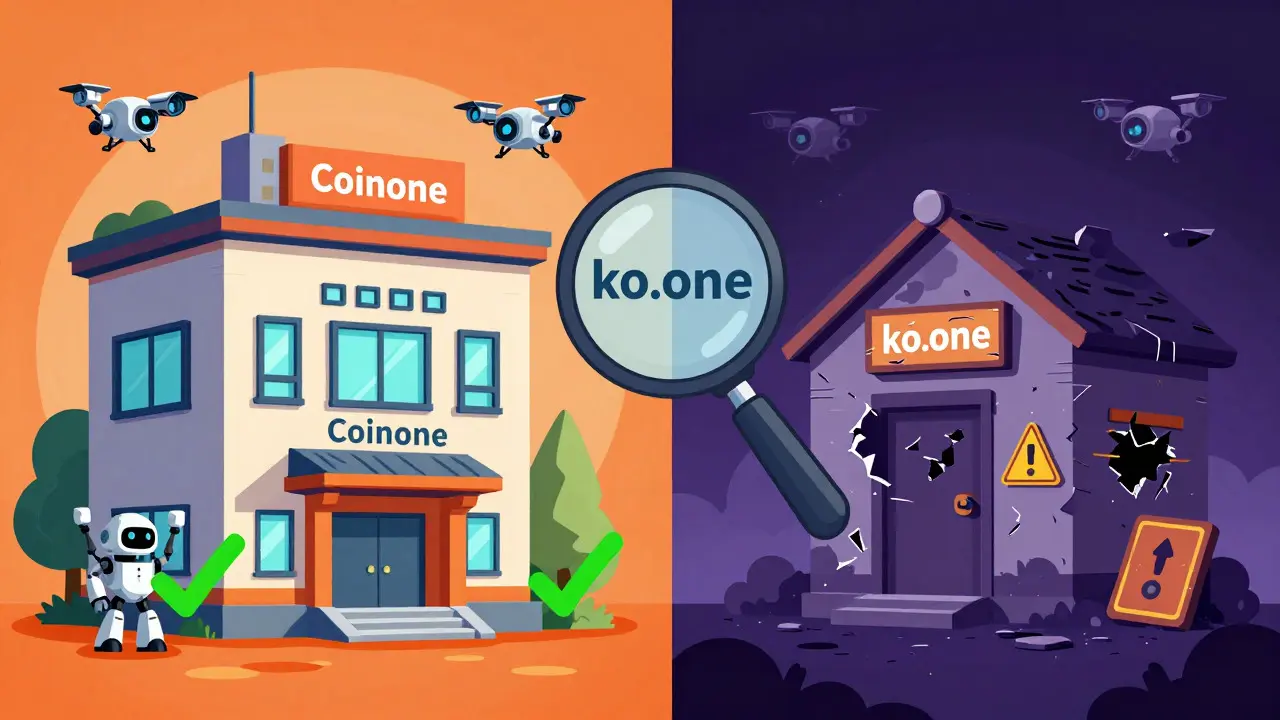
The most logical explanation for encountering "ko.one" is a simple mix-up with Coinone. Coinone is a legitimate, established cryptocurrency exchange based in Seoul, South Korea. It has been operating since 2014 and is currently ranked among the top three exchanges in the country by trading volume. If you were trying to access Coinone, typing "ko.one" might have been an autocorrect error or a misremembered URL.
Coinone is a serious player in the Asian market. It partners with security firms like CertiK and Xangle to ensure its code is secure and its projects are transparent. These partnerships are crucial because they provide independent verification that the exchange isn’t hiding vulnerabilities. Coinone also complies with strict regulations from the South Korean Financial Services Commission (FSC), which directly supervises exchanges to protect investors.
If you meant Coinone, you are dealing with a regulated entity that has faced scrutiny but remains operational and compliant. However, if you are specifically looking at a domain named "ko.one," proceed with extreme caution. Scammers often register domains that look similar to popular brands-like changing "Coinone" to "ko.one" or "coin-one.com"-to catch careless users. This tactic is known as typosquatting.
Why Lack of Information Is a Major Red Flag
In the crypto industry, transparency is currency. A legitimate exchange will have a clear presence on social media, detailed terms of service, and publicly available security audits. For "ko.one," none of this exists in authoritative sources. There are no user reviews on Trustpilot, no mentions in news outlets like Coindesk or Cointelegraph, and no listing on major tracking sites like CoinMarketCap or CoinGecko.
Consider the alternative: what happens when a platform disappears without a trace? We’ve seen it before. The collapse of Mt. Gox in 2014 resulted in the loss of 850,000 bitcoins worth hundreds of millions of dollars at the time. More recently, in 2024, the Japanese exchange DMM Bitcoin suffered a breach attributed to North Korean hackers, losing over $305 million in Bitcoin. While DMM was a legitimate company, it shut down operations by late 2024, transferring assets to SBI VC Trade. Even established players can fail due to poor security or external attacks.
Imagine if that happened to a platform with zero public oversight. If "ko.one" is a small, unregulated entity, who do you call when your funds vanish? Without a regulatory body like the FSC or the SEC overseeing them, you have no recourse. The lack of data suggests "ko.one" may be a shell site, a defunct project, or an outright scam.
Essential Security Features to Check
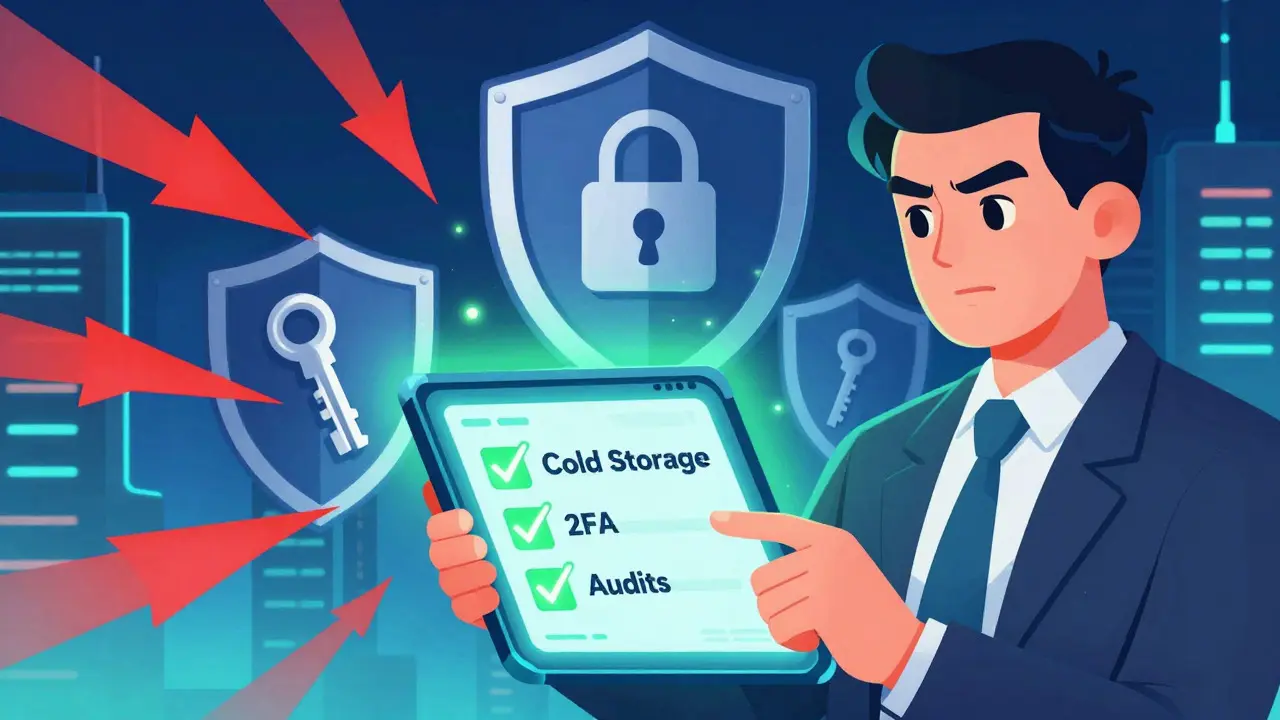
Whether you end up using Coinone or another verified exchange, knowing what to look for is vital. Here are the non-negotiable security features that any trustworthy platform must have:
- Cold Storage: The majority of user funds should be kept offline in cold wallets. This protects against online hacks. Only a small percentage should remain in hot wallets for immediate withdrawals.
- Two-Factor Authentication (2FA): Look for FIDO2-compliant 2FA, which is more secure than SMS codes. Apps like Google Authenticator or hardware keys like YubiKey are preferred.
- SSL Encryption: Ensure the website uses HTTPS with a valid SSL certificate. This encrypts data between your browser and the exchange’s servers.
- Withdrawal Whitelists: This feature allows you to pre-approve specific wallet addresses. Even if a hacker gets into your account, they can’t move funds to an address you haven’t authorized.
- Regular Audits: Reputable exchanges undergo third-party security audits by firms like CertiK or Trail of Bits. These reports should be public.
If "ko.one" cannot prove it has these measures, it is not ready to hold your money. Don’t trust vague claims like "bank-grade security." Ask for proof. Demand audit reports. Check for bug bounty programs on platforms like Immunefi, where white-hat hackers are paid to find vulnerabilities.
Regulatory Landscape in 2026
The regulatory environment for crypto has tightened significantly since 2023. In South Korea, the Virtual Asset User Protection Act requires exchanges to segregate customer funds and accept liability for theft. Globally, jurisdictions like the EU (with MiCA) and the US (through SEC enforcement) are demanding higher standards of disclosure.
An exchange operating under the radar in 2026 is suspicious. Why would a legitimate business avoid regulation? Usually, it’s because they have something to hide. Whether it’s commingling client funds with operational expenses or lacking proper insurance, unregulated platforms pose a high risk. Always check if the exchange is registered with local financial authorities. For example, in New Zealand, the Financial Markets Authority (FMA) maintains a register of licensed entities. If you’re trading from Wellington, ensure your exchange complies with local laws.
How to Verify an Exchange’s Legitimacy
Before signing up for any platform, follow this checklist:
- Check Domain Age: Use tools like WHOIS to see when the domain was registered. New domains (less than a year old) are higher risk.
- Search for News: Look for recent articles about the exchange. Are they featured in reputable tech or finance news? Or only in obscure blogs?
- Review Social Media: Check Twitter, Reddit, and Telegram. Are real users discussing their experiences? Beware of bots posting generic praise.
- Verify Licenses: Look for license numbers on the website and cross-reference them with official government registries.
- Test Customer Support: Send a query. Do they respond quickly and professionally? Poor support is a sign of a poorly run operation.
If "ko.one" fails any of these tests, walk away. There are thousands of verified exchanges. Why risk your capital on an unknown entity?
Better Alternatives for Safe Trading
If you are looking for a reliable place to trade cryptocurrencies, consider sticking with established platforms. Here is a comparison of some top-tier options:
| Exchange | Headquarters | Regulation | Security Highlights |
|---|---|---|---|
| Coinone | Seoul, South Korea | FSC Registered | CertiK Audits, Cold Storage |
| Binance | Global (Multi-jurisdiction) | Varies by Region | SAFU Fund, 2FA, IP Restrictions |
| Coinbase | San Francisco, USA | SEC Compliant | Publicly Traded, Insurance Coverage |
| Kraken | San Francisco, USA | Licensed in Multiple Countries | Proof of Reserves, Cold Storage |
These platforms have survived multiple market cycles, regulatory crackdowns, and security threats. They offer liquidity, stability, and accountability. While fees may vary, the cost of peace of mind is worth it.
Final Thoughts on ko.one
To summarize: unless you have insider information confirming that "ko.one" is a newly launched, fully audited, and regulated subsidiary of a major firm, treat it as a potential scam. The similarity to Coinone is too convenient to ignore. Scammers thrive on confusion. By taking five minutes to verify the legitimacy of an exchange, you can avoid losing your savings.
Stick to platforms with proven track records. Enable every security feature available. Keep your private keys private. And remember, if it sounds too good to be true-or too obscure to find-it probably is.
Is ko.one a legitimate crypto exchange?
There is no verifiable evidence that ko.one is a legitimate exchange. It lacks regulatory listings, security audits, and user reviews. It is likely a typo for Coinone or a phishing site.
What is the difference between ko.one and Coinone?
Coinone is a major, regulated South Korean exchange founded in 2014. ko.one appears to be an unrelated domain with no public history, possibly created to mimic Coinone’s name.
How can I tell if a crypto exchange is a scam?
Look for missing regulatory licenses, anonymous teams, lack of security audits, and poor online presence. If you can’t find independent reviews or news coverage, it’s risky.
Is Coinone safe to use in 2026?
Yes, Coinone is considered safe. It is regulated by the South Korean Financial Services Commission and partners with security firms like CertiK for regular audits.
What security features should a crypto exchange have?
Essential features include cold storage for funds, FIDO2-compliant 2FA, SSL encryption, withdrawal whitelists, and regular third-party security audits.