KYSwap Crypto Exchange Review: Is It Safe or a Scam in 2026?
 Jun, 26 2026
You’ve likely seen the ads. They pop up on social media, promising high returns, zero fees, and the allure of trading without any identity checks. The name KYSwap might sound familiar to those scrolling through these promotions. But here is the hard truth that most promotional content won’t tell you: there is virtually no credible, independent information about an established exchange operating under this specific name in the major financial databases or reputable review aggregators as of mid-2026.
If you are looking for a platform to park your savings or trade serious volume, this silence is not a feature; it is a massive red flag. In the world of cryptocurrency, visibility equals accountability. When a platform refuses to-or fails to-appear in standard industry coverage, you need to proceed with extreme caution. This review isn’t just about listing features; it’s about helping you avoid a potential trap by analyzing what KYSwap claims to be versus what the data actually shows.
The Mystery Behind KYSwap
Let’s get straight to the point. If you type "KYSwap" into Google, you won’t find a Wikipedia page, you won’t see analysis from CoinMarketCap or CoinGecko, and you certainly won’t find regulatory filings with bodies like the SEC or the FCA. Instead, you’ll find a maze of affiliate links and generic blog posts that look like they were generated by AI to rank for keywords.
This lack of digital footprint is critical. Established exchanges like Kraken, which has been operating since 2011, or Coinbase, have thousands of independent reviews, news articles detailing their security audits, and clear corporate structures. KYSwap lacks all of this. The absence of verifiable founders, a known headquarters, or a public whitepaper suggests that this may not be a legitimate financial institution but rather a facade designed to collect deposits.
It is also possible that KYSwap is a rebranded version of another defunct or obscure platform. We have seen this pattern before with scams like Bitconnect or OneCoin, where names change rapidly to evade blacklists. Without a transparent history, you cannot trust the present.
The Allure of No-KYC Trading
Why would anyone choose KYSwap? The primary selling point for platforms like this is usually anonymity. They market themselves as "No-KYC" (Know Your Customer) exchanges. For many users, especially those concerned with privacy, this sounds appealing. You can sign up, deposit crypto, and trade without uploading your passport or proof of address.
However, there is a dangerous misconception here. Legitimate privacy-focused platforms exist, such as Bisq, a decentralized exchange that allows peer-to-peer trading without a central authority holding your funds. Or TorrentSwap, which facilitates token swaps directly from your wallet without requiring an account. These platforms rely on open-source code and blockchain transparency.
KYSwap, however, appears to operate as a centralized entity. If it holds your funds in a central wallet while promising no verification, you are taking on immense risk. Centralized exchanges require KYC not just to annoy users, but to comply with anti-money laundering (AML) laws. If an exchange ignores these laws, it is often because it intends to ignore other regulations too, such as safeguarding user assets.
Red Flags That Signal Danger
When evaluating a crypto platform, you need to look beyond the shiny website. Here are the specific warning signs associated with entities like KYSwap:
- Affiliate Spam: If the only websites talking about KYSwap are paid affiliate blogs with poor grammar and generic stock photos, run away. Legitimate exchanges earn organic traffic from news sites and community discussions.
- Unrealistic Promises: Does the site promise guaranteed daily profits or zero fees forever? Sustainable business models require revenue. Zero fees usually mean they are stealing from your spread or planning an exit scam.
- No Social Proof: Check Reddit, Twitter (X), and Telegram. Are real people discussing trades, bugs, or customer service experiences? Or is the social media presence filled with bots posting emojis and fake testimonials?
- Pressure to Deposit Fiat: Be extremely wary if they encourage you to send bank transfers or credit card payments directly to them. Once fiat money leaves your bank, it is nearly impossible to recover if the exchange disappears.
Comparing KYSwap to Legitimate Alternatives
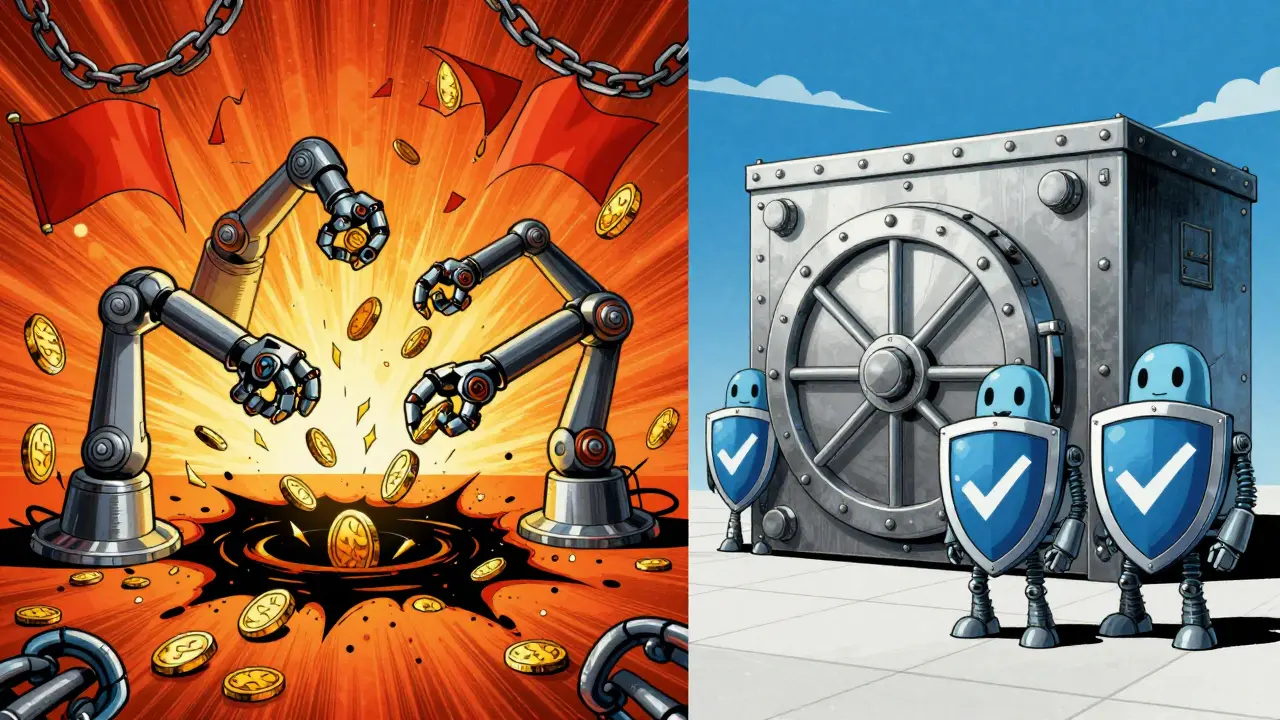
To understand why KYSwap is risky, compare it to exchanges that offer similar benefits but with actual security. Many users seek out unregulated platforms because they want low fees or ease of use. You can get these features safely elsewhere.
| Feature | Suspicious Platforms (e.g., KYSwap) | Legitimate CEX (e.g., Kraken, Coinbase) | Decentralized/Privacy (e.g., Bisq) |
|---|---|---|---|
| Regulation | None / Unknown | Licensed in multiple jurisdictions | Code-based governance |
| KYC Requirement | Often claimed "None" but enforced later | Mandatory for fiat, optional for small crypto amounts | Not required |
| Fund Custody | Centralized (High Risk) | Centralized (Insured/Cold Storage) | User-controlled (Non-custodial) |
| Transparency | Opaque ownership | Public audits and financial reports | Open-source code |
| Recovery Options | None | Customer support and chargebacks (sometimes) | Self-recovery via seed phrase |
Notice the difference in custody. With a platform like Crypto.com, you know exactly who holds your assets and how they are insured. With KYSwap, if the server goes down, your money is gone. There is no insurance fund, no regulatory body to complain to, and no legal recourse.
How to Verify Any Exchange Before Depositing
You don’t have to take my word for it. You can perform due diligence on any platform using these steps. This process will instantly reveal if KYSwap (or any other new exchange) is safe.
- Check Domain Age: Use a WHOIS lookup tool. If the domain was registered less than six months ago, it is too new to be trusted with significant capital. Legitimate exchanges have years of history.
- Search for Complaints: Go to Trustpilot, SiteJabber, and Reddit. Search for "[Exchange Name] scam" or "[Exchange Name] withdrawal issues." If you find nothing, that is suspicious. If you find stories of frozen accounts, it is a confirmation.
- Verify Regulatory Status: Visit the websites of financial regulators in your country (e.g., FinCEN in the US, FCA in the UK). Search their register. If the exchange is not listed, do not use it for fiat transactions.
- Test Small Withdrawals: Never deposit large sums initially. Deposit a small amount, try to withdraw it immediately. Many scam platforms allow deposits but block withdrawals once the amount exceeds a certain threshold.
The Risks of Anonymous Trading in 2026
In 2026, the regulatory landscape for cryptocurrency has tightened significantly globally. Governments are cracking down on unregistered exchanges that facilitate money laundering or tax evasion. Platforms that refuse to implement basic KYC measures are increasingly being shut down or blocked by payment processors.
If you use a platform like KYSwap, you risk more than just losing your investment. You could inadvertently be involved in illegal activities if the platform is used by bad actors. Furthermore, if the platform is seized by authorities, your funds could be frozen indefinitely. Legitimate exchanges navigate these regulations to protect their users; shady platforms cut corners until they collapse.
There is also the technical risk. Unverified exchanges often have poor security infrastructure. They may not use cold storage for the majority of funds, leaving everything vulnerable to hackers. We have seen countless cases where small, unknown exchanges were drained of millions in Bitcoin and Ethereum within hours of launch. Without insurance, the users bear the entire loss.
Better Alternatives for Privacy and Low Fees
If your goal is to trade with lower fees or maintain some level of privacy, you have safer options. You do not need to gamble on unknown entities.
For low fees, consider using decentralized exchanges (DEXs) like Uniswap or PancakeSwap. These platforms operate on blockchain networks, meaning you trade directly from your wallet. There is no central company to steal from you, and fees are determined by network congestion, not arbitrary corporate policies.
For privacy, look into non-custodial wallets combined with DEXs. You retain control of your private keys. If you need to convert fiat to crypto anonymously, peer-to-peer (P2P) platforms like Hodl Hodl allow you to trade directly with other users using escrow smart contracts, without revealing your identity to a central exchange.
If you prefer the convenience of a centralized exchange but want safety, stick to the giants. Binance, despite its regulatory hurdles, has proven resilience and deep liquidity. Kraken is renowned for its security record and customer service. These platforms may require ID verification, but that verification protects you from fraudsters trying to use stolen identities to access your account.
Conclusion: Proceed with Extreme Caution
After reviewing the available data, the verdict on KYSwap is clear: it lacks the transparency, regulatory compliance, and community trust required to be considered a safe venue for trading. The combination of no independent reviews, aggressive affiliate marketing, and unclear ownership structure points strongly toward a high-risk operation, potentially a scam.
In the crypto world, your capital is only as safe as the platform holding it. Do not let the promise of anonymity or easy gains blind you to the fundamental risks. Stick to verified, regulated, or open-source platforms. If a platform seems too good to be true, or too hidden to be found, it probably is.
Is KYSwap a legitimate crypto exchange?
There is no credible evidence to suggest KYSwap is a legitimate, regulated financial institution. It lacks independent reviews, regulatory licenses, and transparent ownership details, which are hallmarks of safe exchanges. Most indicators point to it being a high-risk or fraudulent platform.
Can I trade on KYSwap without KYC?
While KYSwap may claim to offer no-KYC trading, this is a common tactic used by scam platforms to attract users. Even if they allow initial deposits without verification, they often block withdrawals or demand unexpected fees later. Legitimate privacy should come from non-custodial solutions, not unverified centralized exchanges.
What are the safest alternatives to KYSwap?
For safety, use regulated centralized exchanges like Kraken or Coinbase. For privacy and lower fees, consider decentralized exchanges (DEXs) like Uniswap or peer-to-peer platforms like Hodl Hodl. These options provide transparency and security without the risks associated with unknown entities.
How do I know if a crypto exchange is a scam?
Look for red flags such as: no independent reviews, new domain registration, promises of guaranteed high returns, pressure to deposit large sums, and lack of regulatory licensing. Always check complaint forums like Trustpilot and Reddit before depositing funds.
Why is KYC important for crypto exchanges?
KYC (Know Your Customer) helps prevent money laundering, fraud, and terrorist financing. It also protects users by ensuring that accounts are not compromised by stolen identities. While it reduces anonymity, it adds a layer of legal protection and security that unregulated platforms cannot offer.