OneDex Crypto Exchange Review: Is It Safe in 2026?
 Jul, 14 2026
Have you ever clicked on a new crypto exchange because the fees looked low, only to realize later that no one actually talks about it? That is the exact position OneDex finds itself in as of mid-2026. Launched in 2023 and built on the MultiversX blockchain, OneDex promises a permissionless, peer-to-peer trading experience. But when you dig past the marketing, the picture gets complicated. We are looking at an exchange with massive volume concentration in a single pair, zero regulatory licenses, and mixed signals from security auditors. If you are thinking about moving your funds here, you need to understand what you are really signing up for.
The Core Concept: What Exactly Is OneDex?
To get this right, we first need to define what kind of beast we are dealing with. OneDex is a decentralized cryptocurrency exchange (DEX). Unlike centralized exchanges like Binance or Coinbase, where a company holds your money and matches orders on their internal servers, OneDex operates directly on the blockchain. You connect your wallet, and smart contracts handle the trade. This means you keep control of your assets until the moment of execution. There is no customer service team to call if you make a mistake, but there is also no central authority that can freeze your account.
The platform was incorporated in Romania but has listed its registered location as the United Kingdom in some directories. It runs entirely on the MultiversX network. This is crucial context. MultiversX is known for high speed and low energy consumption compared to Ethereum. However, it is also a smaller ecosystem. By building exclusively on MultiversX, OneDex limits its users to tokens within that specific chain. You won't find Bitcoin or standard Ethereum ERC-20 tokens here unless they are bridged variants. This creates a walled garden effect that appeals to niche traders but excludes the broader market.
Trading Reality: Volume, Pairs, and Fees
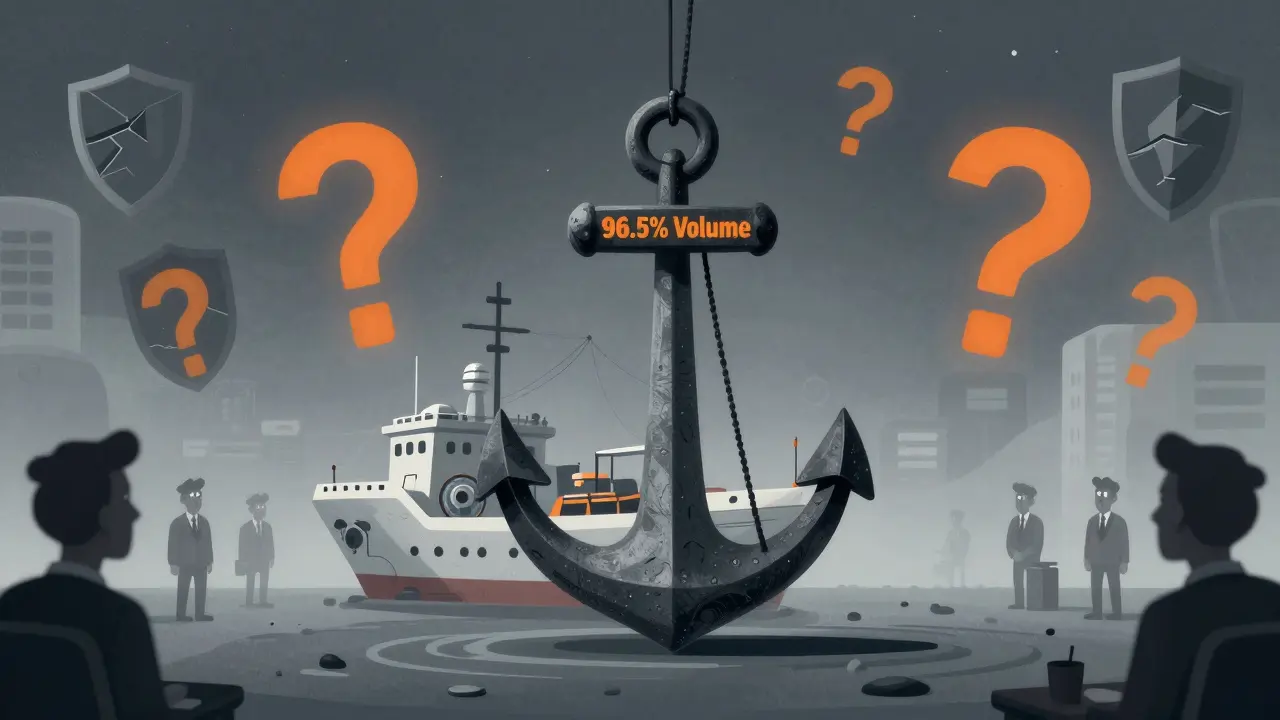
Let’s look at the hard numbers, because they tell a story that the homepage doesn’t. As of July 2026, OneDex lists 25 cryptocurrencies and 54 active trading pairs. On paper, that sounds decent. But look closer at the volume distribution. The total 24-hour trading volume sits around $10.8 million. Sounds healthy? Not quite. Approximately 96.5% of that entire volume comes from a single pair: WEGLD/USDC.
| Metric | Value | Context/Risk |
|---|---|---|
| Total Daily Volume | $10.87 Million | Moderate, but heavily concentrated |
| Top Pair Dominance | WEGLD/USDC (96.5%) | High risk: Lack of liquidity diversity |
| Trading Fee | 0.3% | Standard for DEXs, flat rate |
| Fiat Support | None (Stablecoins only) | Must bridge USDC/USDT externally |
This concentration is a red flag for serious traders. If you want to trade obscure altcoins on MultiversX, you might face wide slippage because there simply isn't enough depth in those pools. The fee structure is straightforward: a flat 0.3% per trade. There are no hidden maker/taker tiers. For spot trading, this is competitive. However, OneDex does not offer margin trading or leverage. If you are looking to bet big with borrowed funds, this platform will disappoint you. It positions itself strictly as a conservative spot-trading venue.
The Regulatory Gray Zone
Here is where things get tricky. In 2026, the crypto regulatory landscape has tightened significantly across Europe and North America. OneDex operates in a gray area. According to assessments by WikiBit, the exchange currently holds no valid regulatory license. Despite being active for several years, it carries a "Suspicious Regulatory License" status with a medium potential risk rating. The warning is explicit: users should be aware that there is no verified regulation backing this entity.
Why does this matter to you? Because decentralization cuts both ways. Yes, you have privacy. But you also have zero recourse. If a smart contract bug drains your funds, or if the development team abandons the project, there is no insurance fund, no regulatory body to file a complaint with, and no legal framework forcing restitution. Being incorporated in Romania while listing UK registration details adds another layer of confusion regarding jurisdiction. If something goes wrong, who do you sue? Where do you go? These are questions you cannot afford to ask after the fact.
Safety Signals: ScamAdviser and Trust Scores
We checked independent trust indicators to see how third-party algorithms view the platform. ScamAdviser analyzed the domain onedex.org and provided a mixed verdict. On one hand, the domain has been registered for several years, which usually suggests legitimacy over fly-by-night scams. On the other hand, the site received a low Tranco ranking, meaning it doesn't attract massive global traffic compared to major financial sites. More concerning were the social media references, which ScamAdviser flagged as "negative."
The final summary from ScamAdviser stated the site is "legit and safe for consumers to access," yet simultaneously warned that the trust score is "rather low" and that it "may be a scam." This contradiction is typical for niche DEXs. They aren't necessarily fraudulent in the traditional sense (stealing deposits immediately), but they lack the robust security infrastructure and community vetting of established platforms. CoinMarketCap lists OneDex as an "Untracked Listing." This means their volume data isn't independently verified. When a major aggregator won't track your stats, it often indicates that the data reliability is questionable or the volume is too thin to meet reporting standards.
How OneDex Compares to Alternatives
You don't have to use OneDex. The decentralized exchange space is crowded. Let's compare it to a modern alternative like Avantis, which operates on the Base blockchain. Avantis offers forex and commodities with leverage, backed by heavy-hitter investors like Pantera Capital. It provides loss rebates and deep liquidity.
In contrast, OneDex is minimalist. It offers spot trading only, no leverage, and limited asset classes. If your goal is simple, private swaps of MultiversX native tokens, OneDex works. If you want breadth, leverage, or institutional-grade security assurances, OneDex falls short. Another comparison point is user support. OneDex relies primarily on email ([email protected]). There are no live chat agents, no comprehensive knowledge base, and zero user ratings on major review boards. Compare this to Uniswap or PancakeSwap, which have massive developer communities and extensive documentation. OneDex feels isolated.
Who Should Use OneDex? (And Who Should Avoid It)
Based on the data, we can map out specific user profiles. This isn't for everyone.
- Use OneDex if: You are already deeply invested in the MultiversX ecosystem. You hold WEGLD and want to swap it for USDC quickly without leaving the chain. You value absolute privacy and self-custody over convenience. You understand smart contract risks and never deposit more than you can afford to lose.
- Avoid OneDex if: You are a beginner who needs customer support. You want to trade Bitcoin, Ethereum, or Solana natively. You require regulatory protection or insured funds. You are looking for high-leverage trading opportunities. You rely on verified volume data for algorithmic trading strategies.
Practical Steps for Risk Mitigation
If you decide to proceed with OneDex despite the warnings, follow these steps to protect yourself:
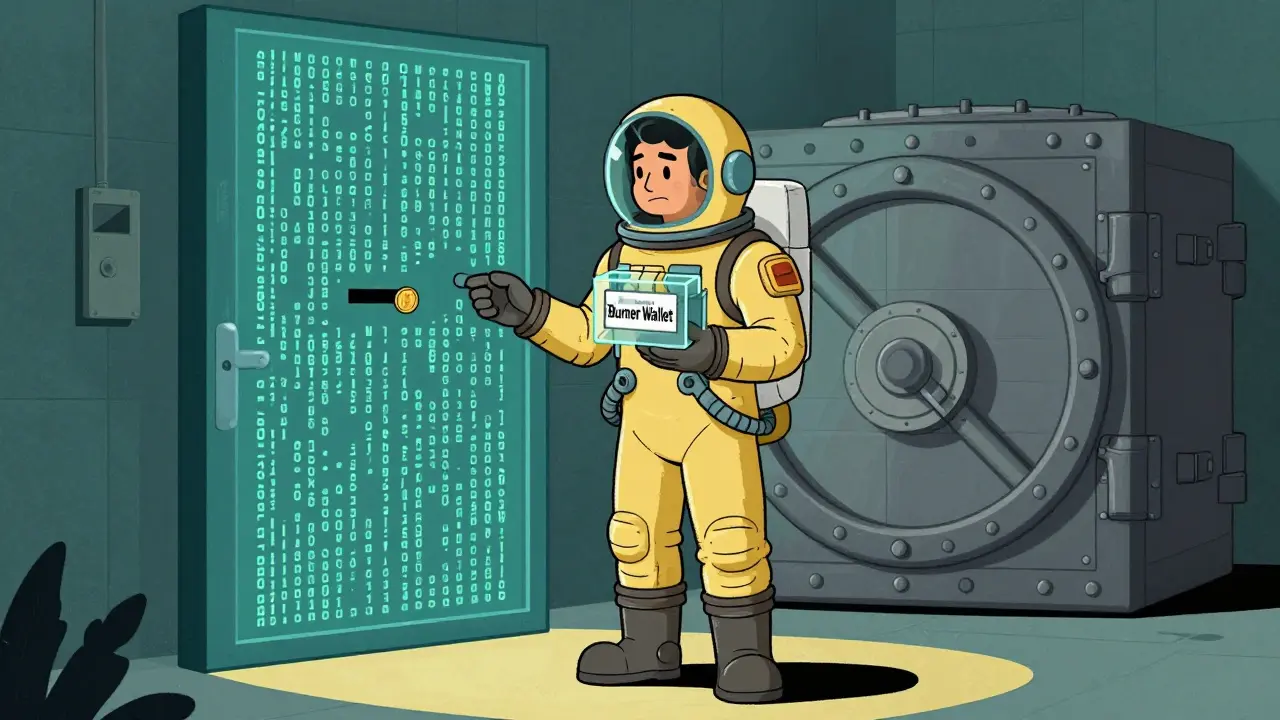
- Use a Burner Wallet: Never connect your main hardware wallet holding your life savings. Create a separate software wallet with minimal funds dedicated solely to this interaction.
- Verify Contract Addresses: Always double-check the smart contract addresses for tokens before swapping. Phishing attacks on DEX interfaces are common.
- Start Small: Execute a small test transaction (e.g., $10) to verify the flow and slippage before committing larger amounts.
- Monitor Gas Fees: Since OneDex runs on MultiversX, ensure you have enough EGLD (or WEGLD) for gas fees. Network congestion can sometimes spike costs unexpectedly.
Final Verdict
OneDex is a functional tool for a very specific niche: MultiversX natives wanting quick, private spot trades. It is not a general-purpose crypto exchange. The lack of regulatory oversight, the extreme concentration of volume in one pair, and the unverified status on major tracking platforms mean it carries higher-than-average risk. In 2026, with so many regulated and secure alternatives available, using OneDex requires a deliberate choice to prioritize decentralization over safety nets. Proceed with caution, keep your exposure low, and never assume your funds are safe just because they are on a blockchain.
Is OneDex a scam?
There is no definitive proof that OneDex is a malicious scam designed to steal funds outright. However, it lacks regulatory licenses, has negative social sentiment flags, and is listed as "untracked" by CoinMarketCap. These are significant risk factors. While it may operate legitimately, the absence of consumer protections makes it risky compared to established exchanges.
What cryptocurrencies can I trade on OneDex?
OneDex supports 25 cryptocurrencies, primarily within the MultiversX ecosystem. The most traded pair is WEGLD/USDC. You cannot trade Bitcoin or Ethereum directly unless they are wrapped versions compatible with the MultiversX chain. The selection is narrow compared to centralized exchanges.
Does OneDex require KYC (Know Your Customer)?
As a decentralized exchange (DEX), OneDex typically does not require traditional KYC verification. You connect your wallet address to trade. This preserves anonymity but also means you have no identity-based recourse if issues arise with your account or transactions.
How much does it cost to trade on OneDex?
OneDex charges a flat trading fee of 0.3% per transaction. Additionally, you must pay network gas fees on the MultiversX blockchain to execute the smart contract interactions. These gas fees are generally low but vary based on network congestion.
Is my money safe on OneDex?
Your funds remain in your personal wallet until you execute a trade, which reduces custodial risk. However, smart contracts can contain bugs, and the platform lacks regulatory insurance. If a vulnerability is exploited, there is no guarantee of reimbursement. Only trade with funds you can afford to lose.