OneDex Crypto Exchange Review: Is It Worth Using in 2026?
 Aug, 1 2026
Most people looking for a place to trade crypto want two things: low fees and access to popular coins like Bitcoin or Ethereum. If you are looking for that on OneDex, you might be disappointed. But if you are deep into the MultiversX blockchain ecosystem (formerly known as Elrond), OneDex is actually one of the best tools available to you.
This isn't a general-purpose exchange. It’s a niche player built specifically for traders who hold assets on the MultiversX network. Launched in 2023 and headquartered in Romania, OneDex operates as a decentralized exchange (DEX). This means no company holds your money. You connect your wallet, swap tokens, and keep control of your funds at all times. The platform’s tagline says it all: "Decentralized Exchange Made for Everybody Owned By No One, Owned By Everyone."
So, is it safe? Is it fast? And should you use it today? Let’s break down exactly how OneDex works, what it costs, and whether it fits your trading style.
What Exactly Is OneDex?
OneDex is an automated market maker (AMM) decentralized exchange built exclusively on the MultiversX blockchain. Unlike centralized exchanges like Coinbase or Binance, where you deposit funds into an account controlled by the company, OneDex uses smart contracts to facilitate trades directly between users.
Here is the key thing to understand: OneDex does not support Bitcoin, Ethereum, or Solana directly. It supports tokens that live on the MultiversX network. As of late 2023 data which sets the baseline for its current structure, it listed around 25 cryptocurrencies. The vast majority of trading volume-over 96%-comes from a single pair: WEGLD (Wrapped eGold) paired with USDC.
If you are holding USDT or USDC and want to buy WEGLD, or vice versa, this is your home base. If you are trying to trade Dogecoin or Cardano, you will need to bridge those assets to MultiversX first, which adds complexity and cost.
Fees and Trading Costs
Cost is usually the biggest factor when choosing a DEX. OneDex keeps it simple with a flat fee structure.
- Trading Fee: 0.3% per swap. This is standard for many AMMs but higher than some concentrated liquidity pools on other platforms.
- Gas Fees: Extremely low. Because MultiversX uses a sharded architecture, transaction fees often drop below $0.001. Compare this to Ethereum, where gas fees can spike to $5-$20 during busy periods.
- Withdrawal Fees: Minimal, depending on network congestion, but generally negligible compared to traditional bank transfers or high-gas chains.
The 0.3% fee goes toward incentivizing liquidity providers. In theory, 100% of these fees fund ecosystem growth, though specific governance details on how those funds are distributed remain somewhat opaque due to the platform's anonymous team structure.
Pros and Cons: The Real Picture
To help you decide if OneDex is right for you, let’s look at the strengths and weaknesses based on actual user experiences and technical performance.
| Pros | Cons |
|---|---|
| Blazing Fast Speeds: Transactions finalize in under 1 second on MultiversX. | Limited Asset Selection: Only ~25 tokens available, mostly MultiversX-native. |
| No KYC Required: Connect your wallet and trade immediately. No ID uploads. | No Fiat On-Ramp: You cannot buy crypto with USD or EUR directly. You must deposit USDC/USDT. |
| Low Gas Fees: Sub-cent transaction costs make small trades viable. | Poor Customer Support: No live chat or email. Reliance on Telegram with slow response times. |
| Non-Custodial Security: Your keys, your crypto. Less risk of exchange hacks stealing user funds. | High Volume Concentration Risk: Over 95% of volume is in one pair (WEGLD/USDC). |
| Simple Interface: Easy to use for basic swaps without complex charting tools. | Anonymous Team: Lack of public founders may raise trust concerns for some investors. |
How to Use OneDex: A Step-by-Step Guide
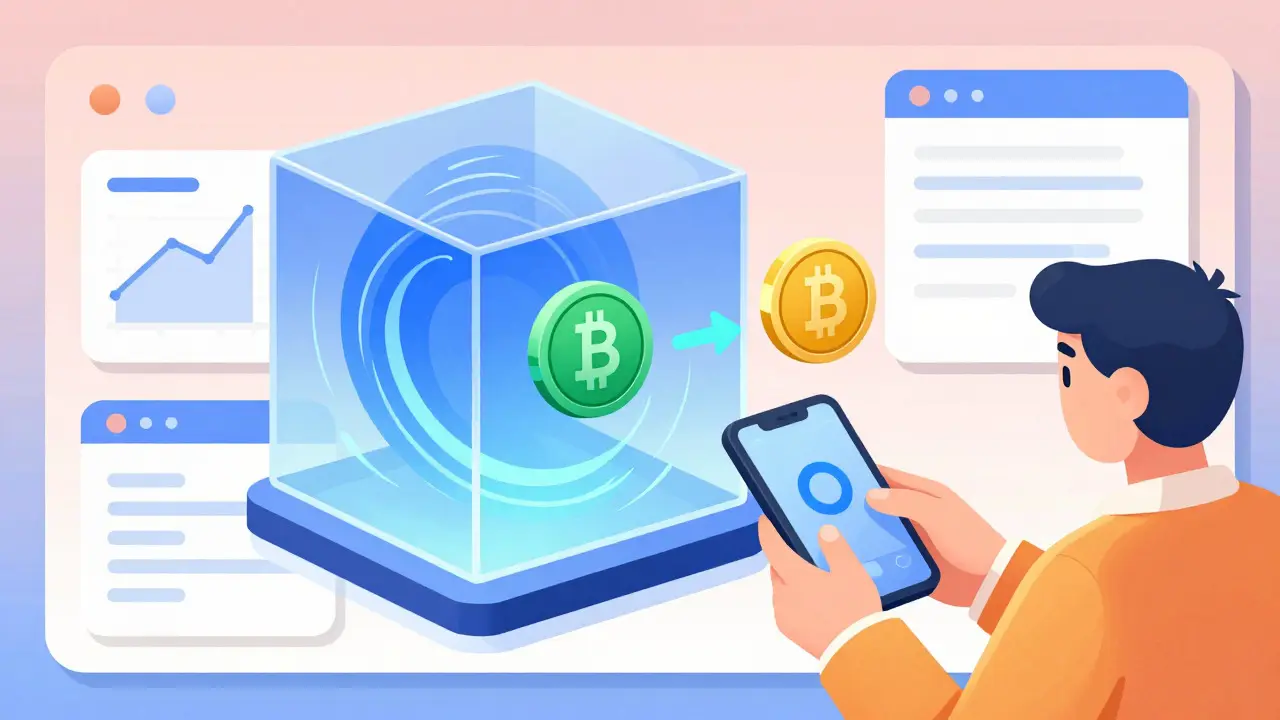
Getting started is straightforward if you already have a MultiversX-compatible wallet. Here is how the process works:
- Set Up a Wallet: Download a compatible wallet like Maiar or XPortal. These are the standard wallets for the MultiversX ecosystem. Ensure you have backed up your seed phrase securely.
- Fund Your Wallet: Since OneDex doesn’t accept fiat currency, you need to acquire USDC or USDT on another exchange (like Binance or Coinbase) and transfer them to your Maiar/XPortal wallet address. Alternatively, use a bridge service to move stablecoins from Ethereum or BNB Chain to MultiversX.
- Connect to OneDex: Visit the OneDex website and click "Connect Wallet." Select your wallet provider and approve the connection in the app.
- Select Your Pair: Choose the token you want to sell (e.g., USDC) and the token you want to buy (e.g., WEGLD).
- Adjust Slippage (If Needed): For volatile tokens, you may need to increase slippage tolerance. However, note that OneDex lacks advanced customization options found on Uniswap v3.
- Execute the Swap: Click swap, confirm the transaction in your wallet, and wait less than a second for completion.
Security and Trust: Should You Worry?
Security in DeFi is different from centralized exchanges. With OneDex, you are trusting the code, not a company. The good news is that because it is non-custodial, there is no central vault for hackers to drain. Your funds stay in your wallet until you initiate a swap.
However, there are risks. First, the team behind OneDex is anonymous. While common in DeFi, it means there is no public face to hold accountable if something goes wrong. Second, while MultiversX itself has a strong security record, OneDex has not published third-party audit reports from firms like CertiK or Trail of Bits in widely accessible sources. Always verify contract addresses before interacting.
Regulatory status is also a gray area. Based in Romania, OneDex falls under EU MiCA regulations coming into full effect in 2024-2025. Anonymous entities face scrutiny here, so keep an eye on compliance updates.
OneDex vs. Competitors
How does OneDex stack up against other options?
- vs. Uniswap: Uniswap supports hundreds of chains and thousands of tokens. OneDex only supports MultiversX. If you want variety, choose Uniswap. If you want speed and low fees on MultiversX, choose OneDex.
- vs. PancakeSwap: Both charge 0.3% fees. PancakeSwap offers yield farming and more features. OneDex is simpler but lacks advanced tools.
- vs. Maiar Exchange: Maiar Exchange is the largest DEX on MultiversX. OneDex ranks second in volume. Some traders prefer OneDex for slightly better liquidity on specific pairs or UI preferences, but Maiar dominates market share.
Final Verdict: Who Is OneDex For?
OneDex is not for everyone. If you are a beginner looking to buy Bitcoin with a credit card, skip it. If you are a trader active in the MultiversX ecosystem, especially dealing with WEGLD, USDC, or niche tokens like MEX and XHUNT, OneDex is a solid, efficient choice.
Its strength lies in simplicity, speed, and low costs within its specific niche. Its weakness is limited scope. Use it as part of your broader DeFi toolkit, but don’t expect it to replace a major centralized exchange for broad asset coverage.
Is OneDex safe to use?
OneDex is non-custodial, meaning you retain control of your private keys, which reduces the risk of exchange hacks. However, it relies on smart contracts that have not been publicly audited by major firms. Always double-check URLs and start with small amounts to test the interface.
Does OneDex require KYC verification?
No. OneDex is a decentralized exchange and does not require Know Your Customer (KYC) checks. You simply connect a compatible wallet like Maiar or XPortal to start trading.
What is the minimum amount to trade on OneDex?
There is no strict minimum set by the platform, but practical limits apply. Due to the 0.3% fee and potential slippage, trading very small amounts (under $10) may result in poor value. Most users trade larger sums to minimize relative costs.
Can I trade Bitcoin or Ethereum on OneDex?
Not directly. OneDex only supports tokens native to the MultiversX blockchain. To trade BTC or ETH equivalents, you would need to bridge wrapped versions of these assets to MultiversX first, which involves additional steps and risks.
Why is OneDex’s volume so concentrated in WEGLD/USDC?
WEGLD is the native staking token of MultiversX, making it the most traded asset on the chain. As a niche DEX focused solely on this ecosystem, most liquidity naturally flows into the primary trading pair involving the native token and a major stablecoin like USDC.