OnTrade Crypto Exchange Review 2026: Is It Safe or a Scam?
 Jul, 3 2026
You’ve heard of OnTrade, maybe saw an ad promising high returns, or perhaps you’re just trying to figure out if it’s a legit place to park your Bitcoin. But here’s the hard truth: finding concrete, reliable information about OnTrade in 2026 is surprisingly difficult. Unlike major players like Binance or Coinbase, OnTrade doesn’t have a massive footprint in public reviews, regulatory filings, or industry news.
If you are looking for a straightforward answer, here it is: **proceed with extreme caution**. The lack of transparent data regarding fees, security audits, and user support is a major red flag in the crypto world. This review breaks down what we know, what we don’t, and why you might want to look elsewhere for your trading needs.
The Mystery Behind OnTrade
According to basic corporate records, OnTrade was established in 2009 in Coral Gables, Florida. That’s over a decade ago, which should theoretically make it one of the older players in the game. However, age alone doesn’t guarantee safety. In fact, many early crypto projects have faded into obscurity or operated as shell entities without active development.
When you search for "OnTrade crypto exchange," you hit a wall. There are no significant discussions on Reddit, no detailed expert analyses from reputable tech publications, and no clear listing on major trust-score websites like Trustpilot with recent, verified reviews. For a platform claiming to offer spot and contract trading, this silence is deafening.
In the crypto space, visibility equals accountability. If a company isn’t talking about its features, fees, or security updates, ask yourself: who are they hiding from? Or worse, do they even have anything to show?
What Does OnTrade Actually Offer?
From the limited data available, OnTrade claims to provide two main services:
- Spot Trading: Buying and selling cryptocurrencies at current market prices. You own the assets.
- Contract Trading: Derivatives trading, including futures and perpetual contracts. This allows for leverage but comes with higher risk.
That’s it. No mention of staking rewards, no NFT marketplace, no decentralized finance (DeFi) integrations, and no clear roadmap for future developments. Compare this to giants like Crypto.com, which offers complex feature sets including spot markets, derivatives, margin trading up to 10x, and TWAP order options. OnTrade feels static, almost frozen in time since its inception.
Without knowing their fee structure-maker/taker fees, withdrawal limits, or hidden spreads-it is impossible to calculate if trading there is cost-effective. Many shady platforms lure users with low advertised fees only to charge exorbitant withdrawal costs or widen the spread so much that you lose money instantly.
Red Flags You Can’t Ignore
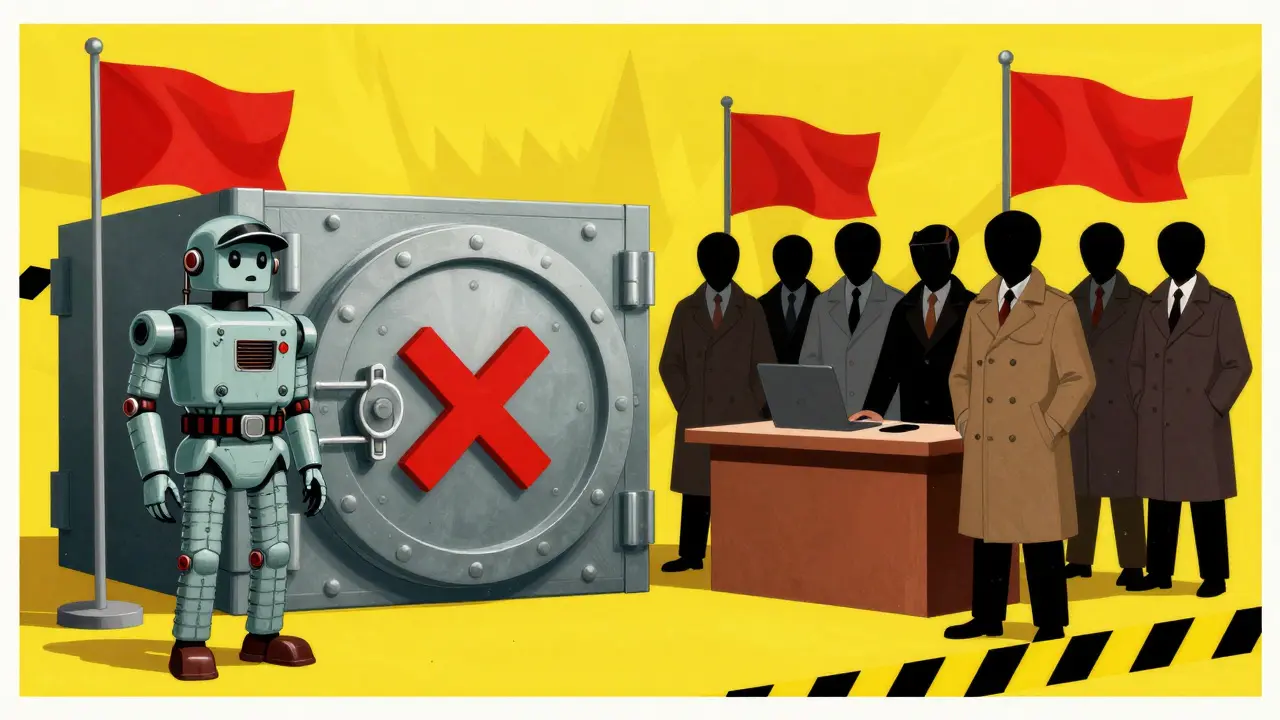
Let’s talk about the elephant in the room. Why is there so little information? Here are the critical warning signs that suggest OnTrade may not be a safe choice for your funds:
- Lack of Regulatory Compliance: Legitimate exchanges in 2026 operate under strict regulations. They hold licenses in jurisdictions like the US (FinCEN), EU (MiCA compliance), or Singapore (MAS). OnTrade has no publicly visible regulatory status. Operating unregulated means if they steal your money or go bankrupt, you have zero legal recourse.
- No Security Audits: Where are the proof-of-reserves reports? Do they use cold storage for 95%+ of user funds? Are they audited by firms like CertiK or Hacken? Silence on security is often code for "we haven’t been tested" or "we failed the test."
- Anonymous Team: Who runs OnTrade? A trustworthy exchange publishes bios of its founders and leadership team. If you can’t find faces behind the brand, how can you trust them with your life savings?
- Outdated Technology: Launched in 2009, yet there’s no evidence of modern API integrations, mobile app updates, or compatibility with hardware wallets like Ledger or Trezor.
Better Alternatives for Spot and Contract Trading
If you need a platform for spot or derivative trading, don’t gamble with an obscure entity like OnTrade. Stick to exchanges with proven track records, millions of users, and transparent operations. Here is how OnTrade stacks up against industry leaders:
| Feature | OnTrade | Binance | Kraken |
|---|---|---|---|
| Regulatory Status | Unknown/Unverified | Licensed in multiple regions | Strictly regulated (US/EU) |
| Security Transparency | No public audits | SAFU Fund, regular audits | Proof of Reserves, cold storage |
| Trading Pairs | Limited/Unclear | 350+ coins | 200+ coins |
| User Reviews | Minimal/Negative | Mixed but high volume | Highly trusted by pros |
| Fees | Hidden/Unknown | Competitive (0.1% base) | Transparent tiered structure |
Binance remains the global leader in volume and liquidity. If you want deep markets and low slippage, it’s the default choice. Kraken is ideal for users prioritizing security and regulatory compliance, especially in North America and Europe. Both offer robust spot and futures trading without the mystery surrounding OnTrade.
Understanding OTC and White-Label Solutions
You might wonder if OnTrade operates as an Over-The-Counter (OTC) desk or uses a white-label solution. OTC trading involves direct transactions between parties, bypassing public order books. It’s great for institutional investors moving millions because it minimizes market impact. However, OTC desks require high levels of trust and verification. OnTrade does not appear to be a recognized OTC provider for institutions.
Alternatively, some small exchanges use white-label software like DXtrade Crypto. These platforms allow brokers to launch a branded exchange quickly using pre-built technology. While not inherently bad, many scams use white-label solutions to look professional while lacking real liquidity or backend security. If OnTrade is running on generic white-label tech without customization or independent liquidity pools, your trades might just be matched internally by the house-a classic pump-and-dump setup.

How to Verify Any Crypto Exchange Yourself
Don’t take my word for it. Before depositing a single cent into any platform, run this checklist:
- Check Regulatory Licenses: Visit the official regulator’s website (e.g., FinCEN, FCA, MAS) and search for the company name. If they aren’t listed, stay away.
- Search for Recent News: Use Google News with filters for the last 6 months. If nothing comes up, the project is likely inactive or irrelevant.
- Read Independent Reviews: Look beyond the exchange’s own testimonials. Check Reddit, Twitter/X, and specialized forums like Bitcointalk. Search for keywords like "withdrawal issues" or "scam" alongside the exchange name.
- Test Customer Support: Send them a question before signing up. If they don’t reply within 24 hours, or give vague answers, imagine how they’ll handle a crisis when you’re trying to withdraw funds.
- Start Small: If you still decide to try it, deposit the minimum amount. Try to withdraw it immediately. If the withdrawal is delayed, denied, or charged excessive fees, close the account and never return.
Final Verdict: Skip OnTrade
In 2026, the crypto market is mature enough that you shouldn’t have to guess whether an exchange is safe. OnTrade fails the basic tests of transparency, regulation, and community trust. With better, safer, and more feature-rich alternatives available, there is simply no reason to risk your capital on an obscure platform with a mysterious past.
Your money deserves a home where it’s protected by law, secured by top-tier encryption, and supported by a responsive team. OnTrade doesn’t offer that. Save yourself the headache and choose a verified exchange.
Is OnTrade a scam?
While there is no definitive court ruling labeling OnTrade a scam, the lack of regulatory compliance, transparent security audits, and user reviews makes it highly risky. Many characteristics associated with fraudulent platforms are present, such as anonymity and operational silence. It is safest to assume it is unsafe until proven otherwise.
Where is OnTrade based?
Corporate records indicate OnTrade was established in Coral Gables, Florida, USA in 2009. However, its current operational headquarters and legal jurisdiction remain unclear due to a lack of updated public information.
Does OnTrade support fiat deposits?
There is no confirmed information about OnTrade supporting traditional fiat currency deposits (like USD or EUR). Most legitimate exchanges clearly advertise bank transfer, credit card, or PayPal options. The absence of this detail suggests limited functionality.
What are the best alternatives to OnTrade?
For spot and contract trading, consider Binance, Kraken, or Bybit. These platforms offer high liquidity, regulatory compliance in major jurisdictions, transparent fee structures, and strong security measures including cold storage and proof-of-reserves.
Can I trust crypto exchanges founded before 2015?
Age alone does not guarantee safety. While older exchanges like Kraken (founded 2011) are reputable, many early projects have become obsolete or insecure. Always verify current security practices, regulatory status, and recent activity regardless of founding date.