Operation Final Exchange: How Germany’s BKA Crushed Russian No-KYC Crypto Exchanges
 Sep, 4 2026
Imagine waking up to find your anonymous crypto haven gone silent. Not just the website, but every server, every backup, and every byte of data you ever uploaded. This isn't a hypothetical scenario for users of 47 Russian-language cryptocurrency exchanges; it is their reality following Operation Final Exchange, a massive enforcement action by Germany's Federal Criminal Police Office (Bundeskriminalamt or BKA) in September 2024. The operation didn't just shut down services; it seized over 8 terabytes of user data, sending a chilling message to the shadow economy: anonymity has an expiration date.
The Anatomy of Operation Final Exchange
Why did German authorities target these specific platforms? These weren't mainstream exchanges like Coinbase or Binance. They were "no-KYC" instant-swap services. In plain English, KYC stands for "Know Your Customer," the standard identity verification process banks use. These exchanges skipped that step entirely. You could swap Bitcoin for Rubles or vice versa without providing a name, phone number, or email. This simplicity made them perfect for two groups: privacy enthusiasts and, more significantly, those needing to bypass international sanctions.
The BKA's approach was total. They didn't just pull the plug on production servers. They seized development servers, backup systems, and everything in between. This prevented operators from simply migrating to a new host overnight. The psychological impact was immediate. A stark message appeared on the seized sites: "We have found their servers and seized them... We have their data - and therefore we have your data." For users who believed their transactions were untraceable, this was a wake-up call. The authorities now held IP addresses, registration details, and full transaction histories.
Why No-KYC Exchanges Became Crime Hotspots
No-KYC exchanges occupy a unique niche in the cryptocurrency ecosystem. Unlike regulated entities, they operate in a gray zone where speed and anonymity trump compliance. For legitimate users, this means quick access to funds without bureaucratic hurdles. But for cybercriminals, it offers a critical off-ramp. Ransomware gangs, for instance, need to convert stolen Bitcoin into fiat currency quickly to pay their bills. Darknet market vendors need to move profits without linking them to real-world identities.
These platforms specifically catered to Russian-speaking users, creating a direct pipeline for sanctioned Russian banks to move capital. By facilitating fiat on-ramps and off-ramps without checks, they enabled systematic sanctions circumvention. Chainalysis, a leading blockchain analytics firm, highlighted that these instant-swap services play a central role in facilitating on-chain cybercrime. When you remove the identity check, you remove the deterrent. It becomes trivially easy for illicit actors to wash money through these channels.

The Technical Scope of the Seizure
Executing a raid on 47 simultaneous digital targets requires precise coordination. The BKA worked with Frankfurt's Public Prosecutor's Office and international partners to time the takedowns perfectly. The technical scope went beyond simple website downtime. Authorities secured complete operational databases. This includes not just current balances, but historical logs that can reconstruct years of activity.
| Feature | Traditional Shutdown | Operation Final Exchange |
|---|---|---|
| Server Coverage | Production only | Production, Development, Backup |
| Data Retention | Often lost or ignored | 8+ TB seized (IPs, Logs, Users) |
| User Impact | Temporary disruption | Permanent loss of service + legal risk |
| Operator Response | Rapid migration possible | Infrastructure dismantled |
This comprehensive seizure strategy prevents the "whack-a-mole" problem common in crypto enforcement. Usually, when one exchange goes down, another pops up under a different domain. By taking the entire infrastructure stack, including backups, the BKA ensured these specific services couldn't simply reappear. The 8 terabytes of data represent a goldmine for investigators, offering substantive financial intelligence that will fuel further prosecutions.
Geopolitical Context: Sanctions and Sovereignty
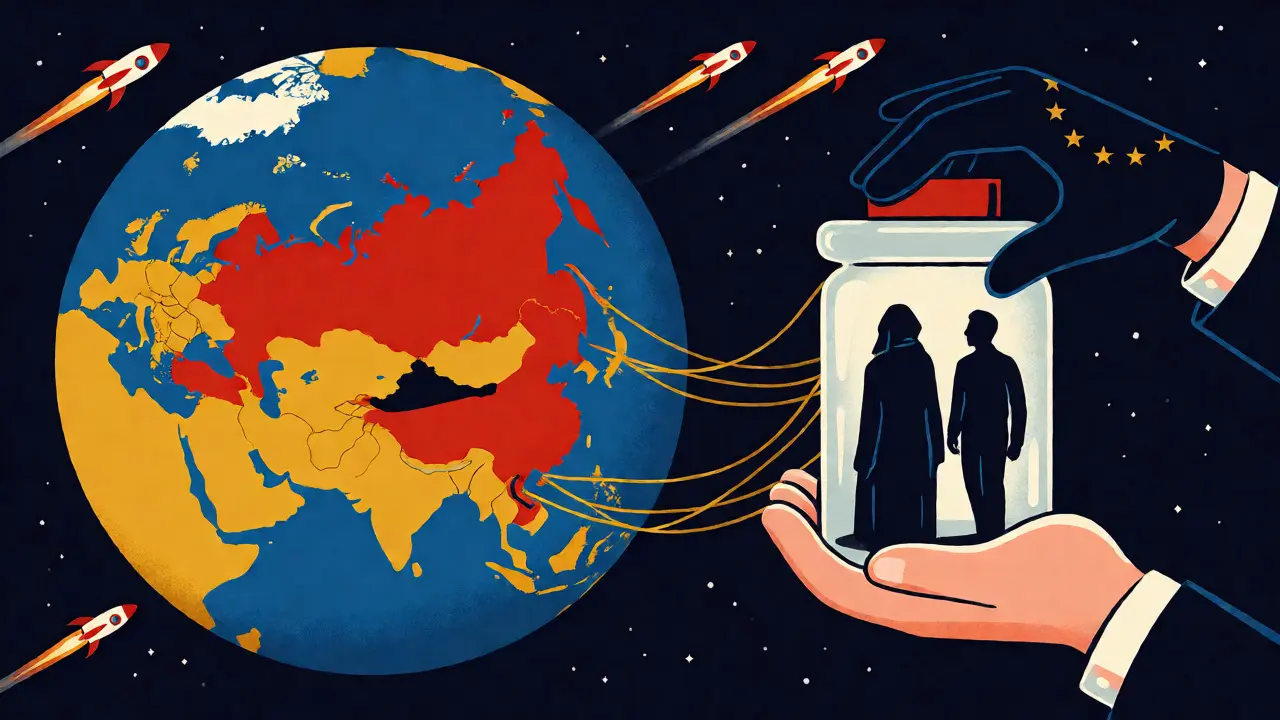
You might wonder why Germany led this charge. The answer lies in geopolitics. Since the invasion of Ukraine, Western nations have imposed strict sanctions on Russian financial institutions. However, capital doesn't stop flowing; it just finds new paths. These no-KYC exchanges became vital arteries for moving money out of Russia or into restricted markets. By targeting these specific Russian-language platforms, Germany struck at the heart of sanctions evasion networks.
This aligns with broader EU trends. Europe is increasingly viewing cryptocurrency not just as a financial asset, but as a tool for geopolitical leverage. Legal analysts note the dual focus here: traditional criminal law (money laundering) and administrative law (sanctions violations). This evolution shows that regulators are no longer just chasing drug dealers; they are policing state-level financial flows. The success of this operation signals to other EU member states that coordinated, aggressive action is both feasible and effective.
Community Reaction and Market Shifts
How did the crypto community react? Predictably, opinions split along ideological lines. On Reddit and Telegram, privacy advocates expressed concern about expanded surveillance capabilities. If the government can seize 8TB of data from a "private" exchange, what does that mean for true anonymity? Many users reported panic, fearing prosecution based on seized transaction records. Darknet vendors confirmed significant disruptions, struggling to find reliable laundering services in the aftermath.
Conversely, compliance-focused investors supported the crackdown. For cryptocurrency to achieve mainstream adoption, it needs legitimacy. High-profile crimes tarnish the industry's reputation. By removing bad actors, regulators hope to clean up the sector. Trust scores for privacy-focused exchanges on platforms like CoinGecko dipped, reflecting user uncertainty. Meanwhile, the market for compliant, KYC-heavy exchanges saw increased interest as users sought safer havens.
The Future of Crypto Enforcement
Operation Final Exchange sets a new benchmark for law enforcement. It demonstrates that agencies can master complex technical environments. The growth of blockchain analytics firms like Chainalysis supports this trend, with the compliance market reaching $1.2 billion in 2024. We can expect similar operations to become more frequent. As criminals adapt-perhaps using newer mixing technologies or decentralized exchanges-authorities will refine their tactics.
For users, the lesson is clear: "No-KYC" does not mean "No-Trace." Blockchain analysis tools are sophisticated enough to link pseudonymous wallets to real-world identities through metadata, IP leaks, and timing patterns. The era of casual anonymity is ending. If you value privacy, you must understand the risks. If you value compliance, you benefit from a cleaner, more secure market.
What exactly was Operation Final Exchange?
It was a coordinated law enforcement action by Germany's Federal Criminal Police Office (BKA) in September 2024. They seized the servers and data of 47 Russian-language no-KYC cryptocurrency exchanges to disrupt sanctions evasion and money laundering.
Why did the BKA target no-KYC exchanges specifically?
No-KYC exchanges require minimal identification, making them ideal for criminals seeking anonymity and for entities trying to bypass international sanctions. They facilitate rapid fiat-crypto swaps without regulatory oversight, enabling illicit financial flows.
What data did German authorities seize?
Authorities seized over 8 terabytes of data, including user registration information, complete transaction records, IP addresses, and operational databases from production, development, and backup servers.
Can I still use no-KYC exchanges safely?
You can, but the risk profile has changed. Law enforcement now has advanced tracking capabilities. While some services remain, users should be aware that transaction data can be subpoenaed or seized, potentially linking wallet activity to personal identities.
How does this affect sanctions against Russia?
The operation directly targeted platforms used by Russian banks and individuals to circumvent Western sanctions. By cutting off these liquidity channels, Germany aims to reduce the effectiveness of financial restrictions and increase pressure on the Russian economy.