Public Key vs Wallet Address: What's the Difference?
 Aug, 29 2026
You’re standing at the digital doorstep of your crypto portfolio. Someone wants to send you some Bitcoin or Ethereum. You pull up your wallet app, see a long string of characters, and hit "copy." But wait-did you just copy your public key or your wallet address? If you sent funds to the wrong spot, did you lose them forever?
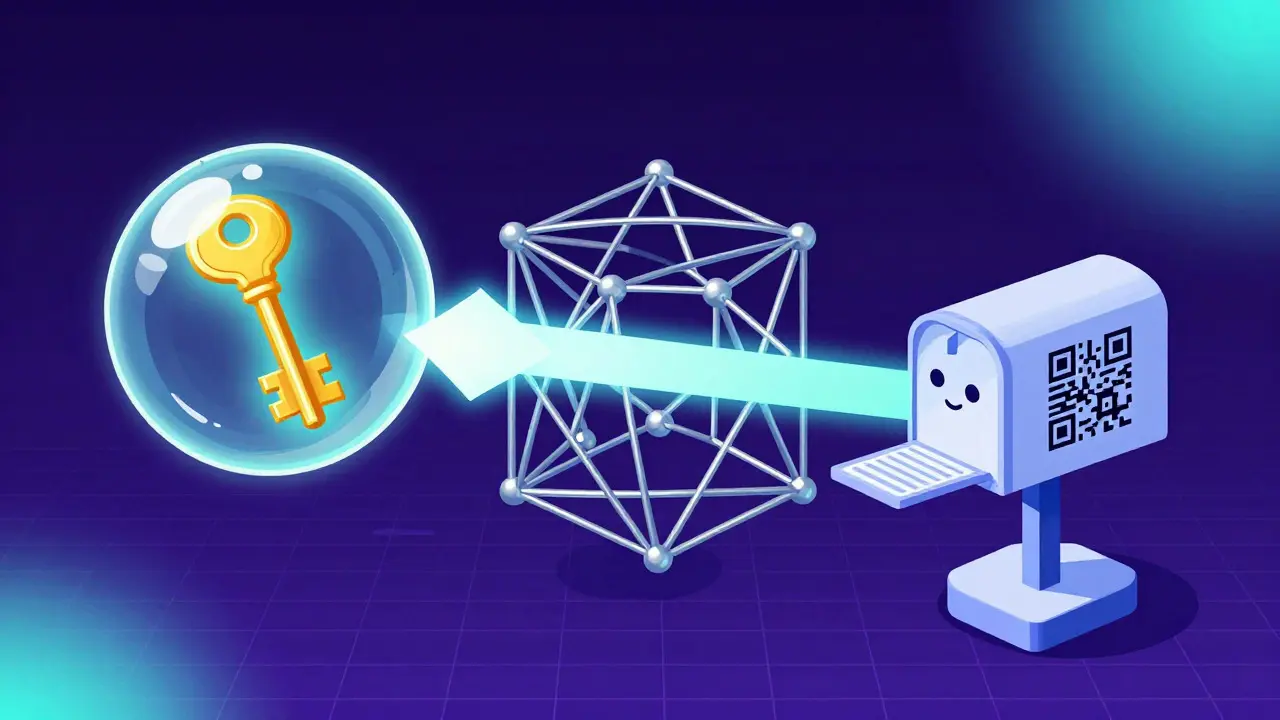
This isn’t just pedantic tech talk. Confusing these two terms causes real headaches for beginners and even seasoned traders. While they look similar-both are alphanumeric strings-they play completely different roles in the blockchain ecosystem. Think of it like mailing a letter. Your wallet address is the street number on your mailbox. It’s where mail arrives. Your public key is more like the unique signature verification code that proves you own that mailbox. One is for receiving; the other is for proving ownership and verifying transactions.
The Cryptographic Hierarchy: From Private Key to Address
To understand why these terms get mixed up, you have to look at how they are made. It all starts with the private key. This is the secret sauce. It’s a randomly generated number, typically 256 bits long, that gives you total control over your funds. If someone else has this number, they can spend your money. Period.
From this private key, your wallet software uses a mathematical function called elliptic curve cryptography (specifically secp256k1 for Bitcoin) to generate a public key. This process is one-way. You can easily calculate the public key from the private key, but you cannot reverse-engineer the private key from the public key. That asymmetry is what keeps your assets safe while allowing the network to verify you.
But here’s the twist: you rarely use that raw public key directly. Instead, the wallet takes the public key and runs it through a hashing algorithm (like SHA-256 followed by RIPEMD-160). The result? A shorter, compressed string known as the wallet address. This is the friendly, shareable version designed for human interaction and transaction destinations.
What Exactly Is a Public Key?
A public key is essentially a cryptographic proof of identity. In the Bitcoin network, when you sign a transaction to send funds, you use your private key to create a digital signature. The network then uses your public key to verify that signature. If the math checks out, the transaction is valid.
Why do we need this if we already have addresses? Because addresses don’t inherently prove who signed the transaction. The public key bridges the gap between the anonymous address and the authorized owner. When you first spend from an address, your public key is revealed on the blockchain. Before that, only the hash (the address) is visible, adding a layer of privacy.
Key characteristics of public keys:
- Length: Typically 33 bytes (compressed) or 65 bytes (uncompressed).
- Format: Often starts with '02' or '03' for compressed keys in hex format.
- Visibility: Safe to share. Exposing it doesn’t let anyone steal your funds.
- Function: Verifies digital signatures and confirms ownership of an address.
Decoding the Wallet Address
If the public key is the ID card, the wallet address is the P.O. Box number. It’s what you give to friends, exchanges, or employers when they pay you in crypto. It’s designed to be error-resistant and easy to type (or scan via QR code).
Wallet addresses are derived from public keys through hashing. This serves two purposes: it shortens the data (making it easier to handle) and adds a checksum. If you mistype a character in a wallet address, the checksum usually fails, preventing you from sending money into the void. Public keys don’t always have this built-in safety net in their raw form.
Key characteristics of wallet addresses:
- Length: Varies by chain. Bitcoin Legacy addresses are ~26-34 characters; Bech32 (SegWit) are longer but start with 'bc1'.
- Format: Starts with specific prefixes (e.g., '1', '3', 'bc1' for BTC; '0x' for ETH).
- Visibility: Publicly shared. Anyone can see your balance associated with it.
- Function: Destination for incoming transactions.
Side-by-Side Comparison
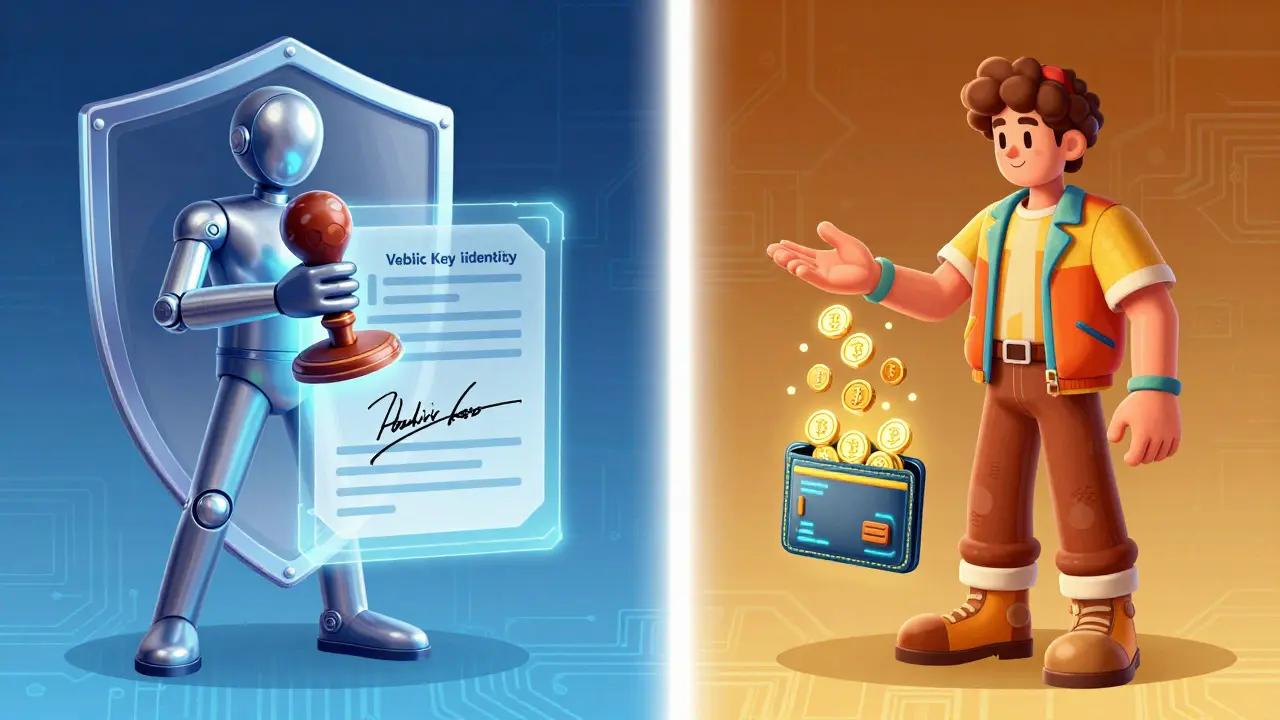
It helps to see the differences laid out clearly. Here is how public keys and wallet addresses stack up against each other in practical terms.
| Feature | Public Key | Wallet Address |
|---|---|---|
| Primary Use | Verifying transaction signatures | Receiving funds / Transaction destination |
| Derivation | Derived from Private Key | Derived from Public Key (via Hashing) |
| Shareability | Safe to share, but rarely used by users | Designed for sharing and daily use |
| Security Risk | Low (Exposure doesn't compromise funds) | Low (Exposure reveals balance/history) |
| Reversibility | Cannot derive Private Key | Cannot derive Public Key easily* |
| User Interaction | Handled automatically by wallet software | Copied/pasted/scanned by user |
*Note: While you can’t derive the public key from the address, once you spend from an address, the public key is broadcasted and becomes visible on the blockchain.
Why You Should Care About the Difference
For most daily transactions, you won’t touch your public key. Your wallet handles it in the background. When you click "Receive," the app shows you the address. When you click "Send," the app signs the transaction using your private key and broadcasts it. The network checks the public key. You never manually input a public key unless you’re doing advanced debugging or using certain multi-signature setups.
However, misunderstanding the hierarchy leads to critical errors. Some older wallets or specific protocols might ask for a "public key" when they really mean the address. Or, worse, a scammer might ask for your "key" and hope you paste your private key instead of your public key. Always double-check what is being requested.
Privacy is another factor. Since multiple addresses can be generated from a single public key (and thus a single private key), using new addresses for every transaction makes it harder for outsiders to cluster your spending habits. If you reused one address forever, your entire financial history would be linked to that one identifier. By rotating addresses, you obscure the link between your public key and your actual spending patterns until you spend.

Common Misconceptions and Pitfalls
Let’s clear up the biggest myths circulating in crypto forums.
Myth 1: "My address IS my public key."
Not technically. They are related, but distinct. The address is a hashed derivative. Sending funds to a raw public key often fails because the network expects an address format. Always send to the address provided by the recipient.
Myth 2: "If I share my address, people know my public key."
Before you make your first outgoing transaction, no. The address is a hash. It’s computationally difficult (though not impossible for powerful computers) to reverse the hash to find the public key. Once you spend, the public key is revealed, linking the past activity to that key.
Myth 3: "I need to back up my public key."
You don’t. You only need to back up your private key or seed phrase. From those, you can regenerate all public keys and addresses. If you lose your seed phrase, your public keys are useless without the private counterpart.
Practical Example: Sending Bitcoin
Imagine Alice wants to send 0.01 BTC to Bob.
- Bob generates a new address: His wallet uses his private key -> creates a public key -> hashes it to create a new Bitcoin address (e.g., bc1qxy2kgdygjrsqtzq2n0yrf2493p83kkfjhx0wlh).
- Bob shares the address: He sends this string to Alice. He does not send his public key or private key.
- Alice sends funds: She enters Bob’s address into her wallet. Her wallet creates a transaction output pointing to that address.
- Broadcast: The transaction goes to the network. Miners include it in a block.
- Verification: Later, when Bob wants to spend those funds, he signs the new transaction with his private key. The network uses his public key (revealed in the signing process) to verify the signature matches the original address.
Notice how Alice never needed Bob’s public key? She only needed the address. The public key only matters when Bob tries to move the money again.
Key Takeaways
- Private Key: The master secret. Never share. Full control.
- Public Key: The verifier. Derived from private key. Used to validate signatures. Safe to share but rarely used by users directly.
- Wallet Address: The destination. Derived from public key. Used for receiving funds. Designed for ease of use and error checking.
- Hierarchy: Private Key → Public Key → Wallet Address. You can go down this chain, but not easily up it.
Can I send cryptocurrency to a public key instead of an address?
Generally, no. Most modern cryptocurrencies require transactions to be sent to a specific address format (like Bitcoin's Bech32 or Ethereum's 0x format). While the address is derived from the public key, the network rules dictate that outputs must point to an address script. Sending raw data to a public key format will likely result in lost funds or rejected transactions. Always use the address provided by the recipient's wallet.
Is it dangerous to share my public key?
No, it is not dangerous. The term "public" means exactly that-it is safe to publish. Sharing your public key allows others to verify your identity or check your balance, but it does not allow them to spend your funds. Only the private key grants spending authority. However, revealing your public key links your transactions together, which can reduce privacy if you reuse addresses excessively.
How many wallet addresses can I have per public key?
Technically, you can generate thousands of addresses from a single private key/public key pair, depending on the derivation path (HD Wallet standard BIP32/BIP44). Most wallets automatically generate a new address for every transaction to enhance privacy. So, while you have one public key controlling the funds, you might interact with hundreds of different addresses over time.
What happens if I confuse my private key with my public key?
This is a common and costly mistake. If you accidentally share your private key thinking it's your public key, anyone who sees it can instantly drain your wallet. Conversely, if you try to receive funds using your private key as the address, the transaction will likely fail or go to an invalid location. Always double-check the prefix: Private keys are long and random; Public keys often start with 02/03; Addresses have specific network prefixes (like 1, 3, bc1, or 0x).
Does every blockchain use the same format for keys and addresses?
No. While the underlying concept (asymmetric cryptography) is universal, formats vary. Bitcoin uses Base58Check or Bech32 encoding. Ethereum uses hexadecimal encoding starting with 0x. Monero uses its own complex addressing scheme. Cardano uses Bech32. Always ensure you are copying the correct address type for the specific blockchain you are using. Sending Bitcoin to an Ethereum address (or vice versa) usually results in permanent loss.