PulseX Review: Is This Low-Fee DEX Safe in 2026?
 Jul, 8 2026
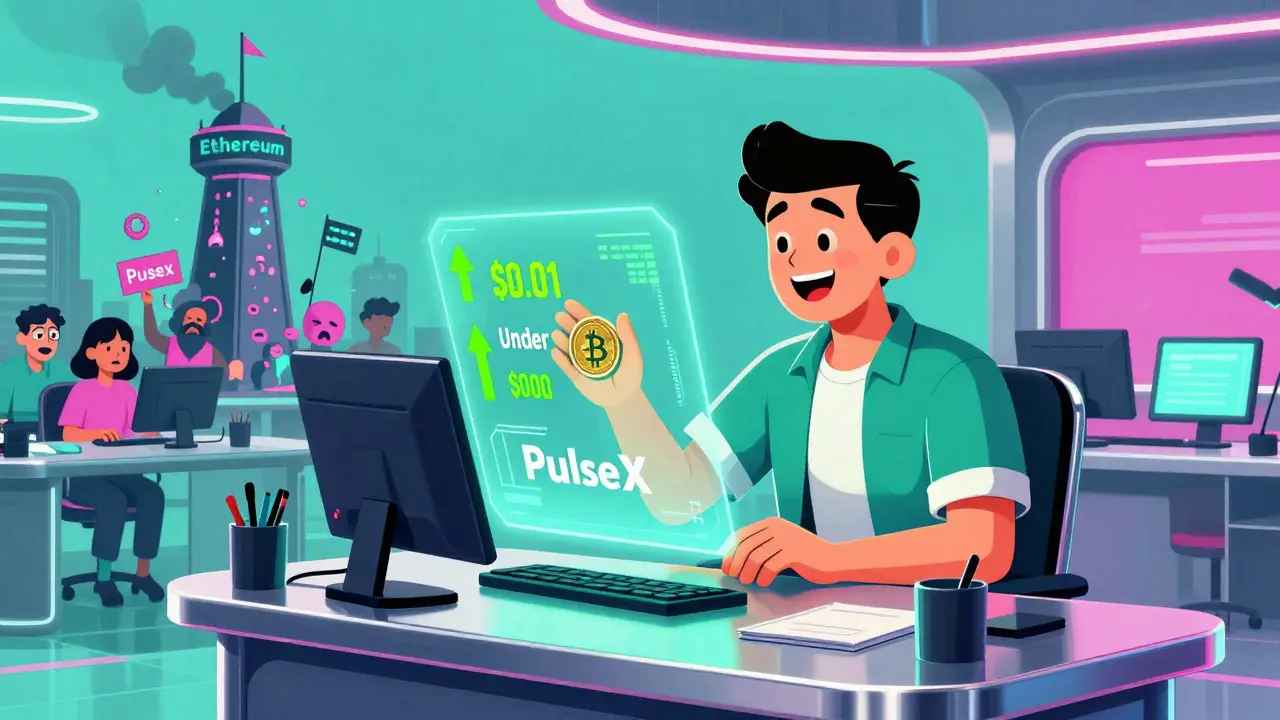
Imagine paying less than one cent to trade cryptocurrency. It sounds like a dream, but for users of PulseX, a decentralized exchange (DEX) built on the PulseChain network designed for high-speed, low-cost transactions, it is daily reality. As we move through 2026, the landscape of decentralized finance (DeFi) has shifted dramatically. Traders are tired of Ethereum’s unpredictable gas fees that can spike from $5 to $100 during busy periods. They want speed, affordability, and access without the friction.
PulseX positions itself as the solution. Born from the PulseChain ecosystem-a hard fork of Ethereum created by Richard Heart-it promises a parallel universe where every token exists on Ethereum also exists here, but with better economics. But does it deliver? Or is it just another shiny new chain with hidden risks? Let’s look at the facts, the figures, and the real-world experience of using PulseX today.
What Exactly Is PulseX?
To understand PulseX, you first need to understand PulseChain, a blockchain network forked from Ethereum that uses proof-of-stake consensus to offer faster transaction times and significantly lower fees. Unlike Ethereum, which historically relied on energy-intensive mining, PulseChain runs on proof-of-stake. This technical shift allows block times of roughly 3 to 5 seconds. For context, Ethereum often takes 12-15 seconds per block, and congestion can delay transactions for minutes or hours.
PulseX is the primary automated market maker (AMM) on this network. Think of it as the Uniswap of PulseChain. It allows you to swap tokens directly from your wallet-like MetaMask or Trust Wallet-without ever depositing funds into a centralized company. You retain control of your keys; the smart contracts handle the rest.
The core value proposition is simple: interoperability and cost. Because PulseChain was launched as a "fee-burning" fork, it copied the state of Ethereum at a specific moment. This means if you held HEX, LINK, UNI, USDC, or DAI on Ethereum, you received those same assets on PulseChain for free. PulseX then provides the marketplace to trade these assets efficiently. The native token, PLSX, powers the ecosystem, offering staking rewards and governance rights.
Fees and Speed: The Real Numbers
If you are a day trader or someone who makes small swaps frequently, fees eat into your profits. On Ethereum mainnet, a single swap might cost $10 to $50 depending on network traffic. On PulseX, the average gas fee is typically under $0.01. In many cases, it is fractions of a cent.
Let’s break down the comparison:
| Feature | PulseX | Uniswap (Ethereum) | PancakeSwap (BSC) |
|---|---|---|---|
| Average Gas Fee | < $0.01 | $1.20 - $15.00+ | $0.05 - $0.50 |
| Block Time | 3-5 seconds | 12-15 seconds | 3 seconds |
| Daily Transactions | ~350,000 | ~1.2 million | ~4 million |
| Consensus Mechanism | Proof-of-Stake | Proof-of-Stake (formerly PoW) | Proof-of-Stake |
As shown above, PulseX is cheaper than Uniswap by a massive margin. It is even cheaper than PancakeSwap on Binance Smart Chain in most scenarios. The speed is comparable to other Layer-1 solutions. However, volume tells a different story. Uniswap processes over 1.2 million transactions daily, while PulseX handles around 350,000. This indicates that while PulseX is efficient, it has not yet captured the mass adoption of its larger competitors.
Security Record: The BetterBank Incident
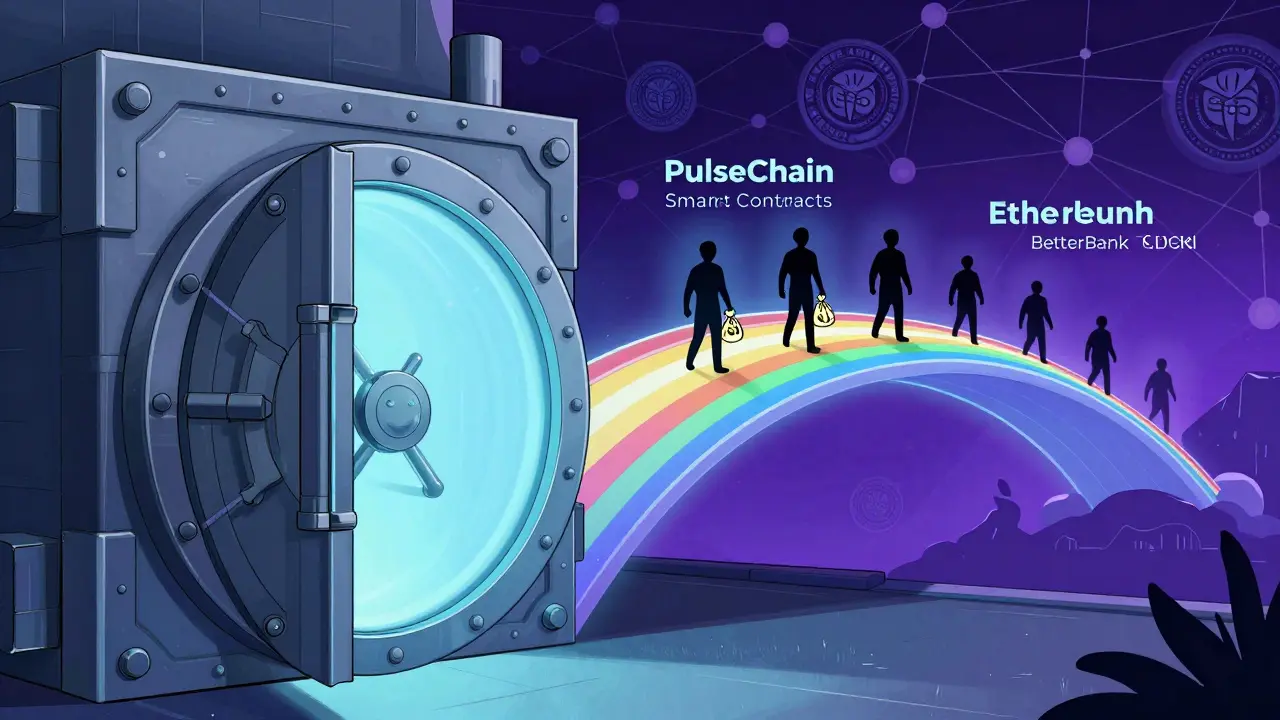
In crypto, cheap fees mean nothing if your funds aren’t safe. PulseX has faced significant scrutiny regarding security. While the platform undergoes regular audits by firms like Kudelski Security, the broader PulseChain ecosystem suffered a notable breach in July 2024.
Attackers exploited a vulnerability in the BetterBank DeFi protocol, which integrated with PulseX. By manipulating unvalidated reward minting functions, they drained approximately $922,000 worth of assets, including DAI, PLSX, and WPLS. These funds were bridged back to Ethereum and laundered through Tornado Cash. This incident highlighted a critical risk: cross-chain bridges.
Bridges are the gateways between blockchains. They are complex and have been the target of billions of dollars in hacks across the industry. Dr. Maria Chen, a blockchain security specialist, noted that while PulseX’s architecture is energy-efficient, the relative youth of the ecosystem means it lacks the stress-testing history of Ethereum. Since the incident, PulseX has implemented enhanced monitoring systems and more frequent audits. However, as a user, you must recognize that interacting with newer chains always carries higher inherent risk than established networks.
Liquidity and Trading Experience
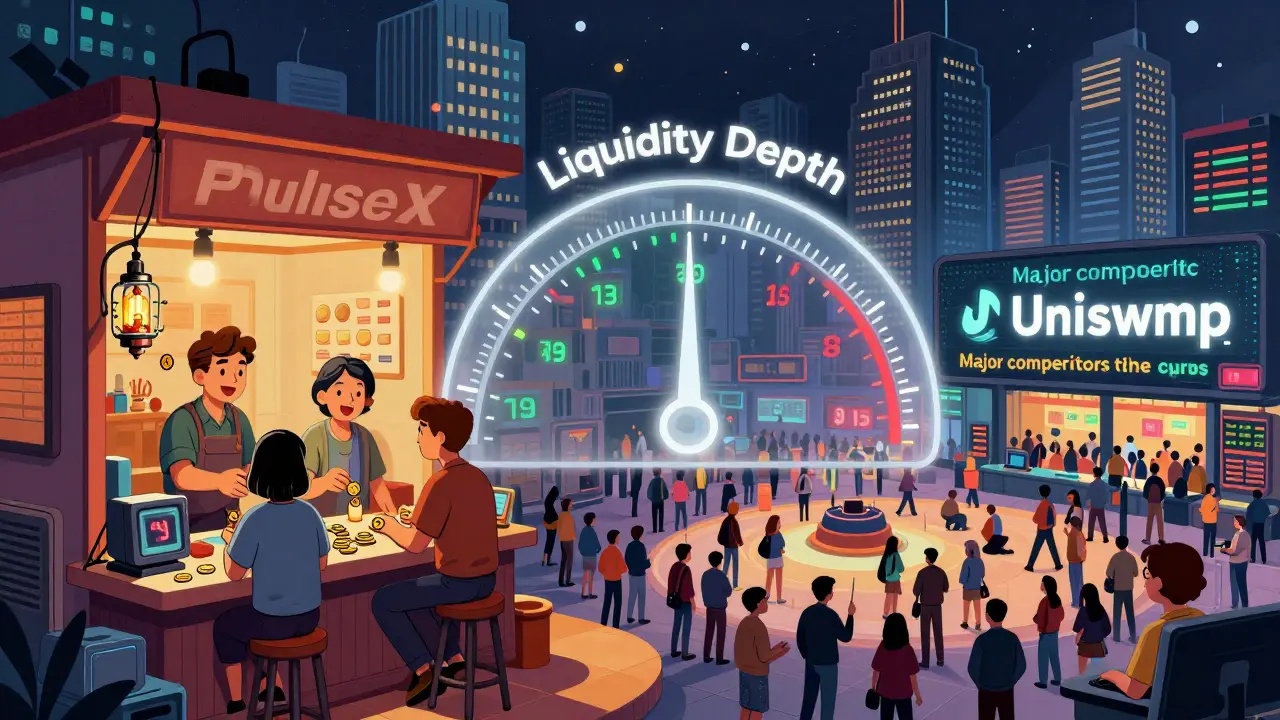
Liquidity refers to how easily you can buy or sell an asset without moving its price. High liquidity means tight spreads and minimal slippage. Here is where PulseX faces its biggest challenge.
According to data from DeFi Llama in late 2024, the average pool liquidity on PulseX was around $287,000. Compare this to SushiSwap or Uniswap, where major pools hold millions or even hundreds of millions of dollars. If you are trading large amounts of ETH or USDC, you might find limited depth on PulseX. Selling $10,000 worth of a niche token could result in significant slippage, meaning you receive less value than expected.
However, for smaller traders, this is less of an issue. User feedback from Reddit and Trustpilot highlights that the interface is intuitive and the low costs make it ideal for micro-trading. One user noted, "I can make 10 trades for less than the cost of one Uniswap transaction." This democratizes trading for people who previously couldn't afford the entry fee of Ethereum-based DeFi.
The platform supports thousands of tokens and NFTs. It processes about 12,500 NFT transactions daily, making it a growing hub for digital collectibles. Yet, with only 247 active farming pools compared to PancakeSwap’s 1,200+, yield farmers looking for diverse opportunities may find PulseX limiting.
How to Use PulseX: A Practical Guide
Getting started with PulseX is straightforward if you already use Ethereum-compatible wallets. Here is the step-by-step process:
- Set Up Your Wallet: Ensure you have MetaMask, Trust Wallet, or Coinbase Wallet installed. You will need to add the PulseChain network manually. Most wallets now support custom RPC additions, allowing you to connect to PulseChain easily.
- Fund Your Account: You cannot simply send ETH from Ethereum to PulseChain. You must use a bridge. Official bridges allow you to lock assets on Ethereum and mint equivalent tokens on PulseChain. This process usually takes 15-20 minutes. Alternatively, you can buy PLSX or other PulseChain-native tokens on centralized exchanges that list them and withdraw directly to your PulseChain wallet address.
- Connect to PulseX: Visit the official PulseX website. Click "Connect Wallet" and approve the connection request in your wallet popup.
- Approve Tokens: Before swapping, you must approve the token you want to spend. This is a one-time permission slip for each token type. It requires a small gas fee on PulseChain (negligible).
- Execute the Swap: Enter the amount you wish to trade. The interface shows the estimated output and price impact. Confirm the transaction in your wallet.
New users often stumble on the bridge step. Bridge synchronization delays affect about 14% of interactions, according to internal metrics. If your funds don’t appear immediately, check the block explorer (pulsechain.com) rather than panicking. Support response times are generally quick, averaging 14 minutes for live chat during business hours.
Staking and Earning Rewards
PulseX isn’t just for swapping; it’s also for earning. The native PLSX token offers staking rewards. By locking up your tokens, you help secure the network and earn annual percentage yields (APY) ranging from 8.5% to 12.7%, depending on the duration.
The minimum staking period is currently 30 days, though updates in late 2024 suggested a reduction to 7 days for shorter-term flexibility. The initial token distribution allocated 20% of the supply to staking rewards, creating a sustainable incentive model. However, remember that staking involves risk. If the value of PLSX drops significantly, your nominal gains might not offset the loss in principal value.
Is PulseX Right for You?
PulseX excels in specific scenarios. If you are a retail trader who makes frequent, small-sized trades and wants to avoid Ethereum’s volatile gas fees, PulseX is a compelling option. It is particularly strong for NFT enthusiasts and those deeply invested in the HEX ecosystem, as PulseChain was largely driven by HEX community demand.
However, it is not ideal for institutional investors or those moving large capital due to liquidity constraints. It is also not suitable for users who prioritize regulatory compliance above all else. PulseX operates without Know Your Customer (KYC) requirements, which aligns with DeFi principles but may pose legal gray areas in strict jurisdictions like the United States.
The ecosystem is growing. With 412,000 unique active wallets monthly and steady integration of new blockchain networks via bridges, PulseX is building momentum. But it remains a niche player with 0.8% of the total DEX market share. Until it addresses liquidity depth and proves long-term security stability beyond isolated incidents, it should be viewed as a complementary tool rather than a replacement for major exchanges like Uniswap or PancakeSwap.
Is PulseX safe to use in 2026?
PulseX implements standard security measures like smart contract audits and encryption. However, no DeFi platform is 100% immune to hacks. The BetterBank incident in 2024 showed vulnerabilities in bridge integrations. Always use hardware wallets for large holdings and never invest more than you can afford to lose. The platform has improved security protocols since 2024, but caution is advised.
How do I get tokens onto PulseX?
You cannot transfer tokens directly from Ethereum to PulseChain. You must use a cross-chain bridge. Lock your assets on Ethereum, and the bridge mints equivalent tokens on PulseChain. Alternatively, buy PLSX or supported tokens on a centralized exchange that lists PulseChain assets and withdraw them to your PulseChain wallet address.
What are the fees on PulseX?
Transaction fees on PulseX are extremely low, typically under $0.01 per trade. This is due to the Proof-of-Stake consensus mechanism and high throughput of the PulseChain network. There are also trading fees paid to liquidity providers, similar to other AMMs, usually around 0.3%.
Does PulseX require KYC verification?
No, PulseX is a decentralized exchange and does not require Know Your Customer (KYC) verification. You connect via a non-custodial wallet like MetaMask. This preserves anonymity but means there is no customer support to recover lost funds if you make a mistake.
Can I stake PLSX tokens?
Yes, you can stake PLSX tokens to earn rewards. APYs range from 8.5% to 12.7% depending on the lock-up period. Minimum staking periods have varied, with recent updates aiming to reduce the minimum from 30 days to 7 days for greater flexibility.