Risk Management Through Diversification in Blockchain: A Practical Guide
 Aug, 25 2026
Imagine waking up to find that the cryptocurrency you held for three years has dropped by 40% overnight. It happens. The blockchain space is volatile, and relying on a single asset or sector is like betting your entire savings on one horse in a race with no finish line. Risk management through diversification is the strategic process of spreading investments across various assets, sectors, and geographies to reduce exposure to any single source of failure. In the context of blockchain, this doesn't just mean buying Bitcoin and Ethereum; it means understanding how different layers of the technology stack interact during market stress.
You don't need to be a Wall Street analyst to apply these principles. Whether you are holding digital assets for long-term growth or using DeFi protocols for yield, knowing how to structure your holdings can save you from catastrophic loss. This guide breaks down how to build a resilient blockchain portfolio using proven financial concepts adapted for the digital economy.
Why Traditional Advice Falls Short in Crypto
Many investors start their blockchain journey by copying what they see on social media. They buy the trending coin, hold it tightly, and hope for the best. This approach works when the market is rising, but it fails spectacularly when things turn sour. The core issue is correlation. In traditional finance, stocks and bonds often move differently. In crypto, however, most altcoins tend to move in sync with Bitcoin. If Bitcoin drops, 90% of the market usually follows.
To manage risk effectively, you must look beyond price action. You need to understand the underlying utility of each asset. Is it a payment network? A smart contract platform? A data storage solution? By identifying assets that serve different functions, you create natural hedges against specific technological failures or regulatory crackdowns targeting only certain types of protocols.
The Core Pillars of Blockchain Diversification
Effective diversification in the blockchain space rests on four main pillars. Ignoring any of them leaves you exposed to blind spots in your portfolio.
- Asset Class Variety: Don't put all your eggs in 'speculative tokens.' Mix large-cap established coins (like Bitcoin) with mid-cap utility projects and stablecoins for liquidity.
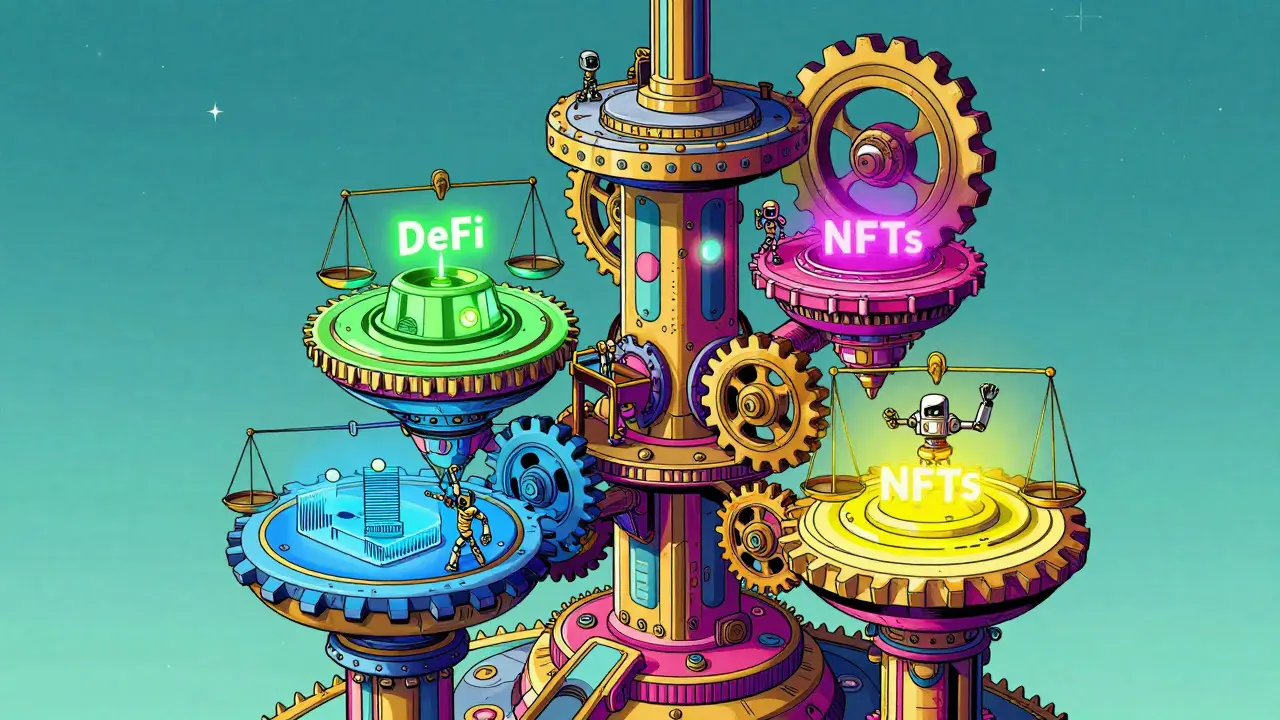
- Sector Allocation: Spread exposure across different use cases. Layer 1 blockchains (infrastructure), DeFi (financial services), NFTs (digital ownership), and GameFi (entertainment) often react differently to news cycles.
- Geographic and Regulatory Exposure: While crypto is borderless, regulation is not. Projects with strong adoption in favorable jurisdictions (like Singapore or Switzerland) may face different risks than those heavily reliant on markets with uncertain legal frameworks.
- Protocol Risk Distribution: Avoid over-concentrating in one ecosystem. For example, if you hold five tokens that all run on the same smart contract platform, you aren't diversified-you're just concentrated in that platform's success.
Understanding Correlation in Digital Assets
Correlation measures how two assets move relative to each other. A correlation of +1 means they move perfectly together. A correlation of -1 means they move in opposite directions. In crypto, correlations tend to spike toward +1 during bear markets because fear drives everyone to sell everything. However, during bull markets, correlations loosen, allowing specific sectors to outperform.
This dynamic requires active monitoring. You can't just set it and forget. During high-volatility periods, even uncorrelated assets can become correlated as liquidity dries up. That’s why holding some cash or stablecoins is crucial-it provides dry powder to buy dips when correlations reset.
| Feature | Concentrated Portfolio | Diversified Portfolio |
|---|---|---|
| Single Point of Failure | High (One bad project wipes out gains) | Low (Losses are spread out) |
| Volatility Profile | Extreme swings | Moderate, smoother returns |
| Regulatory Risk | Targeted impact if sector is banned | Mitigated by multi-sector presence |
| Management Effort | Low (Buy and hold) | Medium (Requires rebalancing) |
| Long-Term Growth Potential | Unpredictable | More consistent compounding |
Practical Steps to Build Your Strategy
Building a diversified blockchain portfolio isn't about owning 50 different tokens. It's about owning the right mix of 8-15 high-quality assets. Here is a step-by-step approach:
- Audit Your Current Holdings: List every asset you own. Calculate what percentage of your total portfolio each represents. Identify any position larger than 20-25%. These are your concentration risks.
- Define Your Risk Tolerance: How much drawdown can you stomach? If a 30% drop keeps you up at night, you need more stable assets (stablecoins, blue chips). If you can handle 50% swings, you can allocate more to high-growth, high-risk sectors.
- Select Uncorrelated Sectors: Choose one major player from infrastructure (e.g., Bitcoin, Ethereum), one from DeFi (e.g., Aave, Uniswap), one from data/storage (e.g., Filecoin, Arweave), and one from emerging tech (e.g., AI tokens or RWA tokens).
- Allocate Based on Conviction, Not Hype: Assign percentages based on how confident you are in the long-term viability of each sector, not just its recent price action.
- Rebalance Quarterly: Set a calendar reminder to review your portfolio every three months. Sell what has grown too large and buy what has lagged, keeping your target allocation intact.
Common Pitfalls to Avoid
Even experienced investors make mistakes. The most common trap is 'false diversification.' Buying ten different meme coins doesn't diversify your risk; it just multiplies your exposure to speculative sentiment. True diversification requires assets with distinct fundamental drivers.
Another pitfall is ignoring liquidity. Holding a highly innovative token with low trading volume can be dangerous. If you need to sell during a crash, you might not find a buyer at the price you expect. Always ensure that at least 70-80% of your portfolio consists of highly liquid assets with deep order books.
Finally, beware of over-diversification. Owning 50 small-cap tokens makes it impossible to track them all. You'll miss critical updates, governance votes, or red flags. Stick to a manageable number of positions where you actually understand the technology and team behind them.

Looking Ahead: Dynamic Rebalancing
The blockchain landscape evolves rapidly. New technologies emerge, old ones fade, and regulations shift. Static diversification-setting a portfolio once and never touching it-is rarely effective in this environment. Modern risk management involves dynamic rebalancing, where you adjust allocations based on changing market conditions and technological maturity.
For instance, as Real World Assets (RWA) tokenization grows, the correlation between traditional finance and crypto may decrease, offering new hedging opportunities. Conversely, if a major regulatory body bans a specific type of algorithmic stablecoin, your portfolio needs to pivot quickly. Staying informed and agile is just as important as the initial allocation.
Frequently Asked Questions
How many cryptocurrencies should I hold for proper diversification?
Most experts recommend holding between 8 and 15 distinct assets. This number allows you to spread risk across different sectors and technologies without making portfolio management unmanageable. Going beyond 15 often leads to 'false diversification' where you hold similar assets that move in tandem.
Does holding Bitcoin count as diversification?
Bitcoin acts as a beta play on the entire crypto market. While it is less volatile than altcoins, it is still highly correlated with the broader sector. To truly diversify, you should pair Bitcoin with assets from different sectors, such as DeFi, NFTs, or real-world asset tokenization, which have different value drivers.
What role do stablecoins play in risk management?
Stablecoins serve as a defensive asset class. They reduce portfolio volatility significantly and provide liquidity to buy undervalued assets during market crashes. Holding 10-20% of your portfolio in stablecoins is a common strategy to preserve capital and wait for better entry points.
How often should I rebalance my blockchain portfolio?
Quarterly rebalancing is a good baseline for most investors. However, if a single asset moves more than 10-15% away from its target allocation due to extreme market movements, consider an ad-hoc rebalance to maintain your risk profile.
Is diversification useful in a bear market?
Yes, but with caveats. In severe bear markets, correlations often rise, meaning most assets fall together. However, diversified portfolios typically recover faster because they suffer smaller initial drawdowns. This preserves more capital for reinvestment when the market turns upward.