Smart Contracts for Conditional Donations: How to Ensure Your Charity Funds Reach Their Goal
 Jun, 30 2026
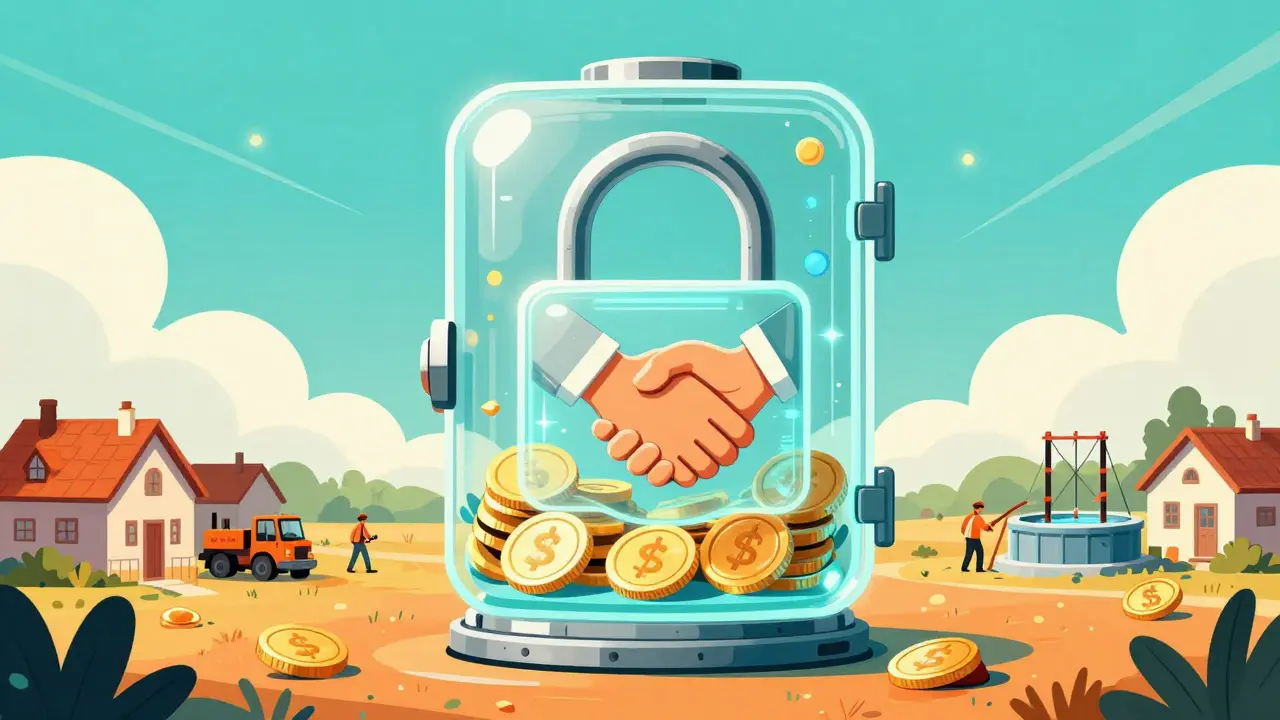
Imagine donating $1,000 to build a well in a rural village. In the traditional world, you hand over the money, hope for the best, and maybe get a vague email six months later saying "thanks." But what if that money was locked in a digital vault that only opened when sensors confirmed the well was actually built? That is the promise of conditional donations powered by smart contracts on the blockchain. This isn't just sci-fi anymore. It’s happening right now. By using code instead of trust, donors can ensure their funds are used exactly as intended. If the charity hits its milestone, the money releases automatically. If they don’t, the funds stay locked or return to you. This shift is turning passive giving into active accountability. But how does it actually work? And is it ready for your next charitable contribution? Let’s break down the mechanics, the benefits, and the real-world hurdles of this new era of philanthropy.
How Conditional Smart Contracts Work
To understand conditional donations, you first need to grasp what a smart contract is. Think of it as a self-executing agreement written in code. Unlike a paper contract that requires lawyers and courts to enforce, a smart contract runs on a blockchain-most commonly Ethereum. Once deployed, no one can change the rules. Not the donor, not the charity, not even the developer who wrote it.
In a standard donation, you send crypto to a wallet address, and that’s it. The transaction is final. With a conditional smart contract, the process looks different:
- You define the conditions: You specify exactly what needs to happen for the funds to release. For example, "Release $500 when 100 trees are planted and verified by satellite imagery."
- Funds are escrowed: Your cryptocurrency goes into the smart contract’s temporary holding area, not directly to the charity’s main wallet.
- Verification occurs: An external data source, known as an oracle (like Chainlink), checks if the condition was met. Oracles bridge the gap between the real world and the blockchain.
- Automatic execution: If the oracle confirms the condition, the contract instantly sends the funds to the charity. If not, nothing happens-or the funds revert to you.
The Transparency Revolution
Trust has always been the currency of charity. According to a 2022 Cone Communications survey, only 23% of donors expressed high confidence in traditional charity accountability mechanisms. That’s a massive gap. People want to give, but they’re afraid their money will be wasted on overhead or mismanagement. Conditional smart contracts solve this by making every transaction transparent and traceable. On networks like the XDC Network, you can see exactly how funds are allocated in real-time. There are no hidden ledgers. If a project fails to meet its goals, the blockchain records that failure publicly. Dr. Nigel Davies, co-author of the seminal 2020 ACM paper on this topic, calls this "automated accountability." He argues it represents a paradigm shift because it aligns donor intent with actual impact. When you know your money is tied to specific outcomes, you’re more likely to give-and to give repeatedly. Firefly Giving’s 2023 data supports this, showing a 42% higher donor retention rate among charities using these systems.
Ethereum vs. Bitcoin: Where Should You Donate?
Not all blockchains are created equal when it comes to complex logic. Currently, two major networks dominate the space for charitable giving, each with distinct pros and cons.
| Feature | Ethereum | Bitcoin (via DLCs) |
|---|---|---|
| Market Share (Charity) | 68% | Growing (approx. 5%) |
| Flexibility | High (Complex logic supported) | Low (Limited scripting) |
| Transaction Speed | Variable (15s - several mins) | ~10 minutes per block |
| Cost (Gas Fees) | High ($5-$50+ during peak) | Low to Moderate |
| Best For | Complex milestones, recurring gifts | Simple, privacy-focused agreements |
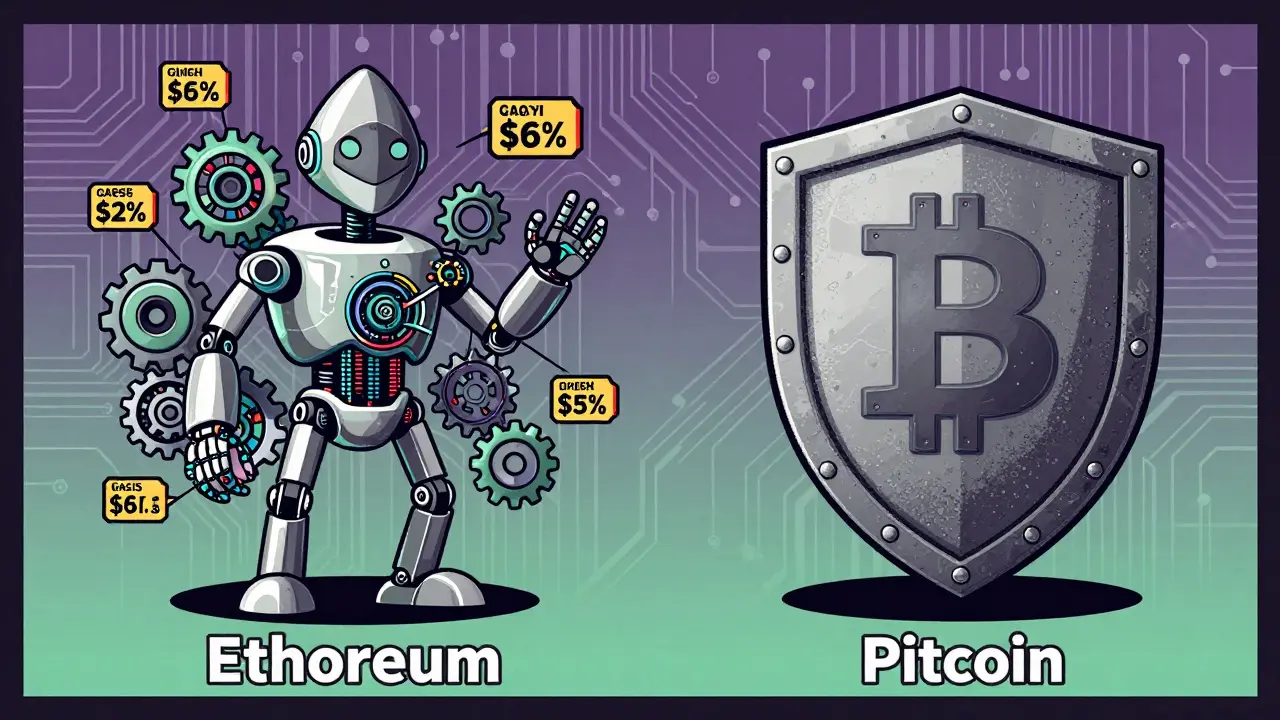
Ethereum remains the leader because its programming language, Solidity, allows for intricate conditions. If you want to set up a donation that adjusts based on quarterly performance metrics, Ethereum is your best bet. However, gas fees can be a killer. During peak usage in Q1 2024, fees spiked over $50, which makes micro-donations impractical. Bitcoin is catching up through innovations like Discreet Log Contracts (DLCs) and Covenants. Lightspark’s 2024 analysis highlights that DLCs allow real-world data to trigger payments while preserving privacy. While less flexible than Ethereum, Bitcoin offers robust security and lower costs for simpler conditional arrangements.
The Real-World Hurdles: Why Isn’t Everyone Doing This?
If it’s so great, why do only 8% of charities use conditional smart contracts? The barriers are significant, mostly falling into three categories: complexity, rigidity, and access.
1. Technical Complexity
Setting up a smart contract isn’t like clicking "Donate" on GoFundMe. It requires coding expertise. According to a 2024 TechSoup survey, 68% of small charities find the technical setup prohibitive. One nonprofit CEO noted on LinkedIn that hiring a blockchain developer cost them $8,500 just for initial setup. For a small organization, that’s a huge upfront investment before they’ve even raised a single dollar.
2. The "Code Is Law" Problem
Smart contracts are rigid. They do exactly what they are told, nothing more. This became painfully clear during the 2022 UNICEF pilot in Pakistan. Floods hit unexpectedly, requiring immediate fund reallocation for emergency shelter. However, the smart contract was coded for long-term infrastructure projects. The funds couldn’t be moved quickly enough because the code didn’t account for emergencies. $220,000 sat idle while people needed help. This highlights a critical flaw: charities often need human discretion, which code cannot provide.
3. The Digital Divide
You need a cryptocurrency wallet to participate. Platforms like MetaMask or Trust Wallet are essential tools, but they confuse many users. A user on Reddit’s r/Nonprofit forum shared that 12 potential donors abandoned a campaign simply because they got stuck setting up their wallet. With 72% of global donors lacking easy crypto access (World Bank, 2024), this technology risks excluding the very people it aims to empower.
Who Benefits Most from Conditional Donations?
This technology isn’t a one-size-fits-all solution. It shines in specific scenarios where verification is possible and flexibility is less critical.
- Disaster Relief with Milestones: Instead of lump sums, funds can be released upon verified delivery of supplies. IoT sensors can confirm goods arrived at a distribution center.
- Environmental Projects: Tree planting, ocean cleanup, or reforestation efforts can be tied to satellite data or drone verification.
- Corporate Matching Gifts: Companies like United Way have piloted programs where matching funds execute within 15 minutes of verification, compared to the 30-90 days typical in manual systems.
- High-Net-Worth Philanthropy: Wealthy donors often seek maximum transparency and tax efficiency. Automated tracking generates IRS-compliant documentation 92% faster than manual methods, according to Firefly Giving.
Legal and Regulatory Landscape in 2026
The legal framework is finally catching up to the technology. For years, there was uncertainty about whether a smart contract was legally binding. The January 2025 ruling in *Bryant v. JPMorgan Chase Bank* helped clarify this. Judge Silverman established that "conduct can manifest acceptance of terms," meaning that interacting with a smart contract can constitute legal assent. This reduces the risk for charities worried about enforceability. However, regulations are tightening. The U.S. Treasury’s FinCEN issued guidance in March 2024 requiring enhanced due diligence for smart contract-based giving exceeding $3,000. Charities must now ensure they are compliant with anti-money laundering (AML) laws even when using decentralized protocols. Look out for ISO 23026, expected in late 2025, which will establish global standards for blockchain social impact, potentially simplifying cross-border charitable giving.
Getting Started: A Practical Guide
If you’re a donor or a charity looking to dip your toes into this space, here is how to proceed safely:
- Start Small: Don’t commit your entire budget to a smart contract. Test with a small amount to understand the workflow.
- Choose the Right Platform: Use established platforms like Firefly Giving or Bloom Solutions rather than building custom code from scratch. They handle the technical heavy lifting and compliance issues.
- Define Clear Conditions: Vague goals lead to failed contracts. Instead of "help the poor," use "provide 500 meals to children under 12 in District X, verified by photo evidence uploaded to IPFS."
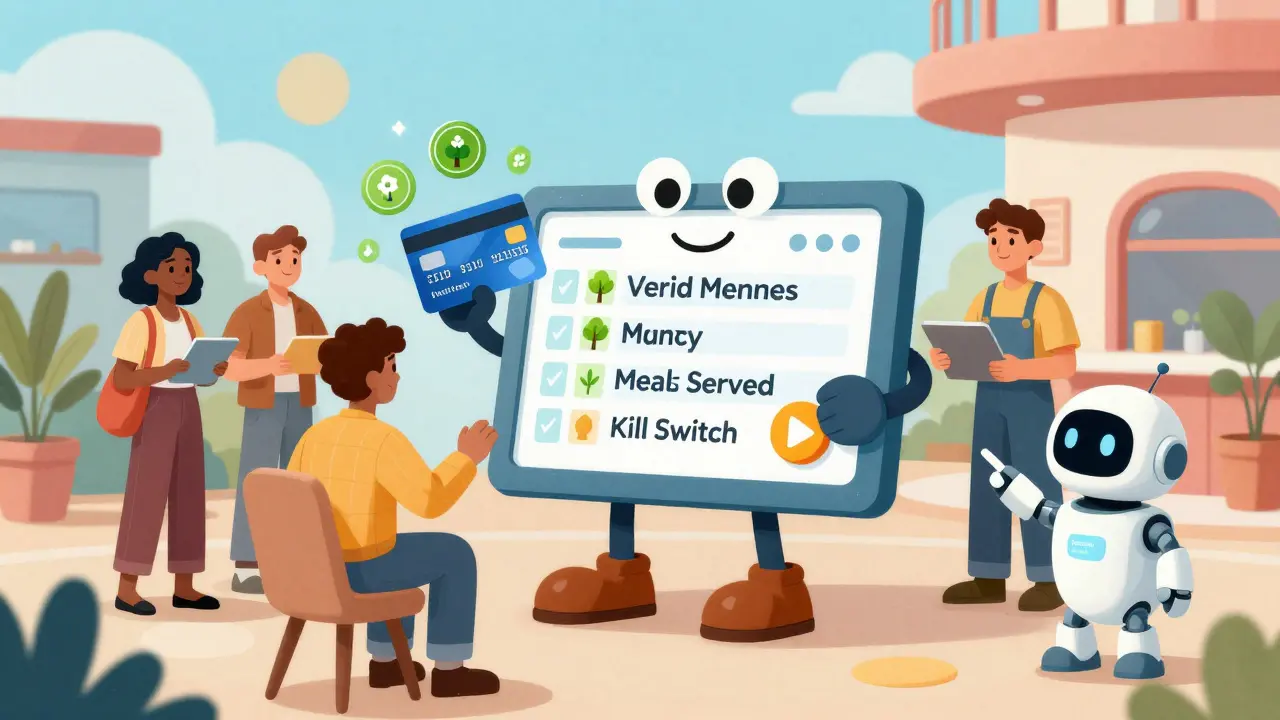
- Plan for Exceptions: Include a "kill switch" or multi-signature approval process that allows trusted parties to pause or redirect funds in case of emergencies. Never lock funds permanently without an escape hatch.
- Educate Your Donors: Provide simple guides on how to use wallets. If you’re a charity, consider accepting credit card payments that are converted to crypto behind the scenes to reduce friction.
What is a conditional donation smart contract?
A conditional donation smart contract is a self-executing agreement on a blockchain that holds donated funds until specific, predefined criteria are met. Once an oracle verifies that the conditions (such as completing a project milestone) are satisfied, the funds are automatically released to the recipient. If the conditions are not met, the funds remain locked or are returned to the donor.
Are smart contract donations safe for charities?
Yes, but with caveats. The technology itself is secure due to blockchain encryption. However, risks include coding errors, high transaction fees (gas), and lack of flexibility in emergencies. Charities should use reputable platforms and include exception clauses in their contracts to mitigate these risks.
Which blockchain is best for charitable giving?
Ethereum is currently the most popular choice due to its flexibility and large ecosystem, handling 68% of charitable smart contracts. However, it suffers from high fees. Bitcoin is gaining traction via Discreet Log Contracts (DLCs) for simpler, privacy-focused donations. Layer-2 solutions and networks like XDC offer lower fees and faster speeds for specific use cases.
Can I donate fiat currency (USD/EUR) to a smart contract?
Directly, no. Smart contracts run on blockchains and require cryptocurrency. However, many platforms (like Firefly Giving) allow you to pay with a credit card or bank transfer. The platform then converts your fiat into stablecoins (like USDC) and executes the smart contract on your behalf, hiding the technical complexity from the donor.
What happens if a charity fails to meet the donation conditions?
It depends on how the contract was coded. Typically, the funds remain in the smart contract’s escrow. After a set period, they may be automatically refunded to the donor, redirected to another qualified charity, or held for a revised proposal. This prevents misuse of funds and ensures donor intent is respected.
Is there a legal framework for smart contract donations?
Yes, the landscape is evolving. Recent court rulings, such as *Bryant v. JPMorgan Chase Bank* (2025), have affirmed that interaction with smart contracts can constitute legal assent. Additionally, regulatory bodies like FinCEN have issued guidelines for crypto donations, requiring due diligence for larger transactions to prevent money laundering.