Bank Account Freeze: Why Crypto Users Lose Access and How to Protect Yourself
When your bank account freeze, a sudden shutdown of your ability to deposit, withdraw, or transfer funds by your financial institution. Also known as fiat access closure, it often happens without warning, and for crypto users, it’s rarely about fraud—it’s about association. Banks don’t freeze accounts because you bought Bitcoin. They freeze them because your transaction history looks like a red flag to their automated compliance systems. If you’ve sent money to a crypto exchange, received airdrop tokens, or even paid for an NFT, your bank might classify you as a high-risk customer—even if you’ve done nothing illegal.
This isn’t just happening in places with strict crypto bans like Bangladesh or Myanmar. It’s happening in Portugal, India, and even Norway. Why? Because banks still operate under old rules designed for cash and wire transfers, not decentralized finance. When they see repeated deposits to Uniswap, withdrawals from Vauld, or transfers to HECO Chain wallets, their systems flag it as potential money laundering. They don’t care if you’re just swapping tokens or earning airdrops. They see patterns, not context. And when they see patterns they don’t understand, they shut it down. The crypto bank closure, the act of a traditional bank terminating a customer’s account due to cryptocurrency-related activity is now a common side effect of using digital assets. Even if you’re compliant, your bank doesn’t know that. They rely on third-party monitoring tools that treat all crypto activity as suspicious by default.
The people most at risk aren’t traders with millions—they’re everyday users who bought a meme coin, participated in a crypto airdrop, a free distribution of tokens to users who complete simple tasks, often used to bootstrap new blockchain projects, or sent USDT to pay for a service. One small transaction can trigger a review. One flagged transfer can lead to a months-long investigation. And if you’re in a country where crypto is legally gray, like India or Myanmar, a frozen account can mean fines, jail time, or worse. The crypto legal risks, the potential financial, legal, or personal consequences of using cryptocurrency in jurisdictions with unclear or hostile regulations aren’t theoretical. They’re in court documents, in bank notices, and in the silence after your online banking app stops working.
You can’t control what banks decide. But you can control how you move money. This collection of posts shows you exactly how people lost access to their funds—and how others avoided the same fate. You’ll see real cases: from Iranians using crypto to survive economic collapse, to Bangladeshis trading Bitcoin underground, to users who got locked out after joining a simple airdrop. You’ll learn what triggers these freezes, which exchanges are safest, and how to document your activity so you’re not left with no proof of innocence. This isn’t about avoiding crypto. It’s about using it without losing your bank account.
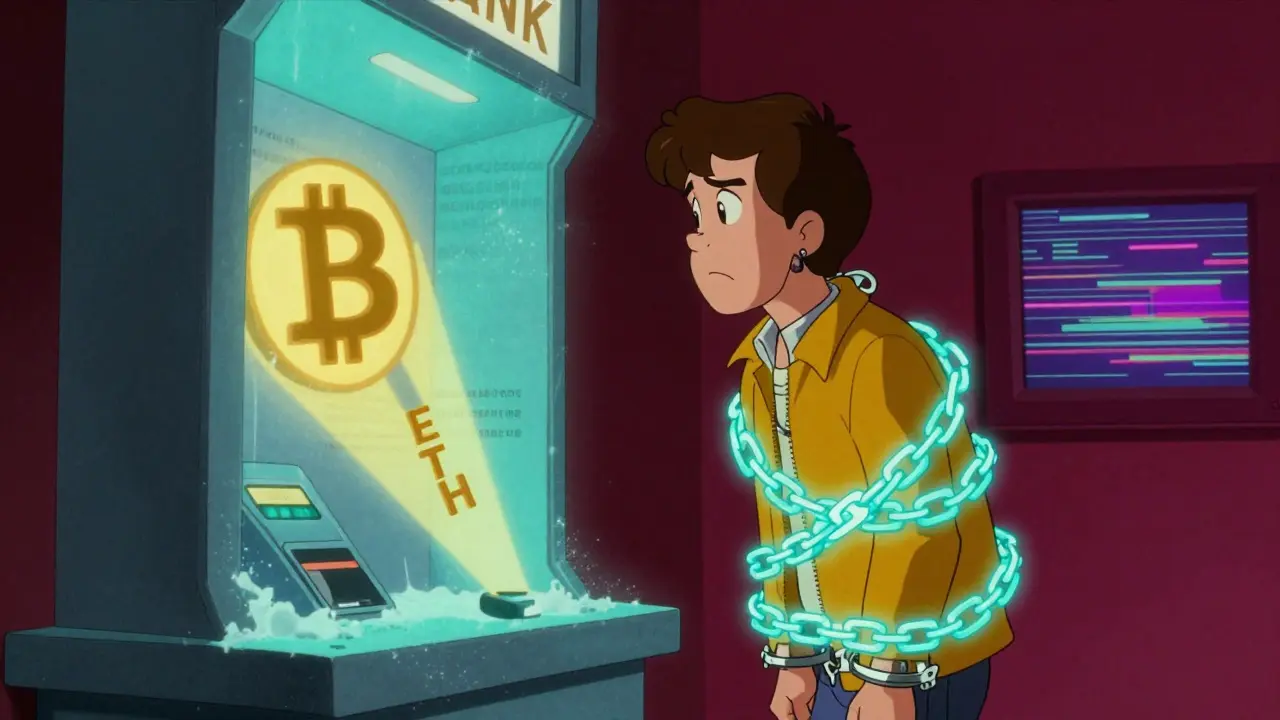
In 2025, your bank can freeze your account just because you received crypto from a suspicious address - even if you had no idea. Here’s how it works, who’s affected, and how to protect yourself.
More