Crypto Bank Freeze: What Happens When Your Crypto Gets Locked Up
When a crypto bank freeze, a sudden halt on withdrawals or account access by a crypto lending or trading platform. Also known as crypto platform collapse, it’s not a glitch—it’s often the endgame for platforms that promised high yields but never had the real assets to back them up. This isn’t just about losing access to your Bitcoin or USDT. It’s about realizing too late that the platform you trusted was never a bank—it was a house of cards built on borrowed money and misleading marketing.
Platforms like Vauld, a crypto lending service that froze all user funds in 2022 after running out of liquidity and others like Celsius and BlockFi didn’t vanish overnight. They grew fast by offering 8%, 10%, even 15% interest on deposits. People believed they were earning passive income. But behind the scenes, those funds were being loaned out, invested in risky DeFi protocols, or worse—used to cover operational costs. When markets turned or withdrawals spiked, the money was gone. No reserves. No backup. Just silence.
The same thing happened in countries like Bangladesh and Myanmar, where trading crypto is outright illegal. Local banks, under pressure from regulators, started closing accounts linked to crypto transactions—even if the user never broke any laws. Your account gets flagged, your funds disappear, and you have zero legal protection. No FDIC insurance. No customer service line. Just a locked screen and a dead email inbox.
And it’s not just about big exchanges. Smaller platforms, especially those promising airdrops or NFT rewards, often operate like Ponzi schemes disguised as Web3 projects. They collect crypto from users, promise future payouts, then vanish. The crypto lending platform, a service that lends user deposits to earn interest, often without proper collateral or audits model is broken because it relies on new users to pay old ones. When growth slows, the whole thing collapses.
So what’s the real risk? It’s not volatility. It’s trust. You’re not storing crypto in your own wallet—you’re handing it over to someone else who claims to be safe. But if they’re not regulated, not audited, and not transparent, you’re gambling with your life savings. The crypto bank freeze isn’t a rare event. It’s the norm for unregulated platforms. And every time one happens, thousands of people wake up to find their crypto gone.
Below, you’ll find real stories of platforms that froze funds, countries that banned crypto trading, and users who lost everything. No theory. No hype. Just what happened, why it happened, and how to make sure it doesn’t happen to you.
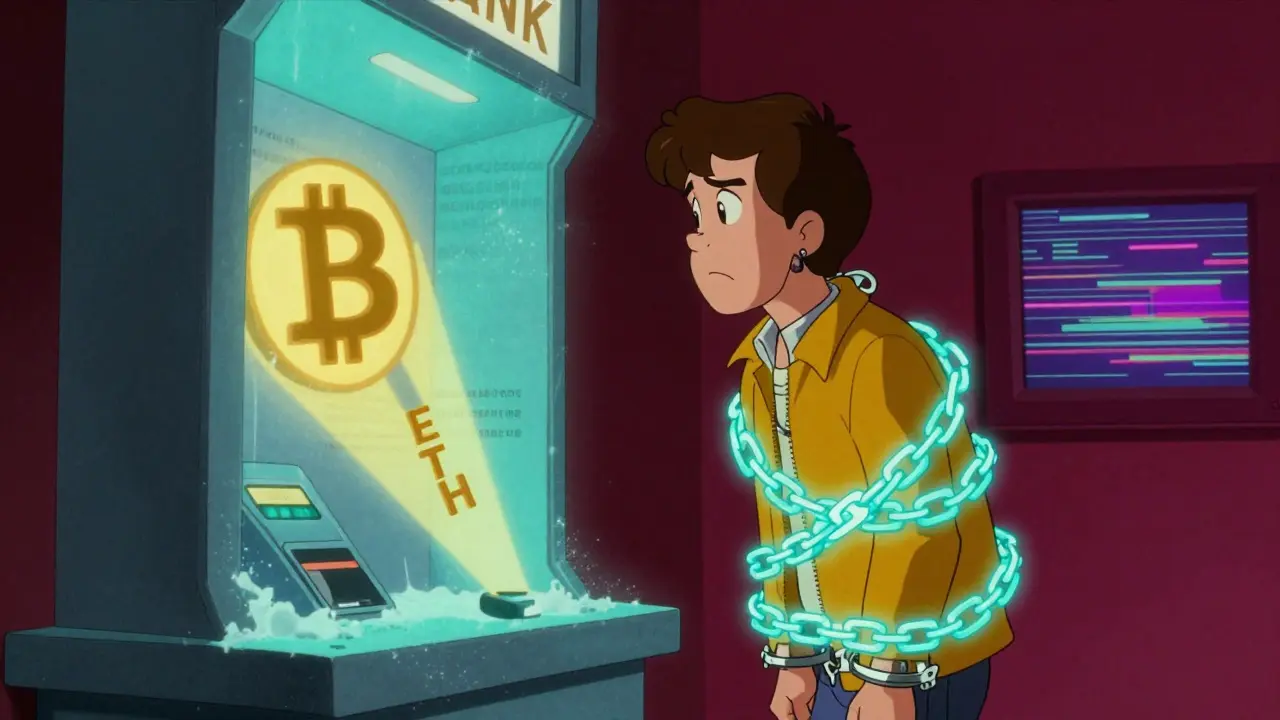
In 2025, your bank can freeze your account just because you received crypto from a suspicious address - even if you had no idea. Here’s how it works, who’s affected, and how to protect yourself.
More