The Future of NFTs in Gaming: Beyond Hype to Real Ownership
 Jun, 7 2026
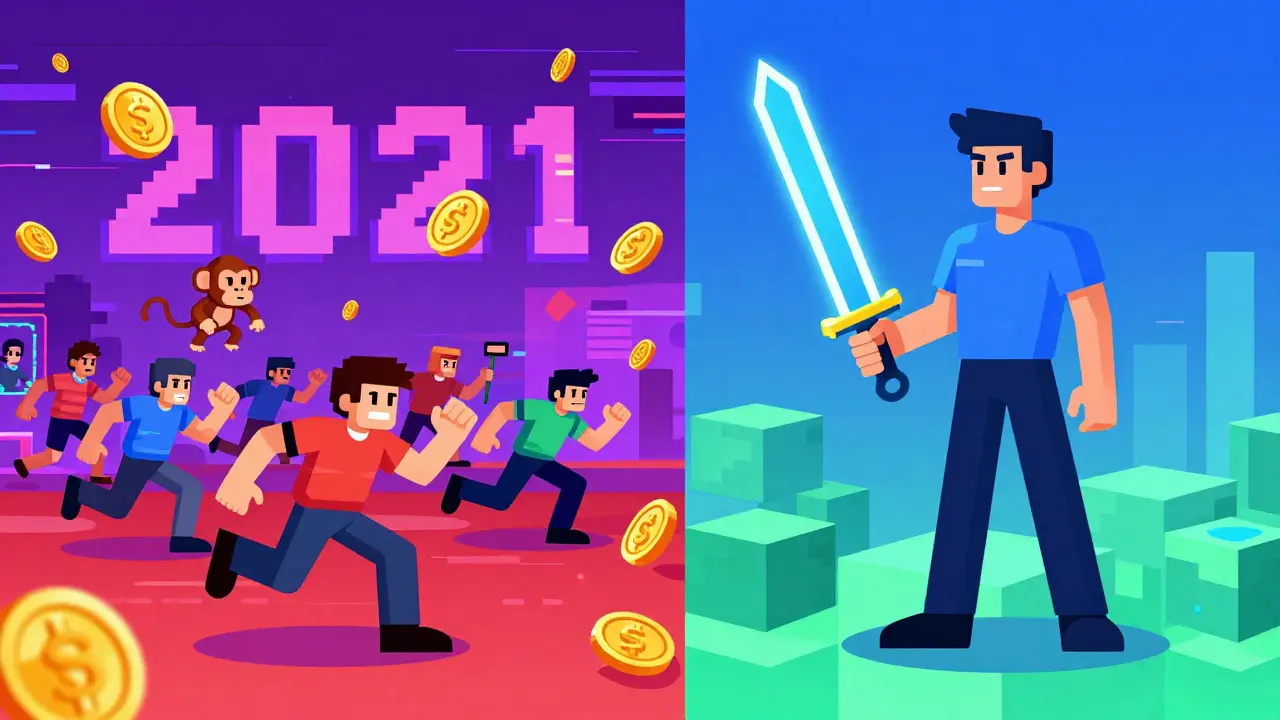
Remember the chaos of 2021? Every second tweet seemed to be about buying a pixelated monkey or earning crypto while playing a game. The hype was deafening, and then, just as quickly, it vanished for many. Fast forward to mid-2026, and the dust has settled. The speculative frenzy is gone, but the technology hasn't disappeared-it’s evolving. Today, Non-Fungible Tokens (NFTs) in gaming are no longer about quick cash grabs; they’re about solving a fundamental problem in the industry: true digital ownership.
If you’ve been watching the space, you know that the "play-to-earn" model that dominated early conversations has hit a wall. Players realized that grinding for tokens often felt more like a job than fun. But beneath that noise, developers have been quietly building something more sustainable. The future of NFTs in gaming isn’t about replacing traditional games with crypto experiments. It’s about integrating blockchain where it actually adds value-ownership, interoperability, and player-driven economies-without ruining the gameplay experience.
The Shift from Speculation to Utility
In the early days, an NFT was primarily a speculative asset. Its value depended on what someone else would pay for it next month. That model collapsed because it lacked intrinsic utility. Today, the focus has shifted dramatically toward utility. An in-game sword, skin, or character trait represented by an NFT is valuable because it does something inside the game world. It enhances your experience, grants access to exclusive content, or allows you to participate in community governance.
This shift is crucial for long-term survival. When players buy an item because it looks cool or makes them stronger, they are engaging with the game’s core loop. When they buy it hoping its price will triple, they are gambling. The latter creates volatile markets and frustrated users when prices drop. The former builds loyalty. Games like Axie Infinity pioneered the concept, but newer titles are refining it. They are designing economies where assets have real use cases within the ecosystem, not just exit liquidity on a secondary market.
We are also seeing a move away from complex financial mechanics. Early blockchain games required players to understand wallets, gas fees, and private keys before they could even start playing. That barrier to entry kept mainstream gamers away. Now, the trend is toward "invisible blockchain" experiences. Players log in with a standard email or social account, and the backend handles the cryptographic complexity. You own your assets, but you don’t need a degree in cryptography to claim them.
True Digital Ownership: What It Actually Means
Let’s talk about what "ownership" really means in this context. In traditional gaming, you license content. If a server shuts down, your rare dragon mount disappears. You can’t sell it to another player for real money without risking a ban. With blockchain-based assets, the item exists on a decentralized ledger. Even if the game developer goes bankrupt or changes the game’s direction, you still hold the token representing that asset.
This doesn’t mean the asset is useful forever-if the game dies, the sword might only be worth its artistic merit-but it gives players a stake in the platform. This sense of ownership fosters deeper engagement. Players treat their accounts differently when they know their investments are secure and portable. It transforms the relationship between developer and player from a service provider-client dynamic to a partnership.
Consider the implications for modding communities. Imagine a scenario where a player creates a custom texture pack or a new level design, mints it as an NFT, and sells it directly to other players through a decentralized marketplace. The creator keeps most of the revenue, the game benefits from fresh content, and players get unique experiences. This kind of user-generated economy is difficult to implement fairly in centralized systems due to payment processing restrictions and lack of transparent royalty structures.
Interoperability: The Holy Grail or a Myth?
One of the biggest promises of Web3 gaming was interoperability-the idea that you could take your helmet from one game and wear it in another. Five years ago, this sounded revolutionary. Today, it’s recognized as incredibly complex. Different games have different art styles, physics engines, and power balances. A +5 Strength sword in a role-playing game might break the economy in a competitive shooter.
Rather than forcing universal compatibility, the industry is moving toward "portable identity" and shared standards. Instead of moving every single item across every game, we are seeing protocols that allow certain metadata to travel. Your reputation, your achievements, or your cosmetic preferences can follow you from one title to another. This is less flashy than carrying a weapon across universes, but it’s far more practical and achievable.
Standards like ERC-721 and ERC-1155 on Ethereum, along with similar protocols on Solana and Polygon, provide the technical foundation for these interactions. Developers are creating middleware solutions that translate these assets into formats usable by different game engines. While full cross-game item usage remains niche, the infrastructure for partial interoperability is maturing rapidly. This means that in the near future, your gaming history and verified skills could unlock bonuses in new titles you try, creating a cohesive ecosystem rather than isolated silos.
Mobile Gaming: The Next Frontier
While PC and console gamers have been experimenting with blockchain for years, the real growth engine for NFT gaming is mobile. With over half of all gamers using smartphones, this demographic represents the largest untapped audience for Web3. Mobile users are already accustomed to microtransactions, in-app purchases, and digital collectibles. The transition to owning those items via NFTs is a natural step.
Mobile-first blockchain games are prioritizing simplicity and accessibility. They feature casual gameplay loops, low transaction costs (thanks to Layer 2 solutions and sidechains), and seamless onboarding. Titles like Splinterlands and Alien Worlds demonstrated that simple card battles and resource gathering could attract millions of daily active users when combined with tangible rewards.
The key here is performance. Blockchain transactions can be slow and expensive on mainnets. To solve this, developers are utilizing high-throughput chains and off-chain scaling solutions. These technologies ensure that trading an item takes seconds and costs fractions of a cent, making the experience indistinguishable from traditional mobile gaming. As hardware improves and networks become faster, the friction between playing and transacting will disappear entirely.
Challenges That Remain
Despite the progress, significant hurdles remain. Regulatory uncertainty is perhaps the biggest threat. Governments worldwide are still figuring out how to classify digital assets. Are they securities? Commodities? Property? The answer varies by jurisdiction and impacts how developers can structure their tokenomics. Compliance costs are rising, and smaller studios may struggle to keep up.
Environmental concerns also persist, though they are diminishing. Most major blockchains have moved from energy-intensive Proof-of-Work consensus mechanisms to efficient Proof-of-Stake models. Ethereum’s "Merge" reduced its energy consumption by over 99%. Newer chains built specifically for gaming are designed with sustainability in mind from day one. Still, public perception lags behind technological reality, and greenwashing accusations can damage brand trust.
Finally, there is the challenge of balancing monetization with fun. Too many early projects focused so heavily on economic incentives that the gameplay suffered. Players left once the rewards dried up or the grind became too tedious. Successful modern NFT games prioritize entertainment first. The blockchain layer supports the fun; it doesn’t replace it. If a game isn’t enjoyable without the potential to earn, it won’t survive in the long run.
| Feature | Traditional Gaming | NFT/Blockchain Gaming |
|---|---|---|
| Asset Ownership | Licensed from developer; revocable | Owned by player; stored on blockchain |
| Resale Market | Restricted or banned; black markets exist | Open, transparent, peer-to-peer trading |
| Economy Control | Centralized by publisher | Decentralized or hybrid community governance |
| Interoperability | None; assets locked to one platform | Potential for cross-game portability via standards |
| User Onboarding | Simple: Email/Social login | Improving: Abstracted wallets, invisible blockchain |
What to Watch For in 2026 and Beyond
As we look ahead, several trends will define the next phase of NFT gaming. First, expect tighter integration with AI. Artificial intelligence can generate dynamic, unique assets on demand, which can then be minted as NFTs. This creates infinite variety and personalization, ensuring that no two players have exactly the same experience.
Second, watch for the rise of DAOs (Decentralized Autonomous Organizations) in game development. Communities will have a say in roadmap decisions, balance changes, and fund allocation. This aligns incentives between creators and players, reducing churn and fostering long-term commitment.
Third, major publishers are beginning to experiment cautiously. While AAA studios haven’t fully embraced NFTs yet, they are investing in research and pilot programs. When a household name releases a game with integrated blockchain features, it will signal mass adoption. Until then, innovation will continue to come from indie developers and dedicated Web3 studios.
The future of NFTs in gaming is not about replacing what works. It’s about enhancing it. By giving players real ownership, enabling fair economies, and breaking down barriers between platforms, blockchain technology has the potential to make gaming more inclusive, creative, and rewarding. The hype cycle is over. The building phase has begun.
Are NFTs still relevant in gaming in 2026?
Yes, but their role has evolved. Instead of being speculative assets, NFTs are now used to represent verifiable digital ownership of in-game items, enabling secure trading, interoperability, and player-driven economies. The focus has shifted from hype to utility and improved user experience.
Do I need to know about cryptocurrency to play NFT games?
Not necessarily. Modern NFT games are adopting "invisible blockchain" technology, allowing players to log in with standard accounts. The complex wallet management and transaction processes happen in the background, making the experience accessible to non-crypto natives.
Is it possible to transfer items between different games?
Full interoperability is still limited due to differences in game mechanics and art styles. However, "portable identity" and shared standards are emerging, allowing certain attributes like cosmetics, achievements, or reputation to carry over between compatible titles within an ecosystem.
What are the biggest risks of NFT gaming?
Key risks include regulatory uncertainty regarding asset classification, market volatility affecting item values, and smart contract vulnerabilities. Additionally, games that prioritize financial rewards over gameplay quality often fail to retain players long-term.
How do NFT games handle environmental concerns?
Most modern blockchain games operate on energy-efficient networks using Proof-of-Stake consensus or Layer 2 scaling solutions. These technologies reduce energy consumption by over 99% compared to older Proof-of-Work systems, addressing earlier environmental criticisms.