TradeOgre Shutdown: What the $40M Crypto Seizure Means for Privacy Coins
 Jun, 3 2026
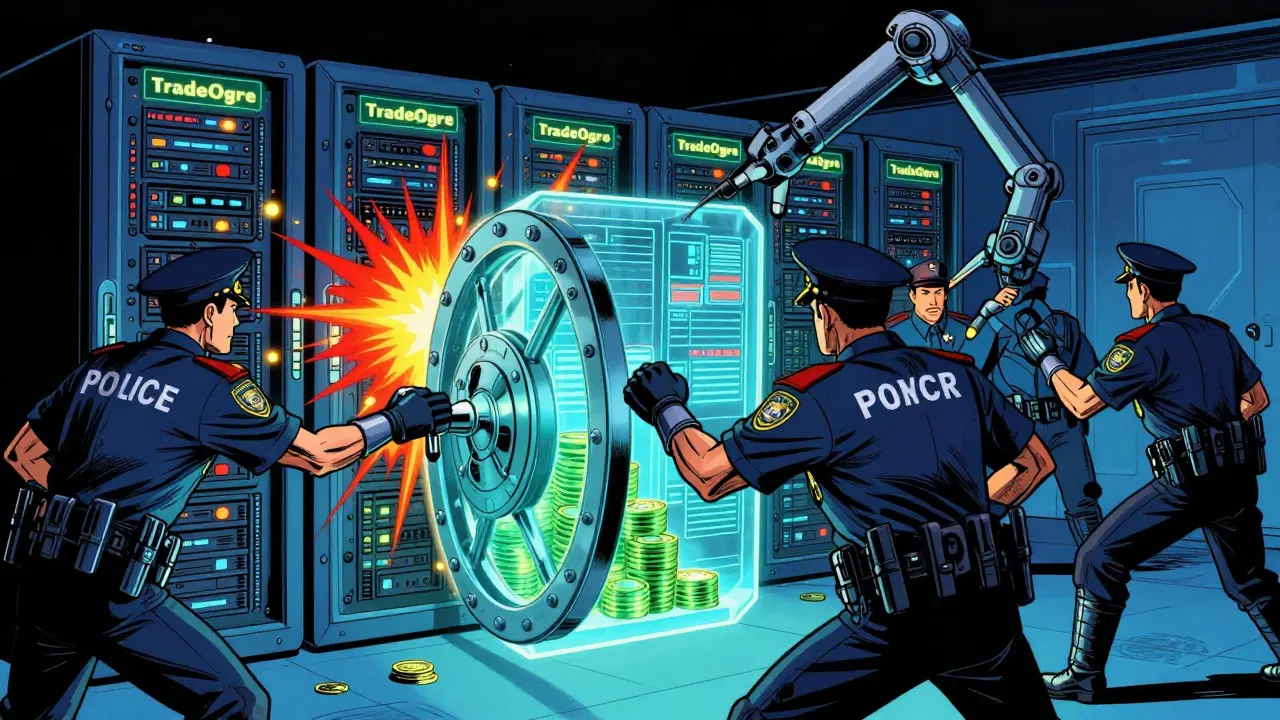
On September 18, 2025, the landscape of cryptocurrency regulation in North America shifted dramatically. The Royal Canadian Mounted Police (RCMP) announced the seizure of CAD$56 million-roughly US$40 million-in digital assets from TradeOgre, a centralized exchange known for its lack of identity verification requirements. This wasn't just another fine or warning letter. It was the first time Canadian law enforcement completely dismantled a cryptocurrency trading platform. For anyone who valued financial anonymity online, this event sent a clear and chilling message: the era of operating outside regulatory oversight is ending.
The End of Anonymity on TradeOgre
To understand why this seizure matters, you have to look at what TradeOgre actually was. Founded in 2018 by an anonymous figure and registered in the United States, the platform positioned itself as a haven for privacy. Unlike major exchanges like Coinbase or Kraken, which require you to upload your passport and verify your address, TradeOgre allowed users to trade without any Know Your Customer (KYC) protocols. You could sign up, deposit funds, and trade niche altcoins or privacy-focused cryptocurrencies like Monero (XMR) without ever revealing who you were.
This model attracted two types of people: legitimate users who simply valued their privacy and individuals looking to move illicit funds away from surveillance. By operating as a Tor-based hidden service, TradeOgre made it difficult for traditional authorities to even locate their servers, let alone track their transactions. However, this very feature became its undoing. The RCMP’s Money Laundering Investigative Team (MLIT) didn’t need to break into a physical office; they needed to follow the money on the blockchain.
How the RCMP Caught TradeOgre
The investigation didn't start with a raid. It started with a tip. In June 2024, Europol, the European Union’s law enforcement agency, passed crucial intelligence to the RCMP. This marked the beginning of a year-long probe that highlighted a new trend in global crime fighting: international cooperation combined with private-sector technology.
The RCMP partnered with Arkham Intelligence, a blockchain analytics firm. These companies don't just watch transactions; they map them. They use heuristic analysis to cluster wallet addresses, identifying patterns that suggest ownership or control. Even though TradeOgre tried to obscure user identities, the flow of funds between wallets left a trail. Arkham helped the police trace these illicit transactions through the exchange's infrastructure, linking specific wallets to the TradeOgre entity.
The climax came in July 2025 when TradeOgre’s website and social media channels suddenly went dark. There was no explanation. No maintenance notice. Just silence. Shortly after, blockchain analysts noticed massive movements of funds from wallets linked to the exchange. But here is the twist: the transfers contained embedded messages declaring that the assets were under RCMP control. This public display of seizure power was designed to signal to other non-compliant platforms that there is nowhere to hide.

Regulatory Violations and FINTRAC
Why did the government care so much? The answer lies in compliance. In Canada, any business dealing in virtual currencies must register with the Financial Transactions and Reports Analysis Centre of Canada (FINTRAC). This is not optional. FINTRAC requires businesses to implement strict Anti-Money Laundering (AML) measures. This includes verifying customer identities, keeping records of transactions, and reporting suspicious activities.
TradeOgre failed on every front. They never registered with FINTRAC. They ignored KYC laws. By allowing anonymous trading, they effectively created a blind spot in the national financial system. The RCMP’s action establishes a precedent: geographic registration (in this case, the US) does not protect you if you serve Canadian users or operate within Canadian jurisdictional reach. If you facilitate transactions that bypass federal financial regulations, you are a target.
| Feature | Compliant Exchange (e.g., Coinbase) | Non-Compliant Exchange (e.g., TradeOgre) |
|---|---|---|
| Identity Verification | Mandatory KYC (ID, Address) | None (Anonymous) |
| Regulatory Status | Registered with FINTRAC/SEC | Unregistered / Blacklisted |
| Asset Safety | Insured/Custodial protections | No protection; high seizure risk |
| Law Enforcement Access | Cooperates with subpoenas | Targeted for seizure |
| Supported Coins | Major pairs (BTC, ETH, USD) | Niche altcoins, Monero, Darknet markets |
Implications for Privacy Coins Like Monero
One of the most discussed aspects of the TradeOgre shutdown is its impact on Monero. Monero is a cryptocurrency designed specifically for privacy. It uses ring signatures and stealth addresses to make transaction tracing nearly impossible. TradeOgre was one of the few places where you could easily swap fiat or other cryptos for Monero without questions asked.
Does this mean Monero is dead? Not necessarily. But it means the "easy" way out is gone. The seizure highlights that while the technology of privacy coins is robust, the entry and exit points (exchanges) are vulnerable. Law enforcement doesn't need to break the cryptography of Monero; they just need to shut down the bridges that connect it to the traditional banking system. Users now face a harder choice: use compliant exchanges that may ban Monero due to regulatory pressure, or use decentralized peer-to-peer methods that carry higher technical risks and potential legal scrutiny.

The Role of Blockchain Analytics
The collaboration between the RCMP and Arkham Intelligence marks a turning point. In the early days of Bitcoin, the blockchain was truly pseudonymous. Today, it is increasingly transparent. Firms like Chainalysis, Elliptic, and Arkham provide law enforcement with tools that can de-anonymize clusters of wallets. They can identify exchange hot wallets, mixers, and tumblers.
For developers and operators of crypto platforms, this is a wake-up call. You cannot rely on obscurity. If you build a platform that handles significant volume, you will be mapped. The ability of the RCMP to embed messages in blockchain transactions showing their control demonstrates that they are not just watching; they are actively managing seized assets. This transparency serves as both a deterrent and a proof of capability.
What This Means for Crypto Users in 2026
If you are holding cryptocurrency, especially on smaller or lesser-known exchanges, the TradeOgre case should make you nervous. Here is the reality check:
- Custodial Risk: When you leave your coins on an exchange, you do not own them. The exchange does. If the exchange is seized, your access is frozen. The CAD$56 million seized likely included user funds, not just corporate assets.
- Not Your Keys, Not Your Coins: This mantra has never been more relevant. Self-custody using hardware wallets is the only way to ensure that a third-party seizure doesn't lock you out of your assets.
- Compliance is Inevitable: The global trend is moving toward stricter AML/KYC rules. Platforms that resist this, like TradeOgre, are becoming liabilities rather than assets. Expect more shutdowns globally, not just in Canada.
The TradeOgre shutdown is not an isolated incident. It is part of a broader strategy by Western governments to bring the crypto economy under the same regulatory umbrella as traditional finance. The message is clear: innovation is welcome, but criminal facilitation is not. And in the eyes of regulators, anonymity often equals criminal facilitation.
Can I still access my funds from TradeOgre?
No. As of September 2025, all assets held by TradeOgre were seized by the RCMP. The platform has ceased operations, and there is no mechanism for users to withdraw their funds. Any attempt to contact the platform for recovery is futile.
Is Monero illegal in Canada?
No, Monero itself is not illegal. However, trading it on unregistered platforms that do not comply with FINTRAC regulations is risky. Major Canadian exchanges may delist Monero to avoid regulatory scrutiny, making it harder to buy and sell legally.
Why did the RCMP seize $40 million instead of just shutting down the site?
Seizing the assets prevents the operators from fleeing with the money and ensures that the funds, which are believed to be proceeds of crime, can be forfeited to the state. It also serves as a strong deterrent to other non-compliant exchanges.
How did Arkham Intelligence help the RCMP?
Arkham provided blockchain analytics tools that allowed investigators to trace fund flows, identify wallet clusters associated with TradeOgre, and distinguish between user funds and operational reserves. This data was crucial for obtaining the necessary court orders for seizure.
Will other privacy-focused exchanges be targeted next?
It is highly likely. The TradeOgre case sets a precedent that Canadian authorities are willing and able to pursue non-compliant platforms regardless of their location or use of privacy technologies like Tor. Other exchanges ignoring KYC/AML laws are at significant risk.