VPN Risks for Crypto Traders in Iran: Detection, Bans, and Safety Guide
 Jun, 21 2026
For millions of Iranians, cryptocurrency is not a speculative hobby-it is a lifeline. With the local currency fluctuating wildly and international banking channels effectively blocked by sanctions, digital assets offer a rare window to preserve wealth. But that window is closing fast. In 2025, the landscape for Iranian traders shifted from a game of cat-and-mouse to a high-stakes enforcement crackdown. If you are using a Virtual Private Network (VPN) to trade crypto in Iran, you need to understand that your connection is no longer just a privacy tool; it is a potential liability that could freeze your assets overnight.
The era of anonymous trading on global platforms is over. Major exchanges have tightened their Know Your Customer (KYC) protocols, and blockchain intelligence firms are actively hunting down wallet addresses linked to Iranian entities. This article breaks down exactly how these detection systems work, why free VPNs are dangerous, and what the recent crackdowns mean for your financial security.
The End of Anonymous Trading
Historically, Iranian traders relied on major global exchanges like Binance, which was once popular among Iranian users due to its lax identity verification requirements. Back in 2019 and 2020, reports emerged that Binance executives were aware of significant Iranian user adoption, with internal messages joking about "IRAN BOYS" driving platform popularity. At that time, simple email registration was enough to start trading. Seven Iranian traders confirmed to Reuters as recently as September 2021 that they successfully evaded geoblocking through VPN usage.
That changed drastically in October 2021 when Binance implemented hardened anti-money laundering rules. The shift was abrupt. Accounts that had operated freely for years were suddenly suspended. Today, the barrier to entry is much higher. Exchanges require government-issued ID, proof of address, and sometimes even live video verification. For an Iranian trader, this means you cannot simply log in from Tehran. You must bypass not just IP blocks, but sophisticated identity checks designed to flag users from sanctioned jurisdictions.
How Exchanges Detect Iranian Users
Many traders believe that if their IP address shows they are in Turkey or Germany, they are safe. This is a dangerous misconception. Modern detection goes far beyond IP location. Exchanges and blockchain analytics firms use a combination of technical fingerprinting and behavioral analysis to identify users.
First, there is device fingerprinting. When you connect to an exchange, the platform collects data about your browser version, operating system, screen resolution, and installed fonts. If your device settings reveal a language preference set to Persian or specific hardware configurations common in the region, it raises a red flag, even if your IP is masked.
Second, transaction pattern analysis is highly effective. Blockchain intelligence platforms can trace funds across multiple wallets. If you withdraw funds to a wallet that has previously interacted with known Iranian exchanges or mixing services, the entire chain gets flagged. The concentration of Iranian crypto activity makes this easier. For example, in 2025, over $2 billion of transactions from Nobitex, Iran's largest domestic exchange, flowed through the TRON network. This heavy reliance on specific networks creates a distinct footprint that analysts can easily track.
Third, behavioral anomalies matter. If you log in at times consistent with Tehran’s business hours but claim to reside in London, or if your withdrawal requests match patterns seen in other flagged accounts, automated systems will trigger a review. A sudden drop in your VPN connection during an active transaction is catastrophic. It immediately exposes your true Iranian IP address to the exchange’s monitoring systems, often resulting in instant account suspension before you can react.
The Underground Identity Market
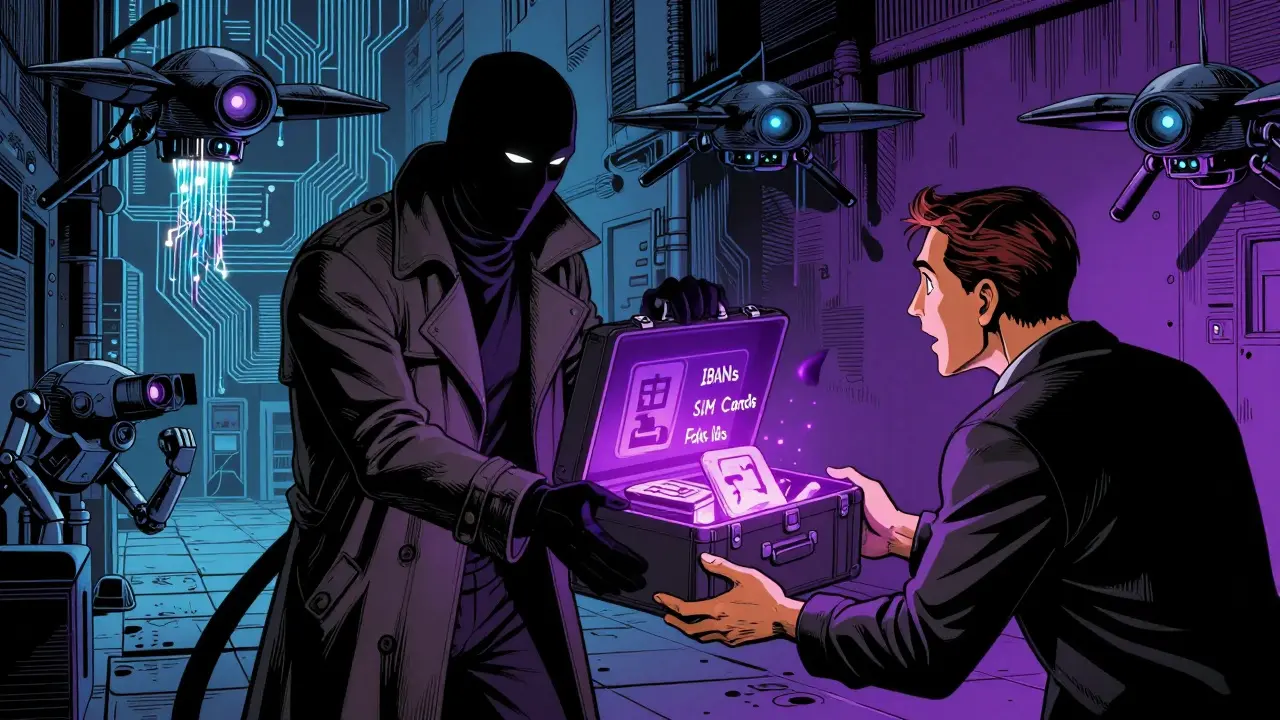
Faced with these barriers, a sophisticated underground ecosystem has emerged. These operations provide comprehensive "identity circumvention packages" for those willing to pay. These packages typically include:
- Foreign IBANs: Bank account numbers from non-sanctioned countries used to deposit fiat currency.
- SIM Cards for OTPs: Real mobile numbers from third-party countries to receive One-Time Passwords for verification.
- Fake Residency Documents: Forged passports or utility bills to satisfy KYC requirements.
Nicholas Smart, Director of Intelligence at Crystal, noted that there is a whole tranche of normal Iranian people using cryptocurrency who require these methods to participate in the global economy. However, relying on stolen or fake identities carries immense risk. If the original owner of the SIM card or bank account reports fraud, or if the document is flagged in a database, your access to funds is cut off permanently. There is no customer support to call when you are locked out of an account registered under a false name.
Detection Risks and Enforcement Actions
The cost of being detected is severe. In January 2025, enforcement actions resulted in the freezing of over one million bank accounts connected to cryptocurrency activities within Iran. The Central Bank of Iran maintains strict prohibitions on domestic payments using cryptocurrencies, creating a complex regulatory environment where VPN usage sits in a legal gray area.
Internationally, the pressure is mounting too. In October 2024, two major blockchain intelligence platforms published wallet information and initiated a wallet identification bounty program specifically targeting Nobitex. This dramatically escalated detection risks. The goal was clear: identify the individuals behind the wallets and push exchanges to block them. The result was widespread account freezes and stricter KYC processes for anyone associated with these networks.
Market data reflects this chilling effect. June 2025 recorded over a 50% year-over-year decline in crypto inflows to Iran. By July, the drop exceeded 76%. This sharp decline coincides with enhanced detection capabilities and intensified enforcement. It suggests that traditional VPN-based circumvention strategies are becoming less effective as exchanges become smarter and more aggressive in blocking suspicious traffic.
Why Free VPNs Are a Trap
In desperation, some traders turn to free VPN services to save money. This is one of the biggest mistakes you can make. Free VPNs pose severe security vulnerabilities. Many lack sufficient encryption protocols, meaning your data-including login credentials and private keys-can be intercepted.
Worse, many free providers monetize their service by stealing or selling user information to third parties. If a free VPN logs your activity and sells that data to a blockchain analytics firm or a government agency, you have handed over your anonymity directly. Additionally, free VPNs suffer from reduced connection speeds and unreliable performance due to high traffic loads. In the world of crypto trading, a laggy connection can mean missing a trade or, worse, dropping your secure tunnel mid-transaction, exposing your real IP address.
| Method | Anonymity Level | Risk of Detection | Cost |
|---|---|---|---|
| Free VPN | Low | High (Data logging/sales) | Free |
| Premium No-Log VPN | Medium | Medium (IP masking only) | Monthly Subscription |
| Tor Browser | High | Low (But slow/blocked by many sites) | Free |
| Underground Identity Package | Variable | Critical (Fraud/Legal risk) | High (One-time fee) |
The Role of Domestic Platforms
With global options shrinking, many Iranians have turned back to domestic platforms like Nobitex. In 2025, Nobitex processed over 87% of all Iranian-linked crypto transaction volume. While this offers convenience and compliance with local regulations, it comes with its own set of risks.
Trust in domestic Virtual Asset Service Providers (VASPs) continues to erode. Security breaches have revealed vulnerabilities, and there are concerns about warrantless surveillance. The Ministry of Energy controls mining licensing and electricity allocation, while the Iran Cyber Police (FATA) intensifies enforcement against illegal crypto operations. Using a domestic platform means your data is subject to local laws and surveillance capabilities. Illicit activity at Iranian exchanges accounts for approximately 0.9% of total volume, matching global averages, but this still creates additional scrutiny from both local authorities and international partners.
Adapting to New Realities
As detection sophistication escalates, Iranian traders are adapting. We see the rise of alternative earning methods, such as Hamster Combat, a digital currency gaming tool that allows users to earn tokens without direct exchange interaction. These tools allow ordinary Iranians to engage with the crypto economy while bypassing traditional exchange monitoring. However, cashing out these earnings remains a challenge, often requiring peer-to-peer (P2P) transactions that carry their own risks of scams and frozen bank accounts.
For those who must trade on international platforms, the advice is clear: do not rely on a single layer of protection. Use a premium, no-log VPN provider based in a jurisdiction with strong privacy laws. Enable two-factor authentication (2FA) using an app like Google Authenticator, never SMS. Keep your device clean of malware that could leak your IP. And most importantly, assume that any account linked to your real identity is vulnerable. Diversify your holdings across different wallets and avoid large, conspicuous transactions that stand out on the blockchain.
Is it illegal to use a VPN for crypto in Iran?
The legality is complex. While the Central Bank of Iran prohibits domestic payments using cryptocurrencies, VPN usage itself exists in a legal gray area. However, using a VPN to bypass sanctions or access banned financial services can lead to account freezes by international exchanges and potential scrutiny from local authorities like the Iran Cyber Police (FATA).
Can exchanges detect me if I use a premium VPN?
Yes. Premium VPNs mask your IP address, but exchanges also use device fingerprinting, behavioral analysis, and transaction pattern recognition. If your behavior matches known Iranian trading patterns or if your device leaks metadata, you can still be detected and banned.
What happened to Nobitex in 2024-2025?
Nobitex faced intense scrutiny after blockchain intelligence firms launched bounty programs targeting its wallets. This led to increased detection of Iranian-linked transactions, causing many users to lose access to international exchanges and driving a significant drop in crypto inflows to the country.
Are underground identity packages safe?
No. They carry critical risks. If the fake documents or SIM cards are flagged, your account will be permanently locked. Since the account is not in your name, you have no legal recourse to recover your funds. It is essentially gambling with your capital.
Why did crypto inflows to Iran drop so sharply in 2025?
Inflows dropped by over 76% in July 2025 due to enhanced detection capabilities by exchanges, stricter KYC enforcement, and the freezing of bank accounts linked to crypto activities. This created a climate of fear and reduced trust in both domestic and international platforms.