What is Emorya Finance (EMR)? A Guide to the Fitness-to-Earn Crypto Token
 Jul, 4 2026
Imagine getting paid every time you burn calories. It sounds like a dream scenario for anyone trying to stay fit while managing their wallet. That is exactly what Emorya Finance (EMR) promises. But before you download an app and start running laps expecting riches, it helps to understand what this project actually is, how it works, and whether it’s worth your time in 2026.
Emorya Finance is not just another meme coin hoping for viral fame. It is a utility token built on the MultiversX blockchain that powers a "live-to-earn" ecosystem. The core idea is simple: you track physical activity through a mobile app, earn reward tokens, and convert them into EMR, which can then be traded or withdrawn. However, the reality involves complex tokenomics, high fees, and significant market volatility.
How the Emorya Ecosystem Works
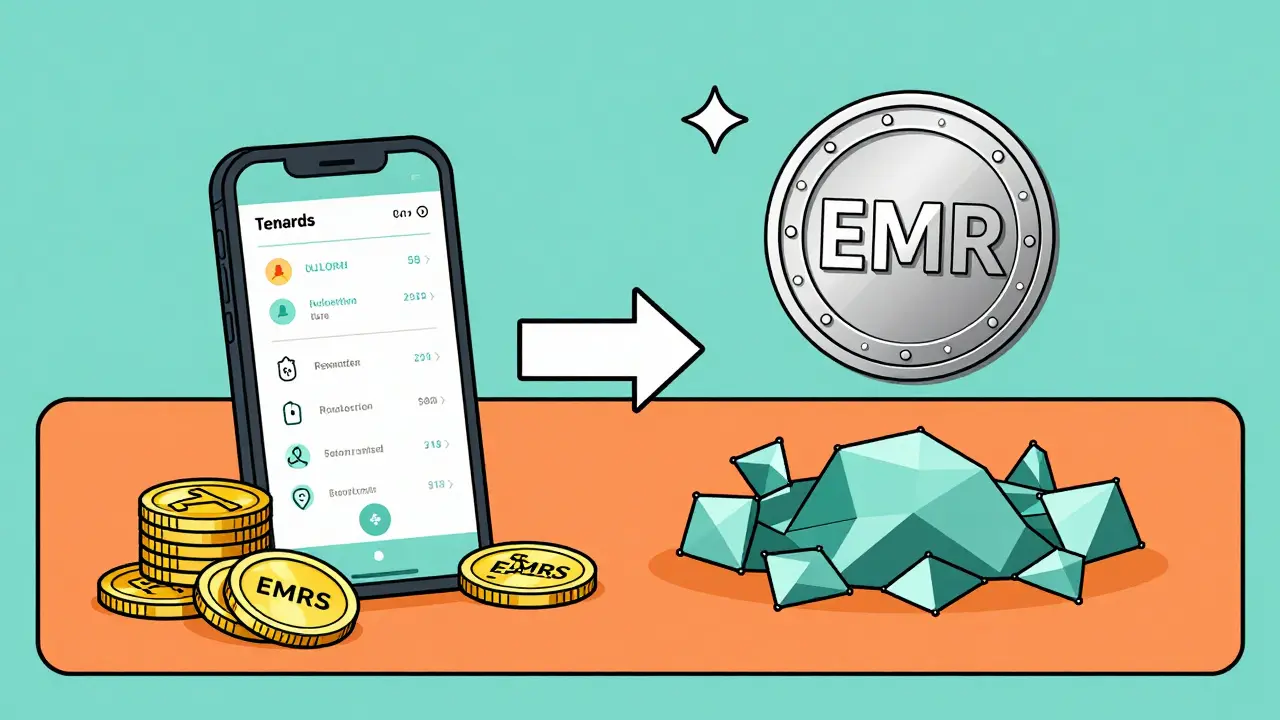
To understand EMR, you have to look at the two-token system Emorya uses. This is crucial because most users interact with one token first and only care about the second later.
- EMRS (Reward Token): This is the currency you earn inside the Emorya app. When you walk, run, or exercise, the app tracks your burned calories via smartphone sensors or connected wearables. At the end of each day, those calories are converted into EMRS and deposited into your digital wallet. Think of EMRS as points in a loyalty program-it has value within the app but isn’t meant to be held long-term on its own.
- EMR (Utility Token): This is the main cryptocurrency. You convert your accumulated EMRS into EMR using the app’s interface. Once you have EMR, you can use it to access premium features, buy products in the Emorya marketplace, participate in governance, or sell it on external exchanges for other cryptocurrencies or fiat money.
The loop is designed to close itself: effort becomes data, data becomes rewards (EMRS), rewards become value (EMR), and value becomes real-world purchasing power. For many beginners, this feels intuitive. If you’ve used health apps before, the transition to crypto rewards adds a layer of financial incentive without changing the daily habit.
Why "Hyper-Deflationary" Matters
You will see the term "hyper-deflationary" attached to EMR almost everywhere. This is the project’s biggest selling point-and its biggest risk. Here is what it means in plain English.
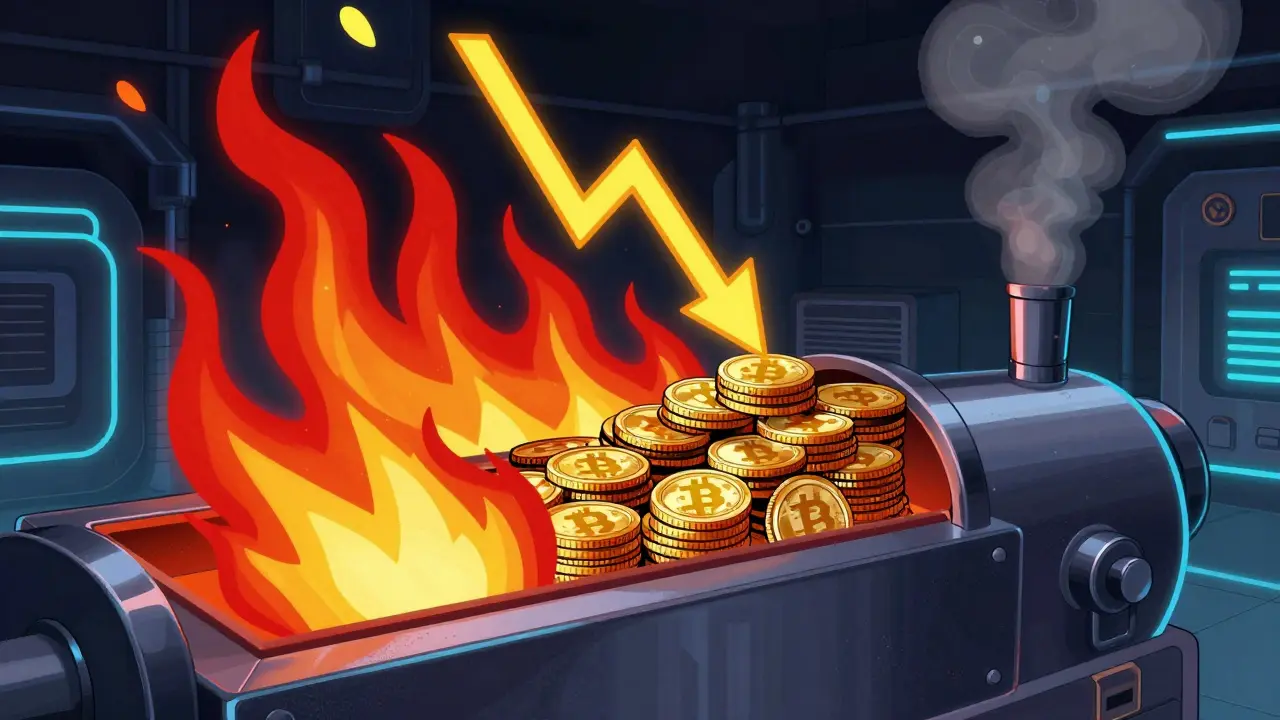
Every time a transaction involving EMR happens on the blockchain, a fee is charged. According to official documentation, 12% of certain operations (like unlocking tokens or claiming rewards) goes toward fees. Of that, 3% is automatically burned. Burning means those tokens are sent to an inaccessible address forever. They are gone. Supply decreases.
The goal? To reduce the total supply of EMR until it hits 1 million tokens. Currently, the total supply is reported around 1 billion. If the project stays active and transactions continue, the supply shrinks. Basic economics says if demand stays steady and supply drops, price should rise. That is the theory.
However, there is a catch. The 12% fee structure is steep compared to standard network gas fees. If you are frequently converting small amounts of EMRS to EMR and trading them, you lose a chunk of your holdings to these burns and protocol fees. This discourages high-frequency trading and encourages holding-or simply staying within the app longer before cashing out.
Technical Foundation: MultiversX Blockchain
Emorya started on Binance Smart Chain but migrated to MultiversX (formerly Elrond). Why does this matter?
MultiversX is known for being fast and cheap. It uses a sharded proof-of-stake consensus mechanism, which allows it to process thousands of transactions per second with minimal cost. For a fitness app where users might check in multiple times a day, low fees and quick confirmations are essential. If every step-tracking update cost $5 in gas fees, no one would use it. By building on MultiversX, Emorya ensures that the micro-transactions involved in daily activity tracking remain economically viable for both the user and the platform.
Market Reality: Price, Volume, and Risk
Let’s talk numbers. As of mid-2026, EMR is a micro-cap asset. Depending on the tracker you check-CoinGecko, CoinMarketCap, or Coinbase-the price hovers between $0.00014 and $0.00033 USD. Market capitalizations range from roughly $147,000 to $223,000. Daily trading volumes are often under $2,000.
This tells us three things:
- Liquidity is thin. Selling large amounts of EMR could significantly drop the price.
- Variability is high. Prices differ wildly between exchanges due to low volume. One exchange might show $0.00015 while another shows $0.00033 for the same moment.
- Speculation outweighs utility. Most trading activity likely comes from investors betting on future growth rather than users actively spending EMR in the ecosystem.
Some analysts predict EMR could reach $0.10 by 2029 or even $1.00 by 2031 if adoption explodes. These are aggressive projections based on best-case scenarios. Current data suggests a much slower, more volatile path. Treat any price prediction with extreme skepticism. Past performance in the crypto space rarely guarantees future results, especially for niche tokens.
| Attribute | Value / Detail |
|---|---|
| Blockchain | MultiversX (ESDT Standard) |
| Total Supply Cap | ~1 Billion Tokens |
| Burn Mechanism | 3% of specific transactions burned; stops at 1M supply |
| Current Price Range | $0.00014 - $0.00033 USD |
| Market Cap | $147k - $223k USD |
| Daily Volume | Under $2,000 USD (varies by exchange) |
Who Is Emorya For?
Not everyone needs to buy EMR. The token serves different people differently.
Fitness Enthusiasts: If you already track steps and calories, Emorya offers a marginal financial incentive. You won’t get rich walking to work, but you might offset some gym costs over time. The barrier to entry is low: download the app, connect a wallet, and move.
Crypto Traders: For traders, EMR represents a high-risk, high-reward play. The deflationary model creates scarcity narratives that can drive short-term pumps. However, the low liquidity means exiting positions quickly can be difficult. This is not a stable store of value.
Web3 Developers: Those interested in MultiversX may study Emorya as a case study in dual-token economies and integration of real-world data (calories) into blockchain logic. The smart contracts handling the EMRS-to-EMR conversion offer insights into oracle usage and automated reward distribution.
Risks You Should Know Before Participating
No investment is safe, but niche crypto projects carry specific dangers.
- Regulatory Uncertainty: Paying users for activity blurs the line between rewards and securities. While Emorya conducted legal audits early on, regulations around "move-to-earn" models are still evolving globally.
- Platform Dependency: EMR’s value is tied directly to the success of the Emorya app. If users stop downloading it, or if competitors offer better rewards, demand for EMR dries up. Unlike Bitcoin, which has global recognition, EMR relies entirely on its own ecosystem’s health.
- Data Privacy: Tracking your physical location and health data requires permissions. Ensure you trust how Emorya stores and uses this information. Read their privacy policy carefully.
- Volatility: With a market cap under $250k, a single large sale can crash the price by 20% or more in minutes. Be prepared for wild swings.
Getting Started: A Practical Checklist
If you decide to try Emorya, follow these steps to avoid common pitfalls.
- Download the App: Get the official Emorya app from your device’s store. Verify the developer name to avoid scams.
- Set Up a Wallet: You need a MultiversX-compatible wallet (like Exodus or the official MultiversX wallet) to hold EMR and EMRS. Never share your seed phrase.
- Track Activity: Grant necessary permissions for step/calorie tracking. Keep your phone with you during workouts.
- Convert Wisely: Accumulate EMRS before converting to EMR to minimize the impact of the 12% protocol fee. Frequent small conversions eat into your earnings.
- Withdraw Carefully: Use reputable exchanges like MEXC or BingX to trade EMR for USDT or other major coins. Check spreads and fees before executing trades.
Final Thoughts
Emorya Finance combines two growing trends: health tech and blockchain rewards. The concept is solid, and the execution on MultiversX is technically sound. However, it remains a speculative asset with limited adoption outside a niche community. Do not invest money you cannot afford to lose. Use it as a fun experiment in gamified fitness, not as a primary retirement strategy.
Is Emorya Finance (EMR) a scam?
There is no evidence suggesting Emorya is a scam. It has a functioning app, transparent tokenomics, listings on established exchanges, and a clear roadmap. However, it is a high-risk investment due to low liquidity and market volatility. Always do your own research before buying any crypto asset.
How do I earn EMR tokens?
You earn EMR indirectly. First, you burn calories tracked by the Emorya app to receive EMRS reward tokens. Then, you convert EMRS into EMR within the app. Finally, you can hold EMR or trade it on external cryptocurrency exchanges.
What blockchain is EMR built on?
EMR is built on the MultiversX blockchain (formerly Elrond). It was previously on Binance Smart Chain but migrated to MultiversX for faster transaction speeds and lower fees, which are critical for a high-frequency fitness tracking application.
Why is EMR called hyper-deflationary?
It is called hyper-deflationary because 3% of EMR tokens involved in specific transactions are permanently burned. This reduces the total supply over time. The project aims to burn tokens until only 1 million remain, theoretically increasing scarcity and value if demand persists.
Can I withdraw EMR to my bank account?
Not directly. You must first sell EMR on a cryptocurrency exchange for a stablecoin (like USDT) or a major crypto (like BTC or ETH). Then, you can withdraw those assets to your bank account via the exchange’s fiat withdrawal options. Fees and availability depend on your local exchange regulations.
What is the difference between EMR and EMRS?
EMRS is the in-app reward token earned for burning calories. It is inflationary and meant for immediate conversion. EMR is the main utility token on the blockchain. It is deflationary, used for trading, governance, and accessing ecosystem services. You convert EMRS to EMR to realize value.
Is it worth buying EMR in 2026?
Buying EMR is highly speculative. With a market cap under $250,000 and low trading volume, prices can swing dramatically. It may be worth a small allocation if you believe in the long-term potential of fitness-to-earn platforms, but it should not form a significant part of a diversified portfolio.
Are there fees for using the Emorya app?
The app itself is free to download and use for tracking. However, there are economic costs. Converting rewards and performing on-chain actions incurs a 12% protocol fee, part of which is burned. There are also standard network gas fees on MultiversX, though these are typically very low.