Bank of Namibia Crypto Policy: Restrictions, Licensing, and the 2023 Act Explained
 May, 25 2026
You might have heard that you can buy Bitcoin in Namibia now. But if you try to use it to pay for groceries or transfer money across borders without going through a licensed provider, you could run into serious legal trouble. The Bank of Namibia crypto policy is a complex regulatory framework that strictly controls how virtual assets are traded, stored, and used within the country, prioritizing anti-money laundering compliance over open market access. It is not a free-for-all. It is a tightly controlled environment where every move is watched.
If you are a business owner looking to accept crypto, or an investor trying to trade, understanding these rules is critical. One wrong step-like using an unlicensed foreign exchange-can mean your funds are frozen or your business is shut down. This guide breaks down exactly what is allowed, what is banned, and how the new licensing system works as of 2026.
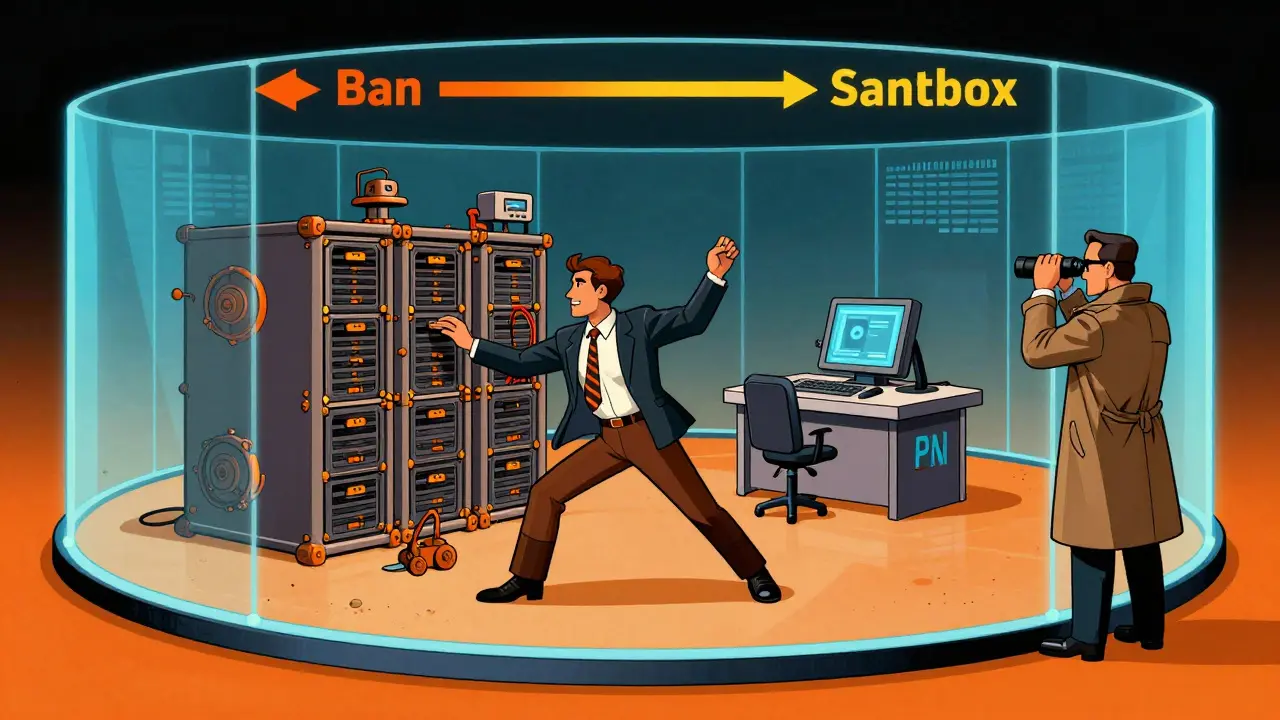
From Ban to Sandbox: How the Rules Changed
To understand where things stand today, you need to look at where they started. Back in 2018, the Bank of Namibia (BON) took a hardline stance. They declared that cryptocurrencies were not recognized as commodities and did not support their trading on any financial market. Essentially, crypto was off-limits.
That changed dramatically with the passage of the Virtual Assets Act Act No. 10 of 2023, which created a formal structure for digital assets. Signed into law in July 2023, this act didn’t just lift the ban; it built a cage around the industry. Alongside it, the Payment System Management Act (Act No. 14 of 2023) gave BON the tools to regulate payment providers.
The result? Cryptocurrency is still not legal tender. You cannot force a shop to accept Bitcoin. However, merchants *can* choose to accept it if they want to. The key difference now is that anyone facilitating these transactions must be licensed by the Namibia Financial Institutions Supervisory Authority NAMFISA, the body responsible for overseeing financial stability.
The Two-Step Licensing Process for Businesses
If you are planning to launch a crypto exchange, wallet service, or ATM network in Namibia, you cannot just open your doors. You must go through a rigorous two-step authorization process designed to prevent fraud and ensure technical readiness.
- Provisional Authorization: First, you apply for provisional status. This lasts for six months. During this time, you are not allowed to conduct any business with the public. You cannot take deposits, make trades, or interact with customers. Your only job is to set up your infrastructure, hire staff, and install security software.
- Full Operational Licensing: After six months, regulators inspect your setup. If you meet all conditions-including strict Anti-Money Laundering (AML) and Counter-Terrorist Financing (CTF) standards-you get full approval to engage with the public.
This "sandbox" approach is unique. Unlike some countries that let you operate under supervision immediately, Namibia forces you to prove your systems work before you touch a single cent of customer money. As Kazembire Zemburuka, a spokesperson for BON, explained, the bank wants to ensure entities are fully ready before they engage with individuals.
| Feature | Provisional Authorization (Months 1-6) | Full Operational License |
|---|---|---|
| Public Interaction | Banned | Allowed |
| Trading Activity | None | Permitted |
| Infrastructure Setup | Mandatory Focus | Ongoing Maintenance |
| Regulatory Oversight | Strict Inspection | Continuous Monitoring |
Key Restrictions Every User Must Know
Even with licenses available, the restrictions remain tight. Here is what you need to watch out for:
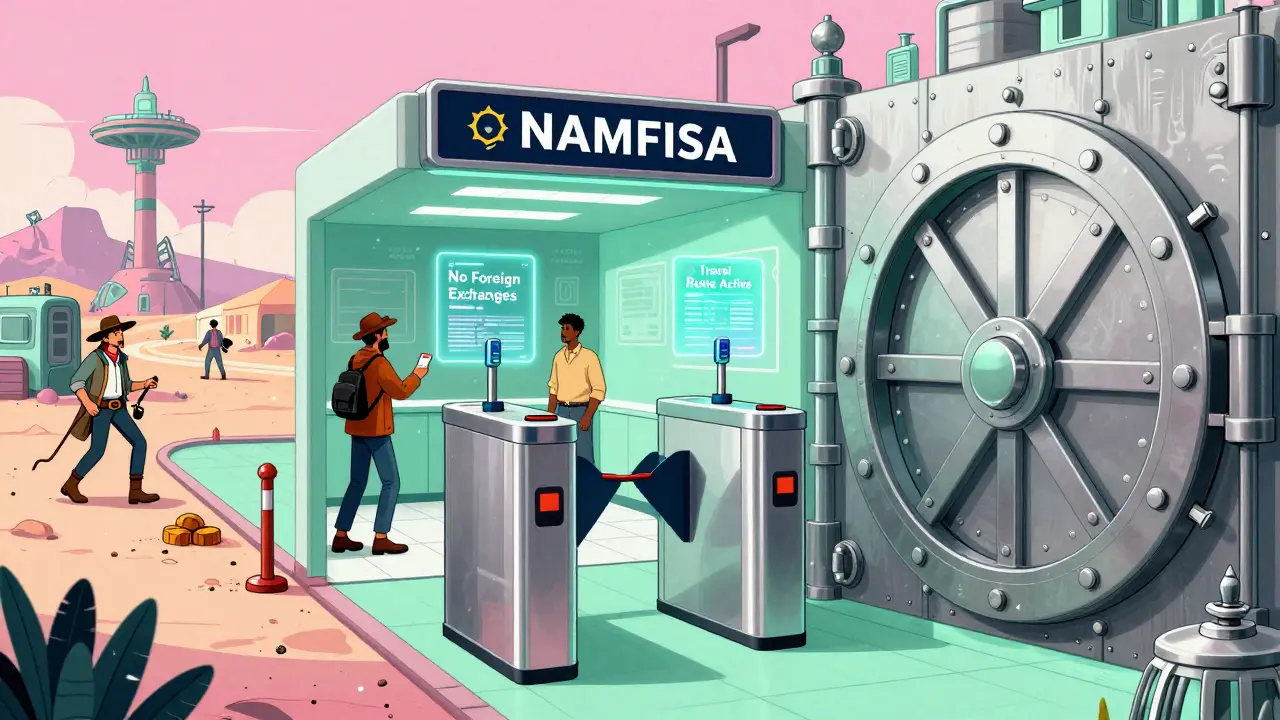
- No Foreign Exchanges: The law bans all crypto-exchanges that are not based in Namibia. If you try to use Binance, Coinbase, or Kraken directly from a Namibian IP address without a local intermediary, you are operating outside the legal framework. Your funds may be at risk if authorities block these services.
- The Travel Rule: For any transaction exceeding NAD 20,000 (approximately USD 1,000), Virtual Asset Service Providers (VASPs) must collect and share detailed information about both the sender and the receiver. This includes names, ID numbers, and account details. Privacy is limited here; transparency is mandatory.
- ICOs Are Discouraged: The Bank of Namibia explicitly states it does not advocate for Initial Coin Offerings (ICOs). They view them as high-risk for fraud and manipulation. While not explicitly criminalized in all contexts, engaging in ICOs carries significant regulatory scrutiny and potential legal peril.
How Namibia Compares to Its Neighbors
Namibia’s approach sits in the middle of the African spectrum. It is more regulated than Kenya, which has largely left the market to self-regulate, but less restrictive than Botswana, which has maintained a near-total prohibition on crypto trading.
Compared to Nigeria, which previously banned banks from facilitating crypto transactions, Namibia offers a clearer path for businesses-but with higher hurdles. South Africa has had VASP registration requirements since 2022, making its framework slightly more mature. Namibia’s six-month waiting period for provisional licenses is longer than many jurisdictions, which can delay revenue generation for startups. However, this caution aligns with global standards set by bodies like the Financial Action Task Force (FATF).
Real-World Implementation: Who Is Licensed?
As of early 2025, the Bank of Namibia granted provisional authorization to four entities. Two were payment service providers (Finatic Technologies and United PayPoint), and two were Virtual Asset Service Providers (Mindex Virtual Asset Exchange and Landifa Bitcoin Trade CC).
However, the process isn’t smooth sailing. By mid-2025, several of these firms requested extensions to their provisional periods because setting up compliant infrastructure takes time. Mindex received an extension until November 2025. This shows that while the door is open, walking through it requires patience and heavy investment in compliance technology.
What About Central Bank Digital Currency (CBDC)?
While regulating private crypto, the Bank of Namibia is also exploring its own digital currency. In 2025, the IMF noted that BON was analyzing the potential for a Retail Central Bank Digital Currency (rCBDC). The goals are clear: improve financial inclusion, modernize payment systems, and speed up cross-border transfers.
This doesn’t replace Bitcoin or Ethereum. Instead, it suggests a future hybrid ecosystem where regulated private cryptos coexist with a state-backed digital rand. For now, though, private crypto remains strictly under the watchful eye of NAMFISA and BON.
Tips for Navigating the Namibian Crypto Market
If you are operating in this space, follow these practical steps to stay compliant:
- Verify Licenses: Before using any exchange or wallet service, check if they hold a valid license from NAMFISA. Unlicensed platforms are illegal to use for domestic transactions.
- Keep Records: If you are a merchant accepting crypto, maintain detailed records of all transactions. You will need to report large transfers under the Travel Rule.
- Avoid Offshore Platforms: Do not rely on international exchanges that do not have a Namibian presence. Use only locally authorized VASPs.
- Stay Updated: Regulations evolve quickly. Subscribe to updates from the Bank of Namibia and NAMFISA to catch changes in licensing requirements or reporting thresholds.
Is Bitcoin legal in Namibia?
Bitcoin is not illegal to own, but it is not legal tender. Trading and exchanging it are only legal if done through licensed Virtual Asset Service Providers (VASPs) registered with NAMFISA. Using unlicensed foreign exchanges is prohibited.
Can I accept cryptocurrency payments for my business?
Yes, merchants can choose to accept virtual assets for goods and services. However, you must comply with anti-money laundering laws, including the Travel Rule for transactions over NAD 20,000, and use only licensed payment processors.
What is the Travel Rule in Namibia?
The Travel Rule requires VASPs to collect and share sender and receiver information (names, IDs, account details) for any crypto transaction exceeding NAD 20,000. This ensures transparency and helps prevent financial crimes.
Are Initial Coin Offerings (ICOs) allowed?
The Bank of Namibia does not support or advocate for ICOs due to high risks of fraud and manipulation. While not explicitly banned in all cases, they face severe regulatory scrutiny and are generally discouraged for the general public.
Who regulates cryptocurrency in Namibia?
The Namibia Financial Institutions Supervisory Authority (NAMFISA) handles the licensing and supervision of Virtual Asset Service Providers, working closely with the Bank of Namibia (BON) on policy and monetary implications.