CYC Airdrop by Cyclone Protocol: How Anonymity for Everyone Distributed Tokens Fairly
 Dec, 16 2025
Most airdrops give you the same number of tokens just for signing up. Cyclone Protocol didn’t do that. In early 2021, they launched the CYC airdrop with one goal: reward real contributors to privacy, not just people who jumped on the bandwagon. If you were active, engaged, and followed the rules, you got more. If you tried to game the system, you got nothing. This wasn’t a lottery. It was a merit-based system built on trust, transparency, and zero-knowledge technology.
What Was the CYC Airdrop?
The CYC airdrop wasn’t just a token giveaway. It was the first real distribution of Cyclone Protocol’s native token, designed to fuel a privacy-focused ecosystem. A total of 1,500 CYC tokens were distributed across thousands of participants - but not equally. Everyone earned points by completing specific actions: joining official Telegram channels, connecting their wallet to the bot, inviting others who actually completed setup, and staying active. Points were tracked in real time, and the final reward was proportional to your score. Someone with 1,000 points got 10 times more than someone with 100. No one got a free ride.How Did the Points System Work?
The system was strict, and that’s what made it fair. Here’s how you earned points:- Joining the official Cyclone Protocol Telegram group: +10 points
- Connecting your wallet to the official Telegram bot: +50 points
- Referring someone who completed wallet setup: +30 points per valid referral
- Participating in community discussions: +5 points per meaningful post (manual review)
- Staying active for 30+ days: +20 bonus points
Why Was This Airdrop Different?
Most crypto projects pre-mine tokens for investors, team members, or venture capitalists. Cyclone Protocol didn’t. The entire 1,500 CYC supply was distributed through this airdrop. No team allocation. No private sale. No early investor dumps. Every single token went to people who helped build the community from day one. That’s rare. It meant the first token holders weren’t insiders - they were users, developers, and privacy advocates who cared about the mission. This wasn’t marketing. It was a statement. Cyclone Protocol was built on the idea that anonymity should be a public good, not a product sold to the highest bidder. The airdrop was the first step in proving that.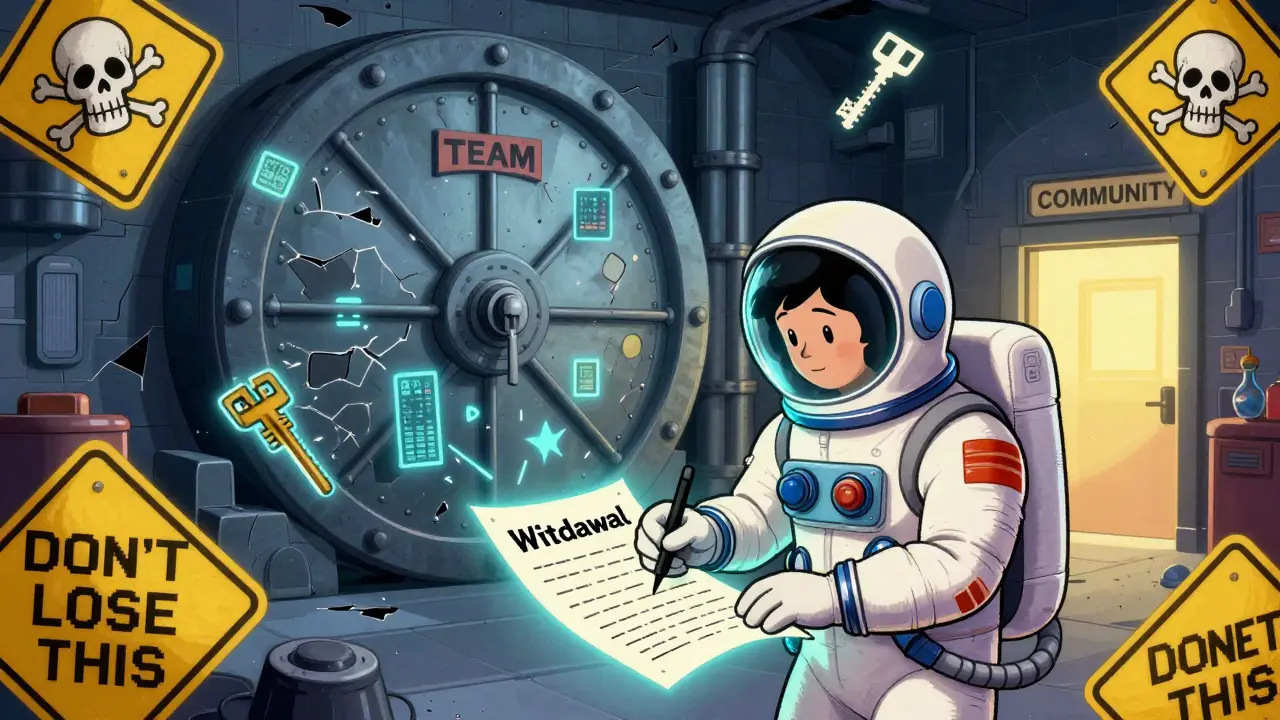
How Did Privacy Tech Power the Airdrop?
Cyclone Protocol uses zkSNARKs - a type of zero-knowledge proof - to let users send funds without revealing the sender, receiver, or amount. This same tech was used behind the scenes to protect airdrop claims. When you claimed your CYC tokens, you didn’t have to link your public wallet address to your identity. You received a cryptographic note - like a private key - that let you withdraw your tokens to any address later. Lose that note? You lose your tokens. No recovery. No helpdesk. No exceptions. This design forced users to take responsibility. It wasn’t just about getting free tokens - it was about learning how to manage privacy in practice. If you didn’t back up your note, you lost your reward. That’s how you know someone truly understood the protocol.What Happened After the Airdrop?
The airdrop wasn’t the end - it was the start. After distribution, the team planned to launch liquidity mining, where users could lock up CYC to earn rewards from anonymity pools. They also planned to let token holders vote on new features: which assets to support, how much to reward anonymity providers, and even whether to reduce token emissions for inactive pools. The goal was a DAO - a decentralized autonomous organization - where CYC holders controlled the protocol’s future. By late 2021, the team had released the governance contract. Voting power was tied to token holdings. The airdrop recipients became the first voters. This turned participants from passive recipients into active stewards. That’s the real power of a fair airdrop - it doesn’t just give you tokens. It gives you a voice.
Common Problems and How They Were Fixed
Not everyone got what they expected. Some users reported missing points. Others were confused why their referrals didn’t count. The team responded with public documentation. They published the full airdrop dataset on GitHub - every address, every point, every decision. If you thought you were wronged, you could check the data yourself. You could even submit an appeal. The most common issue? Referrals. Many users thought inviting someone was enough. But if that person didn’t connect their wallet to the bot, the referral didn’t count. The system didn’t care how many people you told - it only counted those who actually followed through. This stopped bots and fake accounts from inflating scores. Another issue: Telegram scams. Fake bots pretending to be the official one asked for wallet seeds or private keys. Cyclone Protocol warned users repeatedly: “The real bot never asks for your private key.” They posted screenshots of the official interface and listed verified links. Still, some users lost funds. That’s why privacy projects like this require education - not just technology.Where Is CYC Today?
As of 2025, CYC trades on several decentralized exchanges, with its highest volume on Ethereum-based DEXs. It’s listed on CoinMarketCap at around #2842 by market cap - not a top performer, but not dead either. The real value isn’t in the price. It’s in the model. Cyclone Protocol proved that a privacy protocol could launch without insiders, without pre-mining, and without selling out to VCs. It showed that a community-driven, fair airdrop could work at scale. Other projects have copied the model since. Now, you see more airdrops with point systems, referral checks, and anti-sybil rules. But Cyclone was one of the first to do it right - and with full transparency.What You Can Learn From This Airdrop
If you’re thinking about joining the next privacy airdrop, here’s what to remember:- Don’t just join a Telegram group - connect your wallet and use the bot.
- Referrals only count if the person completes the full setup.
- Backup your withdrawal note like your life depends on it - because it does.
- Never give out your private key, even to a “support agent.”
- Check official sources. If something looks too easy, it’s probably a scam.
Did everyone get the same amount of CYC tokens in the airdrop?
No. The 1,500 CYC tokens were distributed proportionally based on points earned through active participation. Someone with 1,000 points received 10 times more than someone with 100 points. Equal distribution was not used - the system rewarded consistent, genuine engagement.
Were CYC tokens pre-mined or given to the team before the airdrop?
No. Cyclone Protocol explicitly rejected pre-mining or team allocations. All 1,500 CYC tokens were distributed through the airdrop. The team and early backers received no tokens upfront, ensuring that early holders were real community participants, not insiders.
How were points tracked during the CYC airdrop?
Points were tracked using an official Telegram bot that linked to users’ wallet addresses. Actions like joining channels, connecting wallets, and successful referrals were automatically logged. The bot also detected spam, duplicate accounts, and inactive referrals, reducing or removing points for suspicious behavior.
What happened if I lost my withdrawal note after claiming CYC tokens?
If you lost your withdrawal note, you permanently lost access to your CYC tokens. The protocol does not store recovery keys or offer customer support for lost notes. This is by design - the withdrawal note acts like a private key, and losing it means losing the funds, just like in any non-custodial system.
Can I still claim CYC tokens from the original airdrop?
No. The airdrop distribution ended in mid-2021. All eligible claims were processed by the end of Q3 2021. The protocol has since moved on to liquidity mining and governance. No further claims are being accepted for the original airdrop.
Why did Cyclone Protocol choose IoTeX for the initial launch?
IoTeX offered lower transaction fees and faster block times than Ethereum, making it ideal for testing privacy features with real users. It also had strong developer support through Halo, its incentive program. After proving the concept, Cyclone expanded to Ethereum, Polkadot, and Heco to reach a broader audience.
Is CYC still being actively developed in 2025?
Yes. While the airdrop is over, development continues on improving anonymity pools, adding new asset support, and refining the governance system. The protocol remains decentralized, with upgrades voted on by CYC holders through its DAO structure.
How can I verify if I was eligible for the CYC airdrop?
The full airdrop dataset, including all eligible addresses and point totals, was published on Cyclone Protocol’s official GitHub repository. You can search your wallet address there to confirm whether you qualified and how many points you earned.
Did the CYC airdrop use a snapshot or a points system?
It used a points system, not a snapshot. Unlike most airdrops that reward users based on a single moment in time, Cyclone tracked activity over weeks. Points accumulated through ongoing participation, making it harder to game and more reflective of real community involvement.
What’s the difference between CYC and other privacy coins like Monero or Zcash?
CYC isn’t a standalone currency - it’s a utility token for a privacy protocol. Unlike Monero or Zcash, which are native coins with built-in privacy, CYC powers a layer that adds anonymity to transactions on existing blockchains like Ethereum and Polkadot. It enables users to anonymize any asset, not just CYC itself.