Real Estate RWA Tokenization: How to Invest in Property on the Blockchain
 Aug, 14 2026
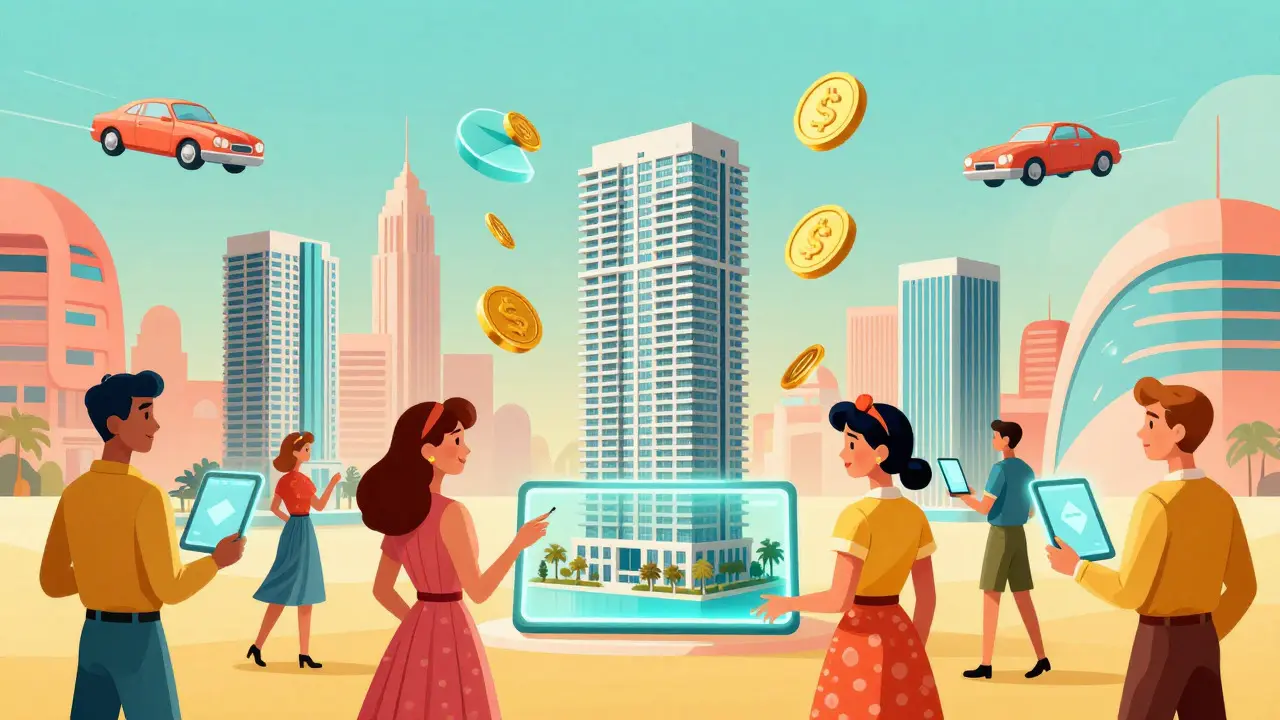
Imagine buying a slice of a luxury apartment in Miami or an office building in London without needing hundreds of thousands of dollars upfront. That is the promise of Real Estate RWA Tokenization, which is the process of converting physical property rights into digital tokens on a blockchain network. Each token represents a fraction of the underlying asset, allowing you to own a piece of real estate just like you would own shares in a company.
This technology is changing how we think about property investment. Instead of locking up your entire savings in one house, you can spread your risk across multiple properties globally. The market for these tokenized assets grew by over 60% in late 2024, reaching $13.5 billion. With major financial institutions now getting involved, this isn't just a niche experiment anymore-it's becoming a serious part of the global financial landscape.
How Real Estate Tokenization Works
To understand how you actually buy and sell these digital properties, you need to look at the steps behind the scenes. It’s not magic; it’s a structured process that bridges the physical world with the digital one.
- Asset Selection: A developer or investor chooses a property-this could be a commercial office block, a residential apartment complex, or even a new development project.
- Legal Structure (SPV): This is crucial. The property is transferred to a Special Purpose Vehicle (SPV). Think of the SPV as a legal wrapper. It holds the title to the building, while the digital tokens represent shares in that SPV. This ensures your token has legal backing.
- Token Minting: Digital tokens are created on a blockchain, usually Ethereum, using standards like ERC-20. If a building is worth $10 million and divided into 100,000 tokens, each token is worth $100.
- Smart Contracts: These are self-executing codes on the blockchain. They handle the rules automatically. For example, when rent comes in, the smart contract calculates each token holder's share and distributes it instantly to their wallets.
- Distribution: The tokens are listed on digital marketplaces where investors can buy, hold, or sell them.
The whole process takes about 90 to 150 days, with most of that time spent on legal checks and valuation. Once live, however, the system runs itself with minimal human intervention.
Why Investors Are Switching from Traditional Methods
Traditional real estate investing has always been exclusive. You needed a big down payment, a mortgage approval, and months of paperwork. Tokenization breaks down those walls. Let’s look at how it stacks up against the old ways.
| Feature | Traditional Investment | Tokenized Real Estate (RWA) |
|---|---|---|
| Entry Cost | High ($100k - $1M+) | Low ($100 - $1,000 per token) |
| Liquidity | Very Low (Months to sell) | Higher (Trade 24/7 on secondary markets) |
| Fees | 3-6% broker commissions | Lower platform fees (0.5-2.5% annually) |
| Transparency | Opaque records | Immutable blockchain ledger |
| Access | Local/Regional only | Global access via internet |
The biggest win here is liquidity. In traditional markets, selling a building can take six months. With tokenization, if there is demand, you can sell your tokens almost instantly. Plus, the cost barrier drops significantly. You don’t need to be accredited to start small, though many platforms still have limits depending on local laws.
The Role of Smart Contracts and Blockchains
At the heart of this system is the blockchain, primarily Ethereum, which is a decentralized computing platform that supports smart contracts and digital tokens. But why Ethereum? It’s because of its maturity and security. Most real estate tokens use the ERC-20 standard, which makes them fungible-meaning one token is identical to another, making trading easy.
However, code alone isn’t enough. You need data from the real world to trigger actions. This is where Oracle Networks like Chainlink come in. Oracles act as bridges. They fetch real-world data-like rental income figures or property valuation updates-and feed it into the smart contract. Without oracles, the blockchain would be blind to what’s happening with the physical building.
For instance, if a tenant pays rent, the property management firm records it. The oracle verifies this data and sends it to the smart contract, which then automatically distributes the profit to all token holders. This removes the need for a middleman to manually cut checks, saving time and reducing errors.

Regulatory Landscape and Legal Risks
Here is the catch: technology moves fast, but laws move slow. One of the biggest hurdles for real estate tokenization is regulatory uncertainty. As of late 2024, only about 37% of global markets have clear frameworks for these assets.
In places like Switzerland, Liechtenstein, and the UAE, regulations are friendly. They allow for clear ownership rights and tax treatments. In the United States, states like Wyoming and Colorado are leading the charge with specific laws protecting digital asset ownership. However, in many other jurisdictions, it’s a gray area. Is your token a security? Is it a utility? The answer changes how it’s taxed and regulated.
The European Union introduced MiCA (Markets in Crypto-Assets) regulations in December 2024, providing a comprehensive framework. This was a huge step forward for clarity. Meanwhile, the U.S. Securities and Exchange Commission (SEC) continues to scrutinize these offerings, often classifying them as securities, which means stricter compliance for issuers.
If you invest, you must check the legal structure. Ensure the SPV holding the property is registered in a jurisdiction that recognizes token-based ownership. Otherwise, you might own a digital token but have no legal claim to the actual building.
Market Growth and Institutional Adoption
This isn’t just for crypto enthusiasts anymore. Big money is entering the space. McKinsey projects the tokenized asset market could hit $2 trillion by 2030. Why? Because institutions see the efficiency.
BlackRock launched BUIDL, a fund for tokenized U.S. Treasury bonds, and expanded into commercial real estate in mid-2024. JPMorgan has piloted tokenized commercial mortgages. These giants aren’t betting on hype; they’re betting on infrastructure. They see that tokenization reduces settlement times from weeks to seconds and lowers administrative costs.
Commercial real estate is the primary focus right now, accounting for 45% of tokenized assets. Residential properties make up 25%, and development projects account for the rest. Commercial buildings offer steady cash flow through leases, which translates well to predictable dividend payments for token holders.
Practical Steps for Getting Started
If you want to dip your toes in, here is how you do it safely. First, choose a reputable platform. Look for platforms that publish audited reports and have transparent fee structures. Brickken and Securitize are notable names in this space.
- Verify the Asset: Check the property details. Is there a third-party valuation? Who manages the building?
- Understand the Fees: Expect annual management fees between 0.5% and 2.5%. Also, watch out for exit fees or lock-up periods.
- Check Liquidity: Can you actually sell the token later? Some platforms have secondary markets, while others rely on the issuer buying back tokens.
- Tax Implications: Consult a tax professional. Dividends from real estate tokens may be taxed differently than capital gains from stocks.
Start small. Treat it as learning capital. The average user needs 8-12 hours to fully understand the mechanics if they already know crypto, and up to 30 hours if they are coming from traditional finance.
Future Outlook: What’s Next?
The next few years will define whether this becomes mainstream or remains a niche. By 2027, Deloitte predicts that 25% of new commercial real estate joint ventures will use tokenization for investor onboarding. This would slash the time to raise capital from months to days.
We also expect better interoperability. Currently, tokens on Ethereum don’t easily talk to tokens on other chains. Standards like RETS (Real Estate Tokenization Standard), introduced in May 2024, aim to fix this. Additionally, Central Bank Digital Currencies (CBDCs) may soon be used to settle these trades, adding another layer of stability and speed.
The risk remains fragmented regulation. If every country has different rules, cross-border investment stays hard. But with global bodies like the IMF pushing for harmonized frameworks, the path is clearing. Real estate tokenization offers a glimpse into a future where property is as liquid and accessible as stock trading.
What is the minimum investment for real estate tokenization?
Minimum investments vary by platform and property. Some platforms allow entry with as little as $100 to $1,000 per token. However, accredited investor requirements may apply in certain jurisdictions, raising the bar to higher amounts. Always check the specific offering details before purchasing.
Is real estate tokenization legal?
Yes, but it depends on your location. Jurisdictions like Switzerland, the UAE, and select U.S. states have clear laws supporting it. In other areas, it may be treated as a security, requiring strict compliance. Always ensure the platform operates legally in your region and uses a valid Special Purpose Vehicle (SPV) for asset holding.
How do I get paid dividends from tokenized real estate?
Dividends are distributed automatically via smart contracts. When rental income is collected, the oracle feeds this data to the blockchain, and the smart contract sends your proportional share directly to your digital wallet. This usually happens within days of rent collection, ensuring transparency and speed.
Can I sell my real estate tokens anytime?
It depends on the platform and the specific token. Some tokens are traded on secondary markets 24/7, offering high liquidity. Others may have lock-up periods (e.g., 6-12 months) or require the issuer to approve the sale. Always review the liquidity terms before buying.
What are the risks of investing in tokenized real estate?
Key risks include regulatory changes, technological failures (smart contract bugs), and illiquidity if there are no buyers for your tokens. There is also the risk of the underlying property losing value or facing management issues. Diversification and choosing reputable platforms with audited smart contracts can mitigate these risks.