Russia Legalizes Crypto Mining: A New Front in Sanctions Evasion
 Aug, 17 2026
Imagine a world where the global financial system isn't just a network of banks and wires, but a parallel shadow economy running on code. That is exactly what Russia is building. Since the invasion of Ukraine in February 2022, Moscow has quietly shifted its stance on digital assets. What was once a restricted space is now a strategic tool for bypassing Western economic restrictions through digital means. The recent legalization of cryptocurrency mining isn't just about tech policy; it's a calculated move to keep the economy running despite heavy pressure from the US and EU.
You might wonder why a country with massive oil reserves needs to dig up Bitcoin. The answer lies in the sheer scale of the blockade. Traditional banking channels have been cut off, forcing Russian exporters to find new ways to get paid. Enter the A7A5 stablecoin. Launched in February 2025 by pro-Russian oligarch Ilan Shor, this ruble-backed token has already processed over $51.17 billion in transactions. It’s not a speculative asset; it’s a payment rail designed to look like a normal business transaction while slipping past traditional compliance checks.
The Mechanics of Shadow Finance
To understand how this works, you have to look at the infrastructure. Russia didn't build this from scratch. They leveraged existing gaps in global oversight. The core of this system relies on exchanges that operate outside the reach of standard regulatory scrutiny. Garantex, a major exchange with deep ties to Russian entities, was sanctioned by the US in 2022. But when one door closes, another opens. In 2024, former Garantex employees launched Grinex, specifically to continue the flow of funds. By August 2025, even Grinex was caught and sanctioned, proving that the cat-and-mouse game is intense.
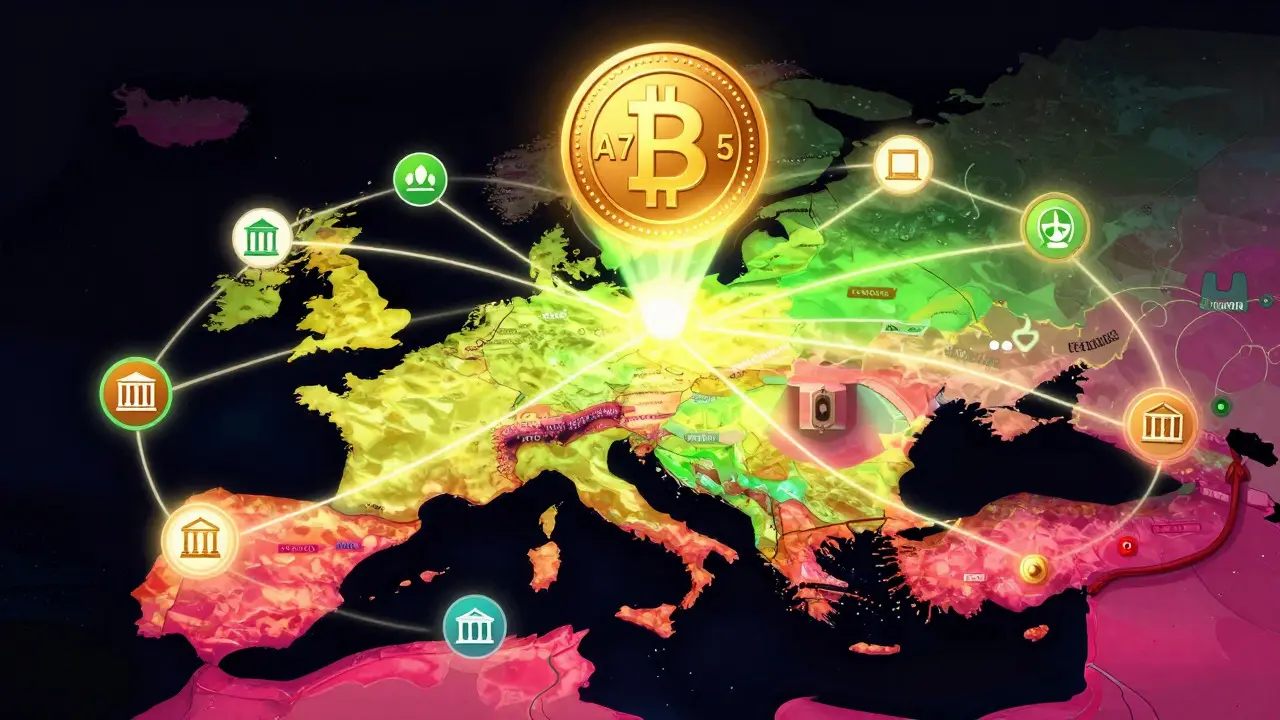
These exchanges don't operate in a vacuum. They form an insular ecosystem, often trading with each other or using platforms with 'notable' ties to Russia. This creates a closed loop where liquidity moves quickly between sanctioned entities without ever touching a dollar-denominated account in New York or London. For a buyer of Russian gas or grain, this means they can pay in crypto, which is then swapped for rubles or other currencies within this shadow network, keeping the transaction invisible to traditional bank monitors.
Why Mining Matters to the Strategy
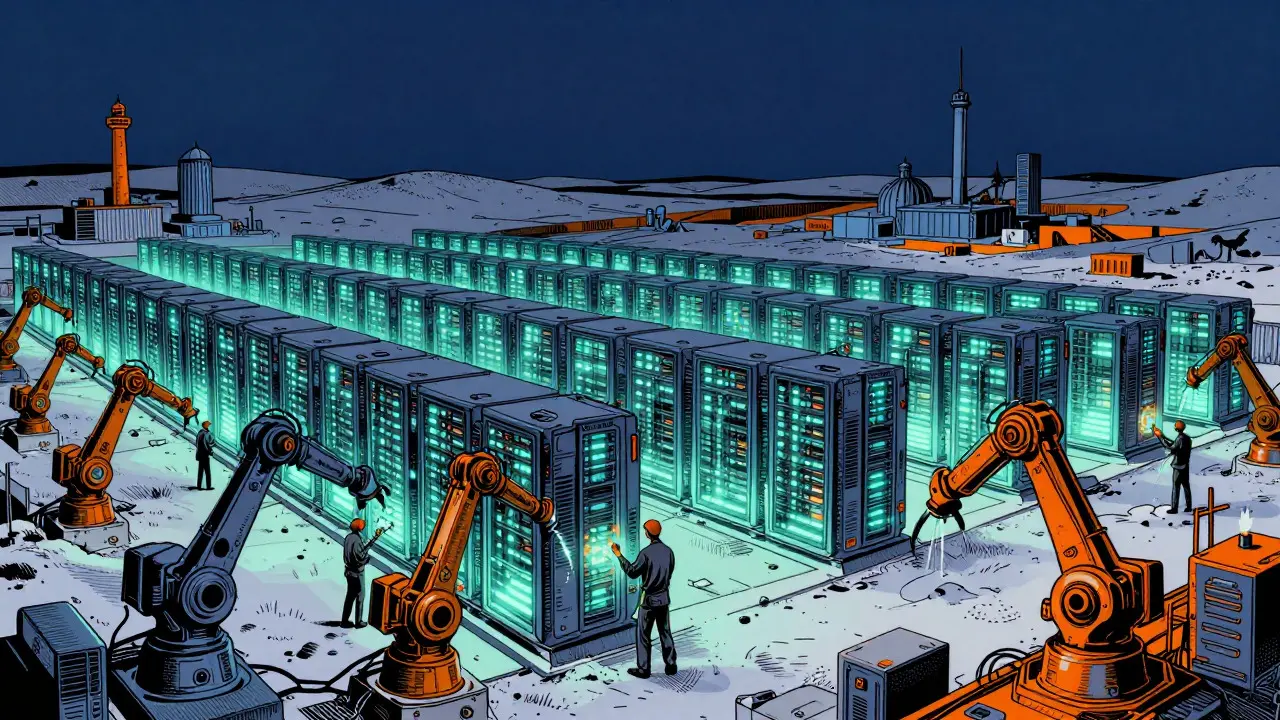
So, why legalize mining? You might think mining is just about creating new coins. In this context, it’s about control and volume. Russia reportedly operates the world's third-largest virtual currency mining industry. By legalizing it, the state gains two things: legitimacy and access to energy resources. Many mining operations are located in regions with cheap electricity, turning excess power into hard assets. More importantly, it allows the state to influence the supply chain of digital assets used in these evasion networks.
On August 20, 2025, the US Treasury's Office of Foreign Assets Control (OFAC) made history by designating a virtual currency mining company for the first time. This wasn't a random pick. It signaled that Washington understood mining was no longer a hobbyist activity in Russia but a state-supported industrial process aiding sanctions evasion. Under Secretary Brian E. Nelson stated clearly that Treasury would target those who aid evasion, marking a shift from punishing end-users to dismantling the entire support structure.
The A7A5 Stablecoin: A Case Study
Let’s zoom in on A7A5, as it represents the most sophisticated part of this strategy. Issued by Old Vector, a Kyrgyzstan-based company backed by Russia's state-owned Promsvyazbank, A7A5 is pegged to the ruble. Why use a stablecoin instead of Bitcoin? Volatility. If you're paying for a shipment of wheat, you don't want the price to drop 10% while the cargo is in transit. A stablecoin offers price stability while retaining the borderless nature of crypto.
| Entity | Role | Status (as of Aug 2025) | Notable Attribute |
|---|---|---|---|
| A7A5 | Ruble-backed Stablecoin | Active | Processed $51.17B+ in transactions |
| Old Vector | Issuer of A7A5 | Sanctioned by UK | Backed by Promsvyazbank |
| Grinex | Crypto Exchange | Sanctioned by US & UK | Created by ex-Garantex staff |
| Garantex | Crypto Exchange | Sanctioned by US | Major hub for A7A5 trading |
What makes A7A5 tricky is its operational pattern. Blockchain analytics firm Chainalysis noted that A7A5 shows clear business-day activity patterns. This suggests it’s being used by commercial entities-factories, exporters, importers-rather than retail investors flipping coins on weekends. During its first four months, it moved an estimated $9.3 billion. That’s real trade finance, hidden inside a digital wrapper.
Western Countermeasures and Enforcement
The West hasn't been sleeping. The response has been swift and coordinated. In August 2025, both the US and UK moved simultaneously. The US targeted facilitators, including the aforementioned mining firms, while the UK’s Office of Financial Sanctions Implementation (OFSI) sanctioned eight individuals and entities linked to the A7A5 infrastructure. These targets included Luxembourg-based firms and four Kyrgyz entities. Why Kyrgyzstan? It serves as a convenient jurisdictional buffer, allowing Russian-linked companies to operate with less direct exposure to immediate Western legal reach.
However, enforcement is hard. Crypto doesn't stop at borders. When the US sanctioned Transkapitalbank and a network led by oligarch Konstantin Malofeyev, it highlighted the complexity. These networks aren't just about money; they involve military procurement, commodity trade, and money laundering services. The goal for authorities is to disrupt the liquidity providers-the people and firms that convert crypto back into usable cash or goods. Without them, the crypto is just numbers on a screen.
Limitations of Crypto as a Sanctions Tool
Here’s the reality check: Is this actually working? Experts argue it’s more complicated than headlines suggest. The Bitcoin Policy Institute points out that Bitcoin is 'ill-suited' to replace the dollar or euro as a primary trade currency. Russia’s pre-war exports were around $400 billion annually. That’s roughly 50% of Bitcoin’s market cap at the time. Trying to route half your national export revenue through a volatile asset is risky. One bad day in the market could wipe out billions in value before the deal closes.
Furthermore, the size of the crypto market, while growing, is still small compared to the traditional global financial system. Most large-scale commodity trades still happen in dollars or euros because of depth and stability. Crypto is currently best suited for mid-sized transactions, gray-market goods, or specific niches where speed matters more than absolute security. It’s a supplement, not a replacement, for the old system.
The Role of Blockchain Transparency
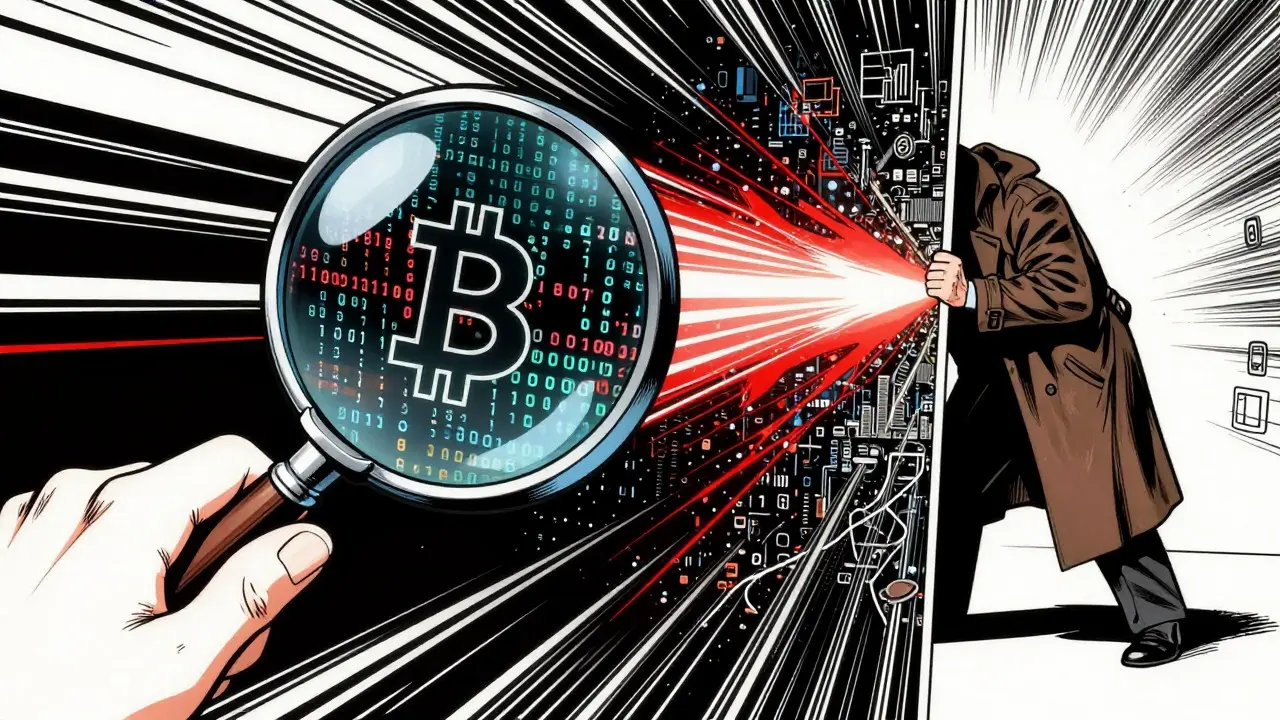
Ironically, the very technology enabling this evasion also provides the tools to catch it. Blockchain is public. Every transaction on a public ledger like Bitcoin or Ethereum is visible. While privacy coins exist, the major networks used in these schemes (like those supporting A7A5 or traded on Grinex) are increasingly traceable. Firms like Chainalysis use this data to map out connections. They can see if a wallet receiving Russian gas payments is linked to a known oligarch or a sanctioned entity. This transparency turns the tables on evaders, making every move a potential clue for investigators.
This creates a paradox. Russia wants anonymity, but the tools they use offer visibility. As a result, the 'shadow economy' is becoming a 'lit shadow.' Authorities can now pinpoint exactly where the money flows, who controls the exchanges, and which mining farms are feeding the system. This is why the recent sanctions focused so heavily on the infrastructure-miners, issuers, and exchange operators-rather than just the end users.
What This Means for the Future
We are witnessing the birth of a new era in geopolitical finance. Russia is betting that by decentralizing its payment systems, it can decouple from Western dominance. The legalization of mining is a cornerstone of this bet, providing the raw material and industrial base for this alternative financial stack. Meanwhile, the West is adapting, moving from sanctioning banks to sanctioning code, servers, and miners.
For businesses and investors, this means higher compliance risks. If you touch any Russian-linked trade, you need to check if crypto is involved. If you hold tokens on smaller exchanges, be aware they might be next on the sanctions list. The line between legitimate fintech innovation and sanctions evasion is blurring, and navigating it requires constant vigilance. The battle isn't just over land or oil anymore; it's over the rails that move value across the globe.
Did Russia officially ban or legalize crypto mining?
Russia has moved towards legalizing and integrating cryptocurrency mining into its broader financial strategy. While earlier regulations were restrictive, the current approach supports mining as a way to generate digital assets for cross-border payments, effectively using it to bypass traditional banking sanctions.
What is the A7A5 stablecoin and who issues it?
A7A5 is a ruble-backed stablecoin issued by Old Vector, a company based in Kyrgyzstan. It is backed by Russia's state-owned Promsvyazbank and has been used to facilitate over $51 billion in transactions since its launch in early 2025.
How does crypto help Russia evade sanctions?
Crypto allows Russia to receive payments for exports without using SWIFT or dollar-denominated bank accounts. By using stablecoins and specific exchanges, Russian entities can move value across borders, converting it to local currency or goods within a closed network that is harder for Western regulators to monitor.
Are Bitcoin and Ethereum effective for large-scale trade?
Most experts believe they are limited for large-scale commodity trade due to volatility and market depth. While stablecoins like A7A5 are better suited for trade finance, pure cryptocurrencies like Bitcoin remain too volatile to replace the dollar for multi-billion dollar contracts.
What action did the US Treasury take in August 2025?
The US Treasury's OFAC designated several entities for sanctions evasion, including the first-ever virtual currency mining company. They also sanctioned Grinex and other facilitators, signaling a focus on disrupting the infrastructure supporting crypto-based evasion rather than just individual users.