What is Slippy (SLIPPY) Crypto Coin? A Deep Dive into the ERC-20 Token
 Sep, 7 2026
You’ve probably seen the ticker SLIPPY pop up in your portfolio tracker or a Telegram group and wondered what on earth it actually does. Is it the next big meme coin winner, or just another ghost town on the blockchain? If you’re trying to figure out if this token has legs or if it’s already running out of breath, you’re in the right place.
Here’s the blunt truth: Slippy (SLIPPY) is an Ethereum-based ERC-20 token launched in 2025 that operates with a massive fixed supply but extremely thin liquidity. It’s not a complex DeFi protocol with years of development behind it. It’s a speculative asset that lives and dies by trading volume and community hype. As of late 2026, it remains a micro-cap player, meaning every dollar you put in carries significant risk. But understanding its mechanics-supply, volatility, and exchange presence-is the first step before you decide whether to buy, hold, or ignore it completely.
The Anatomy of Slippy: Supply and Structure
Let’s strip away the jargon. Slippy isn’t a new blockchain; it’s a token living on the Ethereum network. This means it uses Ethereum’s security model and smart contract infrastructure. You don’t mine Slippy. It was created all at once, or nearly so, with a hard cap set in stone.
The total maximum supply is 420.69 billion SLIPPY tokens. The circulating supply matches this number exactly, which tells us there are no hidden emissions waiting to dilute your holdings later. In traditional finance terms, think of this like a company issuing all its shares upfront. There’s no inflationary pressure from mining rewards, but that also means the value relies entirely on demand. If nobody wants to buy, the price crashes because there’s no fundamental yield backing it.
Why 420.69 billion? It’s a nod to internet culture, specifically the "420" meme often associated with cannabis culture, hinting that Slippy likely positions itself within the meme coin sector rather than serious utility infrastructure. This cultural signal matters because it sets investor expectations. People buying Slippy aren’t looking for enterprise-grade technology; they’re looking for viral potential.
Market Performance and Volatility Risks
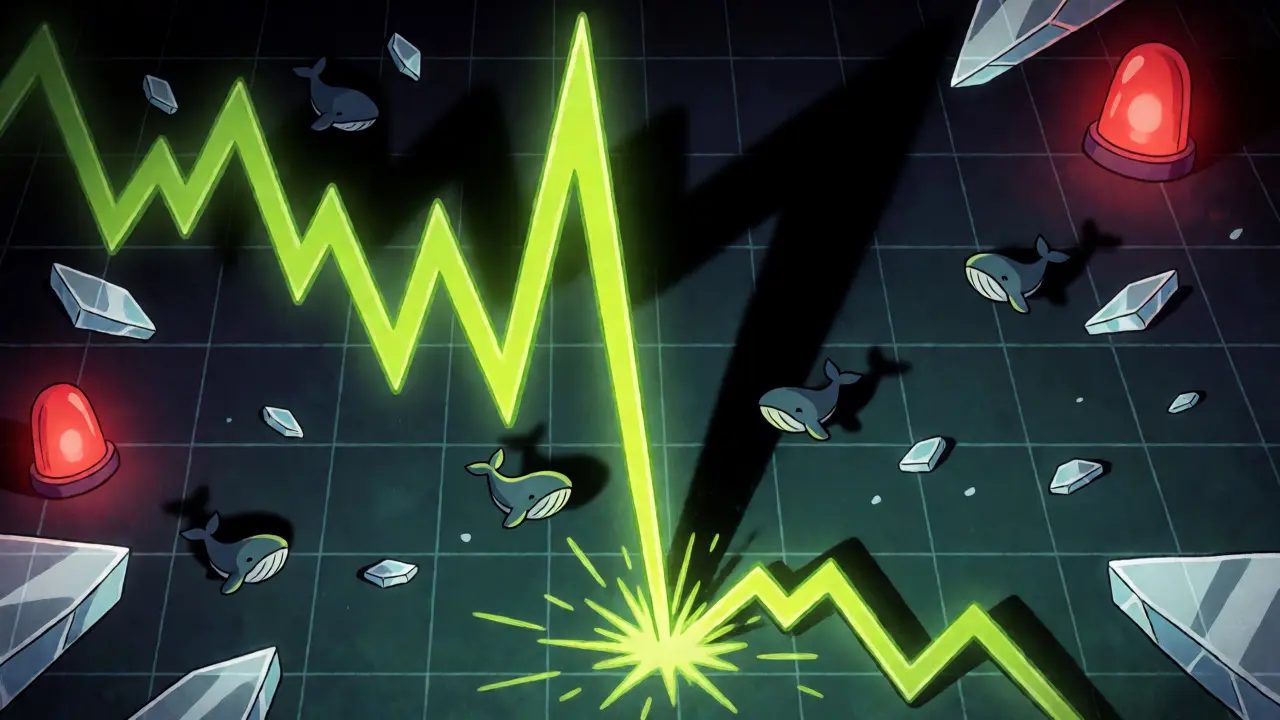
If you look at the charts, you’ll see why traders call these tokens "high-risk." Slippy’s price history since its July 2025 launch is a rollercoaster. It hit an all-time high of roughly $0.00052132 shortly after launch, then plummeted to lows near $0.000000885841. That’s a drop of over 99% from peak to trough in a short span.
This extreme volatility isn’t unique to Slippy-it’s standard for early-stage micro-caps-but it’s amplified here due to low liquidity. When order books are thin, a single large sell order can crash the price by double digits. Conversely, a small buy wave can spike it up 75% in a day. For example, data from March 2026 showed an 8.40% increase in 24 hours on Dropstab, while other periods saw negative changes. These swings happen because there aren’t enough buyers and sellers to stabilize the price.
| Metric | Value / Status | Implication for Investors |
|---|---|---|
| Total Supply | 420.69 Billion | No future dilution, but requires massive demand to move price. |
| All-Time High | ~$0.00052132 | Significant upside existed, but most holders are underwater. |
| Market Cap Range | $0 - $866K | Extremely small; susceptible to manipulation. |
| Holder Count | ~1,100 | Very concentrated ownership; whale dominance possible. |
| Trading Volume | Low ($0 - $100K daily) | Hard to exit large positions without slippage. |
Where Can You Trade Slippy?
You won’t find Slippy on every major exchange. Its presence is fragmented across platforms, which complicates trading. Major aggregators like CoinGecko and CoinMarketCap list it, but actual trading pairs exist on specific venues.
- Binance: Listed but with reported market caps sometimes showing $0 or negligible figures, suggesting very low activity or delisting risks.
- Bybit: Showed active trading in mid-2025 with a market cap around $370K.
- MEXC & Gate.io: Often host smaller altcoins with lower listing fees.
- Decentralized Exchanges (DEXs): Likely traded on Uniswap or similar platforms via Ethereum pools, though direct pair data varies.
Be careful when checking prices. Because liquidity is so low, the price on Binance might differ significantly from the price on MEXC. This is called arbitrage opportunity, sure, but for retail investors, it mostly means you need to check multiple sources before executing a trade. Don’t trust a single screenshot from Twitter.

The Problem With Low Liquidity and Holder Concentration
Here’s the biggest red flag for Slippy: holder concentration. Data suggests only about 1,100 unique addresses hold the token. Compare that to established coins with millions of holders, and you realize how fragile this ecosystem is.
When only a few wallets hold the majority of supply, those "whales" control the market. If one large holder decides to dump their position, the price collapses instantly because there’s no depth in the order book to absorb the sell pressure. This is known as "slippage," ironically fitting for a token named Slippy. You might intend to sell at $0.000001, but the actual execution price could be much lower due to lack of buyers.
Furthermore, the lack of transparent information about the development team or roadmap adds to the uncertainty. Unlike projects with whitepapers detailing technical milestones, Slippy appears to rely heavily on community sentiment. Without clear utility or regular updates, maintaining interest becomes difficult once the initial hype fades.
Is Slippy Worth Your Money?
So, should you invest? That depends on your risk tolerance. If you’re looking for a safe haven or steady growth, Slippy fails the test. It’s a speculative vehicle designed for high-risk/high-reward scenarios.
Consider these factors before buying:
- Liquidity Risk: Can you get out easily? With volumes often under $50K daily, selling $1,000 worth might impact the price noticeably.
- Community Engagement: Check social media. Are people talking about it organically, or is it bot-driven noise? A silent Discord or Twitter feed is a bad sign.
- Exchange Support: Ensure the exchange you use supports withdrawals to your wallet. Some smaller exchanges have withdrawal delays or high fees.
- Regulatory Clarity: As an ERC-20 token, it falls under broader crypto regulations. Keep an eye on global regulatory shifts that might affect small-cap tokens.
For many, Slippy represents a lottery ticket. You allocate a tiny portion of your portfolio-money you can afford to lose-to bet on viral success. If the community grows and volume picks up, the percentage gains can be huge. But statistically, most tokens like this fade into obscurity.
What blockchain does Slippy (SLIPPY) run on?
Slippy is an ERC-20 token, meaning it runs on the Ethereum blockchain. It utilizes Ethereum's smart contract capabilities and is compatible with any Ethereum wallet, such as MetaMask or Trust Wallet.
How many Slippy coins are there in total?
The total maximum supply of SLIPPY is capped at 420.69 billion tokens. The entire supply is currently in circulation, meaning no new tokens will be minted through mining or staking rewards.
Why is the price of SLIPPY so volatile?
Volatility is driven by low liquidity and a small holder base (approx. 1,100 holders). Small trades can cause large price swings because there aren't enough market participants to stabilize the price. Additionally, as a meme-style token, its value is highly sensitive to social media trends and community sentiment.
Where can I buy Slippy (SLIPPY)?
SLIPPY is available on several centralized exchanges including Bybit, MEXC, and occasionally listed on Binance depending on liquidity status. It may also be traded on decentralized exchanges (DEXs) like Uniswap using ETH as the trading pair. Always verify current listings on aggregators like CoinGecko before purchasing.
Does Slippy have a real use case?
Currently, public documentation regarding specific utility or technical roadmaps for Slippy is limited. It primarily functions as a speculative asset and meme coin. Investors typically buy it based on community hype and potential for viral growth rather than underlying technological innovation or revenue generation.